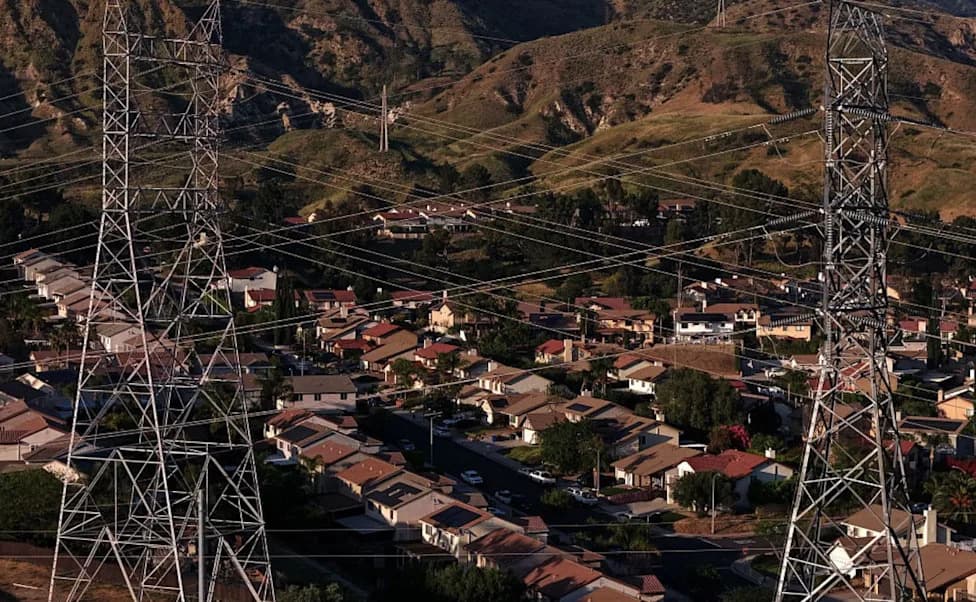
The California Supreme Court on Tuesday issued a unanimous decision that makes it harder for the town of Apple Valley to take control of Apple Valley Ranchos Water Co., the private utility serving roughly 65,000 people in San Bernardino County. The ruling requires trial judges to independently evaluate whether a municipal takeover is genuinely necessary, rather than simply deferring to the town's own decision.
Background
After private equity firm Carlyle Infrastructure Partners acquired the system in 2010, customers saw significant rate increases. In response, Apple Valley adopted resolutions in 2015 to pursue public ownership and filed an eminent domain action. Liberty Utilities — which later purchased the water company and is controlled by Algonquin Power & Utilities Corp. — challenged the takeover, arguing the town had not proven a public necessity to justify condemnation.
What the Supreme Court Held
The court rejected Apple Valley's argument that a highly deferential standard of review should govern challenges to the town's resolution of necessity. Instead, Justice Leondra Kruger wrote that the trial court, acting as the trier of fact, "must exercise its independent judgment" and determine whether the utility owner has rebutted presumptions and established by a preponderance of the evidence that the taking is not authorized under eminent domain law.
"The resolution is not the be-all and end-all of a condemnation proceeding. As a general rule, public necessity is a matter for the public entity to decide, subject to limited judicial review," Justice Kruger wrote.
Procedural History And Immediate Effects
At a 67-day bench trial, Liberty prevailed on the necessity issue and was awarded $13.2 million in legal fees. An appeals court later reversed that decision. The California Supreme Court has now remanded the case to the lower court with instructions that the trial judge make an independent factual determination under the tougher preponderance-of-the-evidence standard. That likely extends the timeline for any municipal takeover and reduces the likelihood of a quick path to local control or immediate rate relief.
Why This Matters
The ruling raises the evidentiary burden on governments seeking to use eminent domain to seize privately owned public utilities. It also fits into a broader pattern in California and the Western U.S., where cities and counties have considered or pursued eminent domain as a tool to try to address affordability and accountability in utility services — for example, San Francisco's efforts involving parts of Pacific Gas & Electric's grid.
On remand, the trial court will weigh testimony, documents, and expert analysis anew to determine whether the taking is justified. The decision underscores that courts have a substantive role in testing municipal claims of public necessity in high-stakes utility condemnations.