The swan family at Canvey Lake in Essex died after exposure to a toxic blue‑green algal bloom, leaving local residents "devastated." Three cygnets and their two parents were admitted to South Essex Wildlife Hospital and later died; earlier this year two cygnets were killed by foxes and another died of avian botulism. July tests found about 2.5 million algal cells/ml — over 100 times the warning threshold — prompting the town council to hand the lake lease to Castle Point Borough Council. Restoration plans are underway with council funding and Environment Agency support amid wider regional heat and drought conditions.
Swan Family Dies After Toxic Algal Bloom at Canvey Lake — Residents 'Devastated'
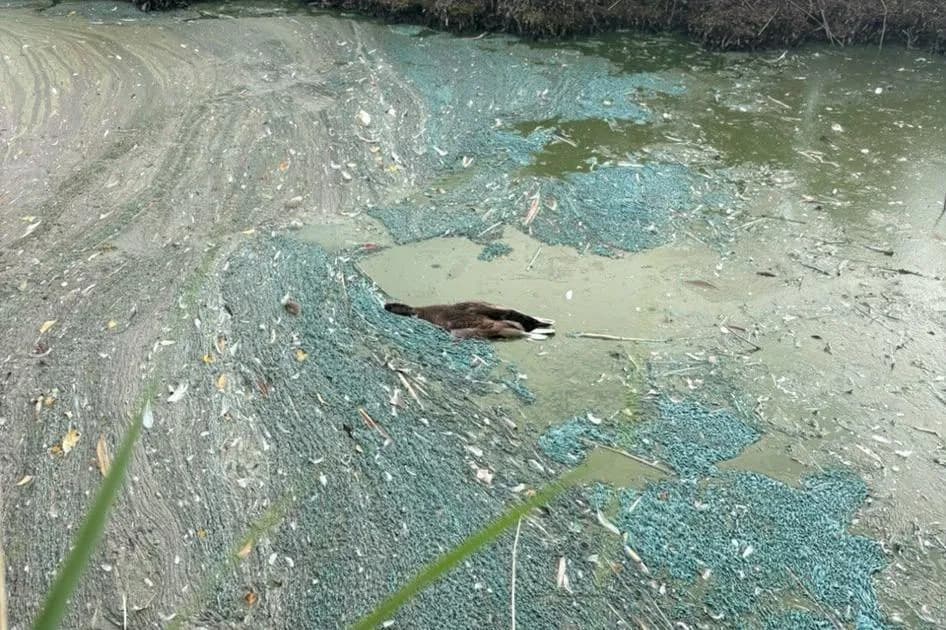
Other wildlife have also perished in recent weeks, Cockayne said [Hayley Cockayne]
Residents around Canvey Lake in Essex say they have been left "broken" and "devastated" after an entire swan family died following a toxic blue‑green algal bloom.
The lake’s two adult swans produced nine cygnets this year. Two were previously killed by foxes, and four were taken to South Essex Wildlife Hospital in June, where one later died from avian botulism. The remaining three cygnets and both adults were admitted to the same wildlife hospital on Tuesday amid growing concerns about the lake’s condition; all five birds died on Friday.
Local Response and Expert View
Martin England, 62, a member of Friends of Canvey Lake, called the episode an "environmental disaster." Sue Schwar, founder of South Essex Wildlife Hospital, said she was "100% sure" the deaths were linked to exposure to blue‑green algae.
"I'm absolutely broken. I'm devastated. I've spent four or five hours with them daily for the past three years," said local resident Hayley Cockayne. "I always said this year we would lose all the wildlife on this lake and I knew it was coming but it didn't make it any easier to accept."
Testing, Causes and Council Action
Laboratory tests in July 2025 detected roughly 2.5 million blue‑green algae cells per millilitre at Canvey Lake — more than 100 times the official warning threshold of 20,000 cells/ml. Blue‑green algae (cyanobacteria) can form a surface scum on still water and produce toxins that are harmful to birds, mammals and other wildlife.
Following the findings, Canvey Island Town Council surrendered its lease of the lake to Castle Point Borough Council. The borough council said it was "very saddened" by the loss of the swans and confirmed recent testing had detected blue‑green algae. An Environment Agency spokesperson said the agency is supporting Castle Point Borough Council in responding to the problem.
Restoration and Wider Context
In June the borough council allocated £500,000 toward lake restoration. The council later said plans for major restoration works were continuing and backed by £1m in funding. Officials noted that algal blooms are a naturally occurring risk in still waters during prolonged hot weather, and similar problems have been reported across the region amid recent heatwave and drought conditions.
Local campaigners and residents say other wildlife have also perished in recent weeks as the lake’s condition has deteriorated. Canvey Lake was designated a Local Nature Reserve in 1998 to protect its wildlife and improve site standards; many residents are calling for urgent, sustained action to restore the habitat.
What to watch next: further water-quality testing, details of the council’s restoration timetable and any public health or wildlife advisories from the Environment Agency or local authorities.
Help us improve.