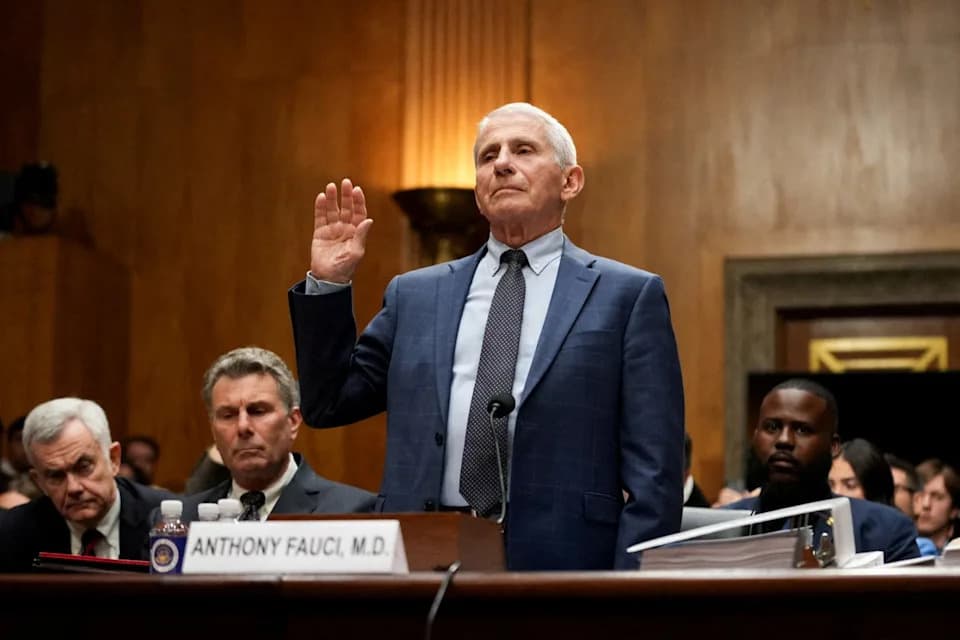
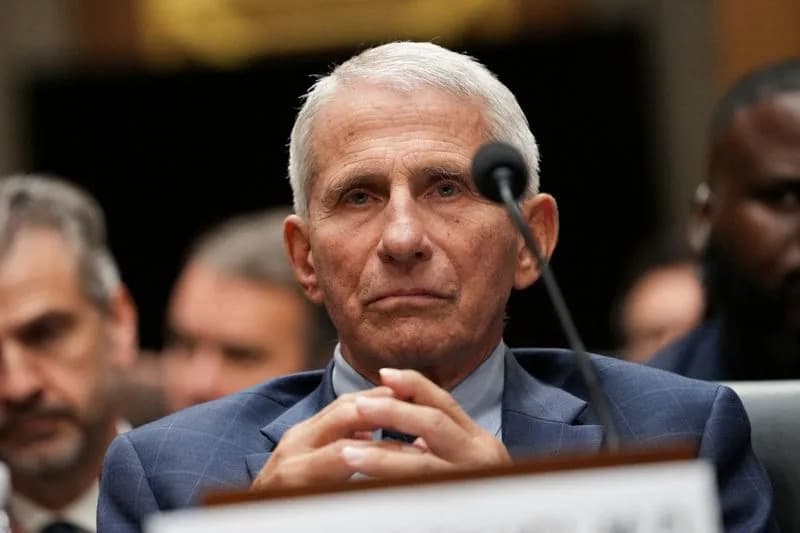
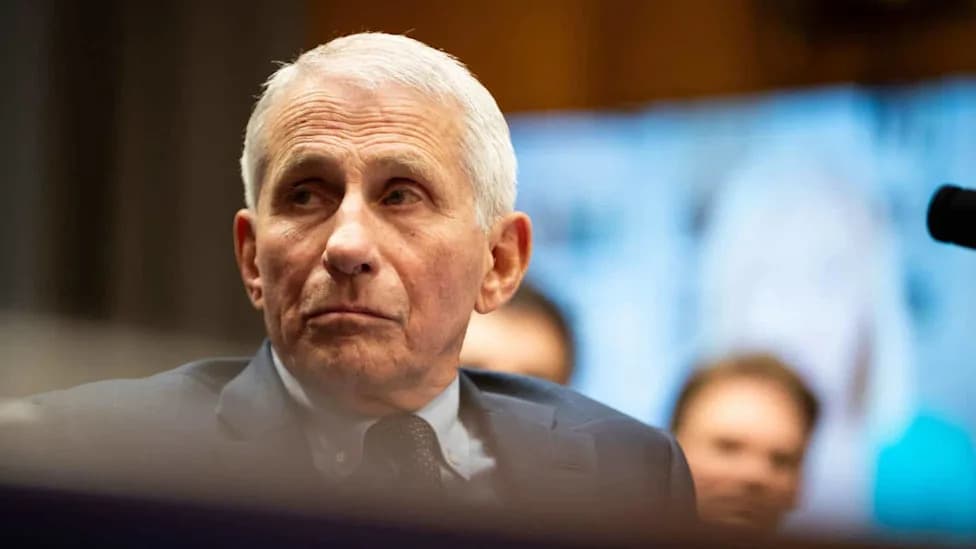
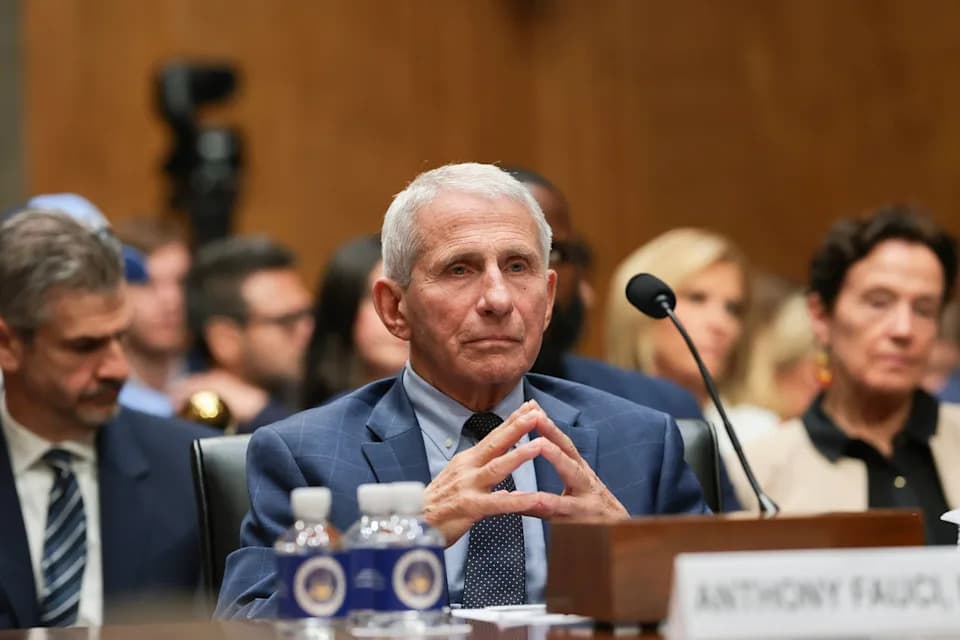
Dr. Anthony Fauci invoked the Fifth Amendment more than 100 times during a Senate hearing probing his pandemic decisions, prompting threats of contempt and possible prosecution from Senator Rand Paul. Fauci’s lawyer, David Schertler, said his client is "on solid legal ground" in asserting the Fifth. President Biden issued a pre-emptive pardon covering federal actions from 2014 through 2025, but state-level investigations — including one announced in Florida — remain possible. Any contempt resolution would face steep hurdles in the Senate and could lead to legal fights over pardons and testimony obligations.
Fauci’s Lawyer Says He’s on “Solid Legal Ground” After Invoking the Fifth in Heated Senate Hearing

Masks worn at a primary school in Stamford, Connecticut, in 2020 [Getty Images]
Dr. Anthony Fauci’s attorney says the former White House chief medical adviser is "on solid legal ground" after Fauci repeatedly invoked his constitutional right against self-incrimination during a contentious Senate hearing.
What Happened
Fauci appeared before the Senate Committee on Homeland Security and Governmental Affairs, chaired by Senator Rand Paul, for questioning about his role during the Covid-19 pandemic. According to reports, Fauci asserted the Fifth Amendment more than 100 times as he declined to answer questions the committee posed.
"Rand Paul may be a doctor, but he is not a lawyer," wrote Fauci’s lawyer, David Schertler, in an email to CBS, adding: "We are completely confident that Dr. Fauci has a valid Fifth Amendment privilege here and is on solid legal ground in asserting it."
Legal Issues at Play
Invoking the Fifth Amendment is a constitutional right that protects witnesses from answering questions that could incriminate them; doing so is not, in itself, a crime. Still, Senator Paul warned Fauci could face contempt-of-Congress proceedings for his refusal to testify. The committee plans a vote on a contempt resolution, which, if approved, would go to the full Senate — where passage would likely require 60 votes and thus Democratic support to advance.
Separately, President Joe Biden issued a pre-emptive pardon for Fauci covering government actions from 2014 through 2025, according to the report. That pardon would only apply to federal offenses, leaving open the possibility of state-level investigations. On Wednesday, Florida’s top prosecutor announced an inquiry into Fauci, though state officials provided no public specifics about alleged crimes.
Precedent, Pardons and Prosecution
Republican committee members pointed to an 1896 Supreme Court decision as precedent in disputes over testimony and pardons. Legal experts note that the interaction between a pardon and a witness’s obligation to testify can be complex and could prompt future court rulings should lawmakers pursue contempt charges and referral for prosecution.
Political Context and Broader Debate
The hearing also revisited partisan disputes over the origins of Covid-19. Senator Paul and other Republicans emphasized evidence suggesting a possible lab leak from the Wuhan Institute of Virology, a theory the CIA said last year it found more likely than not; Fauci has denied wrongdoing and defended his public health decisions. Democrats on the committee defended Fauci, with Senator Maggie Hassan saying the session appeared "designed to entrap" him. Former President Donald Trump posted on social media criticizing Fauci and restating his view that the virus originated in a lab.
Takeaway
The legal and political wrangling over Fauci’s testimony touches on constitutional rights, the scope of presidential pardons, federal versus state jurisdiction, and ongoing debates about how the pandemic began. Any determination about contempt or prosecution would likely trigger further legal challenges and could be decided in the courts.
Help us improve.