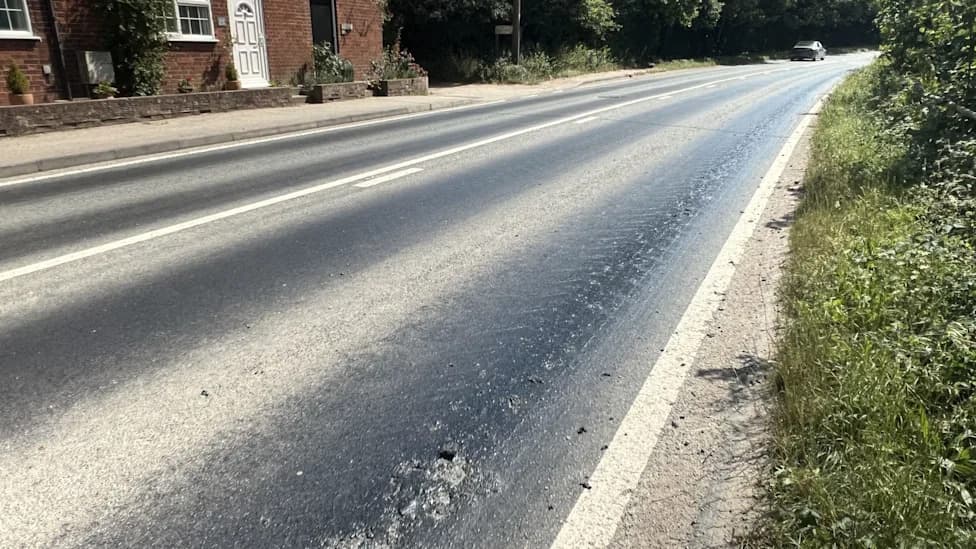
Los Angeles tested DuraShield-SR, a solar-reflective pavement coating, across more than 700,000 sq ft in Pacoima to evaluate neighborhood-scale cooling. A 12-month study published in Environmental Research Communications found treated surfaces cooled by over 16°F and ambient street air temperatures fell by up to 3.4°F during a heatwave. The pilot covered about 18 blocks around Hubert H. Humphrey Memorial Park and reported no major glare issues, suggesting reflective pavement could be a practical tool for urban heat mitigation.
Reflective Pavement Slashes Temperatures in Sweltering Pacoima Neighborhood
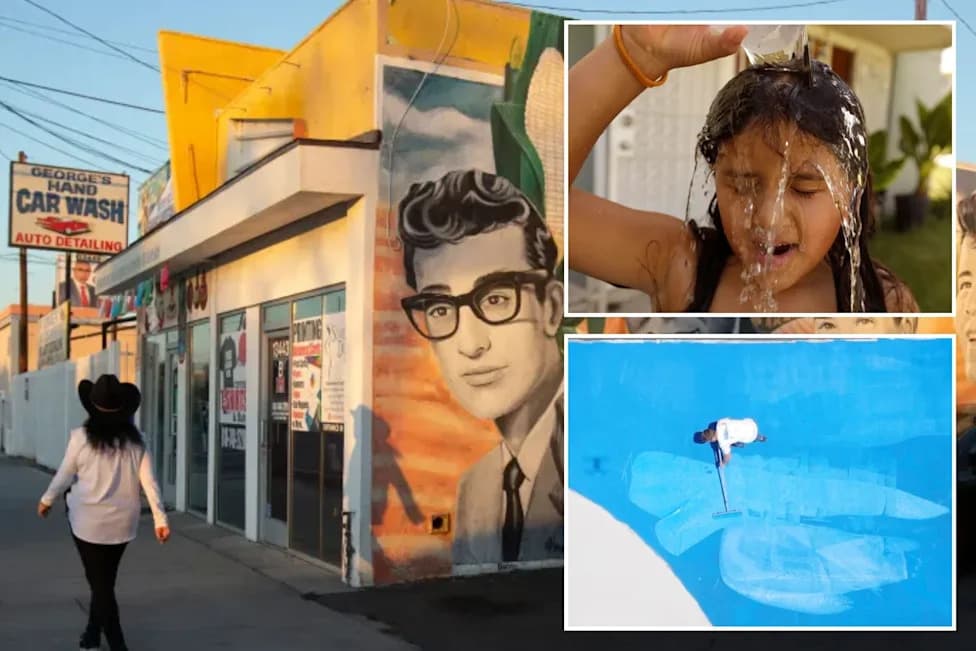
An image collage containing 3 images, Image 1 shows A mural depicting Ritchie Valens and other rock legends on Van Nuys Boulevard, Image 2 shows Young girl cooling off by pouring a cup of water over her head, Image 3 shows Two workers apply
Los Angeles is testing a ground-up approach to beat summer heat in Pacoima: more than 700,000 square feet of sun-baked asphalt were coated with a solar-reflective material to see whether changing street and lot surfaces can cool an entire community.
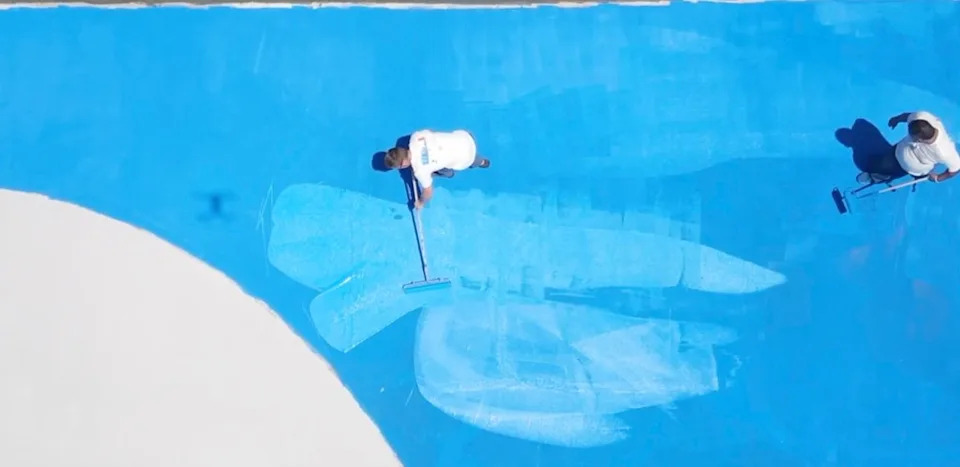
Researchers found that a specialty pavement coating called DuraShield-SR slashed surface temperatures. Climate Resolve
What the Pilot Did
City crews applied a specialty pavement coating called DuraShield-SR across roughly 18 blocks around Hubert H. Humphrey Memorial Park. The project covered neighborhood streets, parking lots, playgrounds and recreational spaces in a largely asphalt-dominated area of the northern San Fernando Valley.

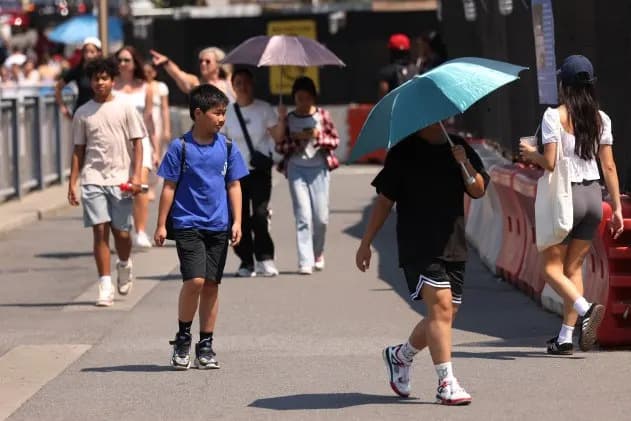
In Pacoima, a neighborhood tucked in the San Fernando Valley, summer heatwaves are infamous. Los Angeles Times via Getty Images
Key Findings
According to a study published in Environmental Research Communications, the reflective coating reduced pavement surface temperatures by more than 16°F. Importantly, ambient air temperatures measured along treated streets dropped by up to 3.4°F during a heatwave — a potentially meaningful reduction for residents during extreme heat events.
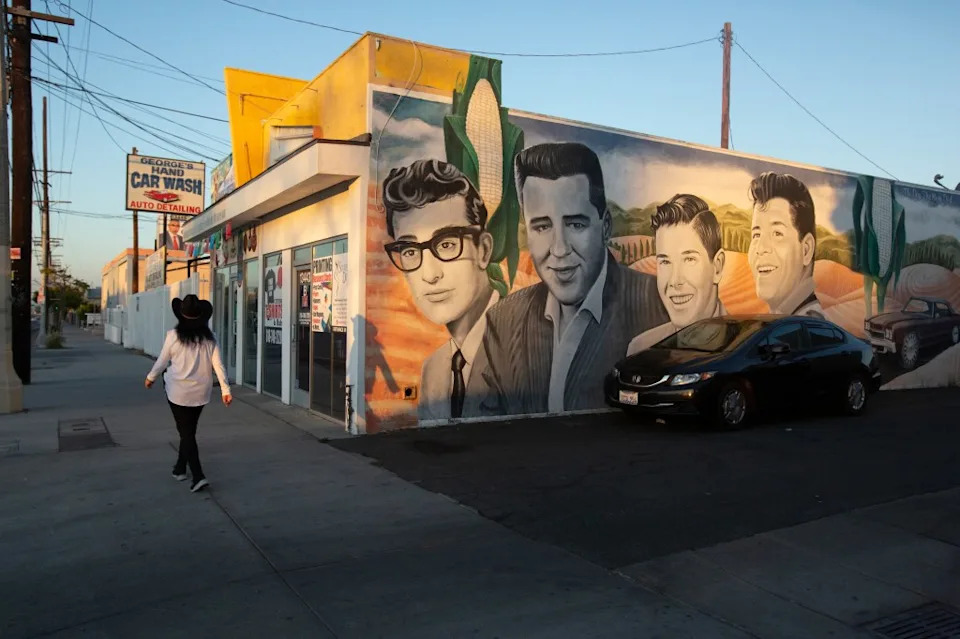
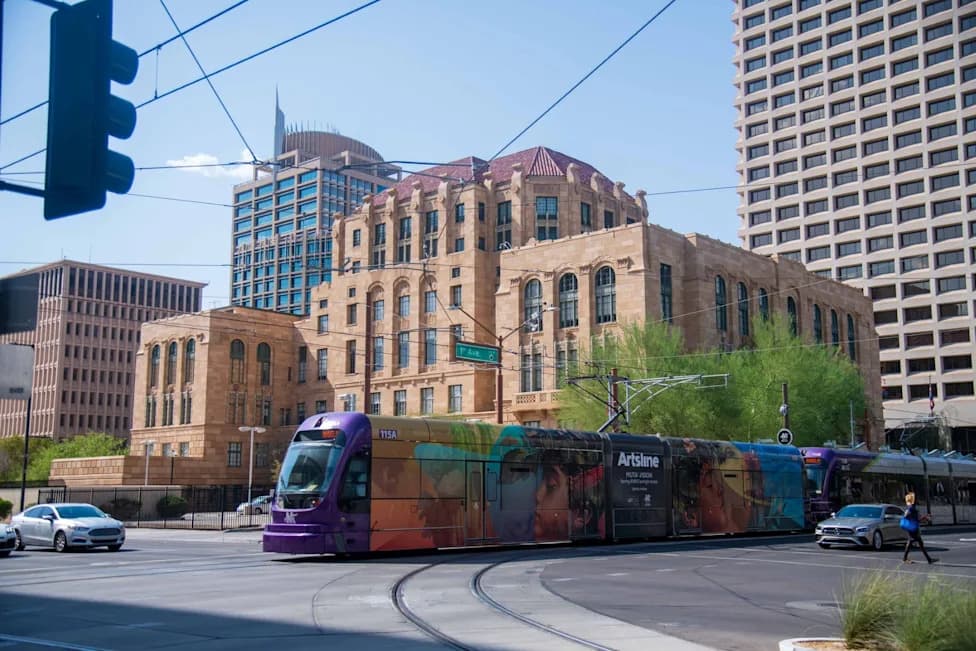
Levi Ponce's mural on Van Nuys Boulevard in Pacoima, is a tribute to Ritchie Valens and other rock legends who died in an Iowa corn field in a plane crash in 1959. The mural sits next to a drive through burger joint. The Washington Post via Getty Images
Why It Works
Traditional dark asphalt absorbs and stores solar energy all day. The reflective coating reverses that behavior by bouncing a large share of incoming sunlight back into the atmosphere before it heats the pavement, cutting both surface and local air temperatures in areas dominated by blacktop or concrete.
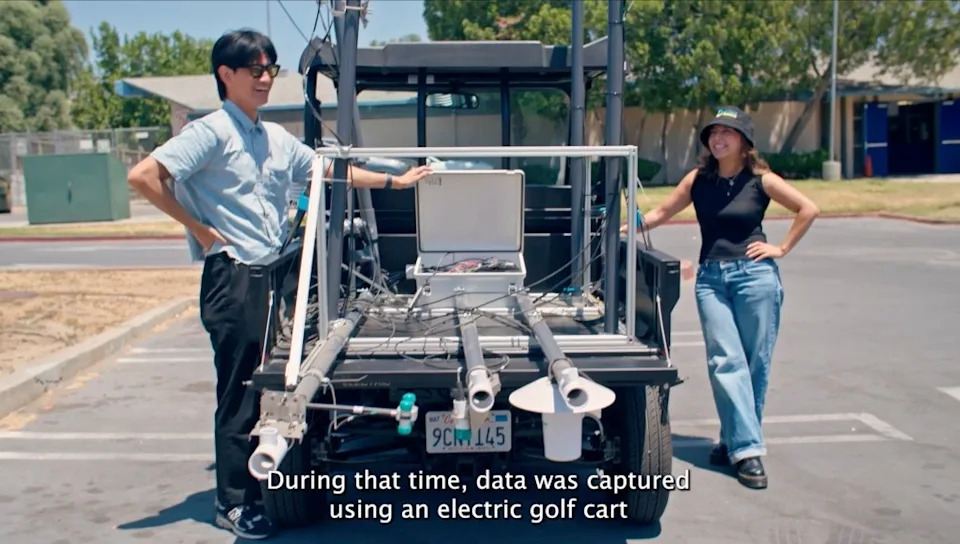
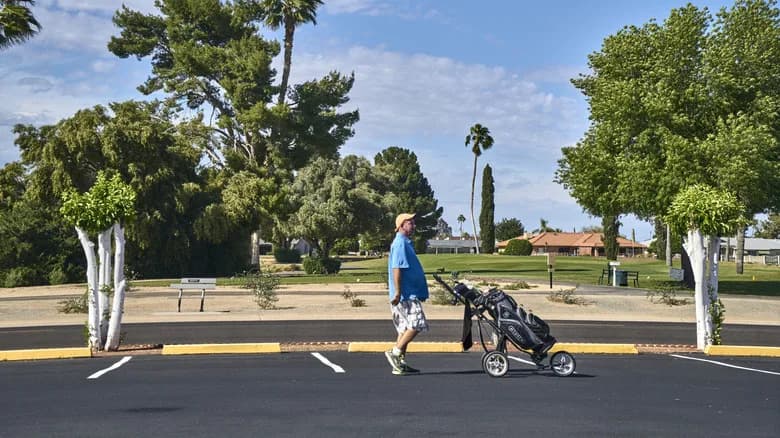
To verify the tech, researchers went all out over a 12-month period, using weather stations, satellite imagery, drones, thermal sensors and even an electric golf cart loaded with monitoring equipment to measure the experiment. Climate Resolve
How the Team Measured Results
The pilot included a 12-month monitoring campaign. Researchers used weather stations, satellite imagery, drones, thermal sensors and a mobile monitoring cart (an electric golf cart equipped with instruments) to collect granular, neighborhood-scale data across seasons and during heatwaves.
Community Context and Concerns
The treatment took place in a part of Pacoima known for punishing summer heat; nearby public art such as Levi Ponce’s mural on Van Nuys Boulevard helps illustrate the neighborhood context. Some residents and observers worried the lighter surface might create blinding glare, but researchers reported no major reflection or glare issues during the study period.
Implications
The results suggest cool-pavement treatments like DuraShield-SR could be a scalable tool for urban heat mitigation, particularly in heat-vulnerable neighborhoods. Further study on durability, cost, maintenance and wider-scale implementation will help determine how broadly the approach can be adopted.
Help us improve.