The study models a rooftop rainwater capture-and-sprinkle system for a Tokyo neighborhood and finds it can cool roof surfaces, reduce building cooling demand, and lower urban heat exposure. Sprinkling operated during June–September, typically 9 a.m.–7 p.m., with the activation temperature having the greatest impact on outcomes. Over a 10-year simulation, roof extreme-heat hours fell by about 592.5–1,221 hours and urban canyon exposure ≥35°C dropped by 86–297.5 hours. Authors caution results are model-based and practical feasibility depends on rainfall, costs, and regulations.
Sprinkling Harvested Rainwater on Rooftops Could Cool Cities and Cut AC Use, Model Shows
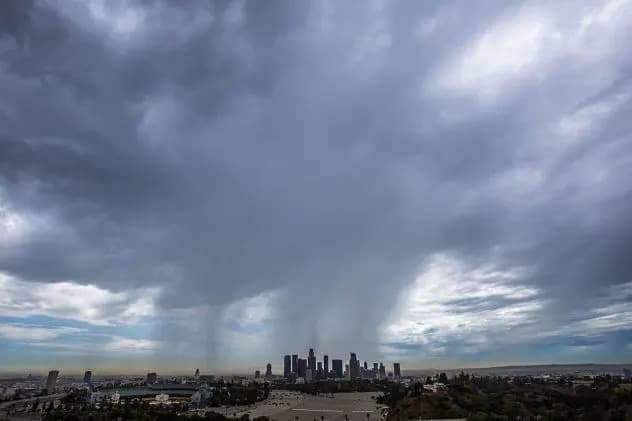
Light rain and clouds are seen over downtown on Sept. 8, 2026, in Los Angeles, California. (Photo by Apu Gomes/Getty Images)
A new modeling study suggests that collecting rainwater in rooftop tanks and periodically spraying it onto roof surfaces can reduce urban heat exposure and lower building cooling demand during hot months.
How the System Works
The proposed system captures rooftop runoff in storage tanks and activates sprinklers when roof-surface temperatures exceed a preset threshold. Spraying moistens the roof, increasing evaporative cooling and reducing heat transfer into buildings. In the Tokyo-based simulation, sprinkling typically ran from about 9 a.m. to 7 p.m. during the hottest months (June–September), with peak benefits around noon when surface temperatures were highest.
Key Findings From the Model
Simulations for a Tokyo neighborhood over a 10-year period produced these main results:
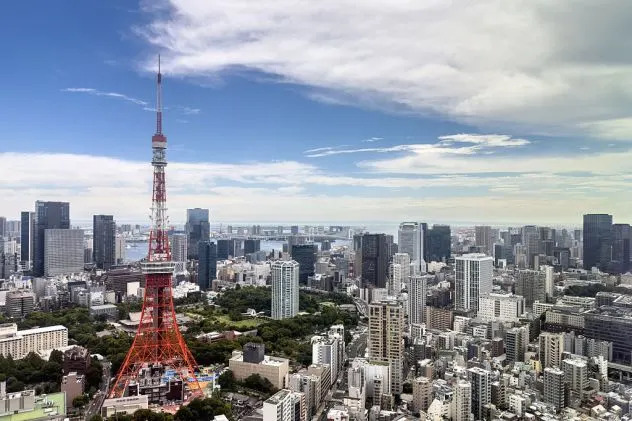
This picture taken from Azabudai Hills on August 28, 2026, shows the Tokyo Tower and the city skyline in Tokyo. (Photo by Philip FONG / AFP via Getty Images)
- Roof extreme-heat hours were reduced by approximately 592.5 to 1,221 hours over 10 years.
- Exposure to urban canyon air temperatures ≥35°C (95°F) declined by about 86 to 297.5 hours.
- The temperature threshold that triggers sprinkling had a larger influence on outcomes than either sprinkler intensity or tank size.
- Under limited water availability, longer-duration, moderate-intensity sprinkling preserved useful wetting and saved more air-conditioning energy than short, high-intensity bursts.
- Larger tanks generally produced greater benefits, but gains diminished with increasing tank volume; larger tanks did not continually increase reductions in heat-wave intensity.
Why Tokyo?
Researchers selected Tokyo for the case study because it has hot, humid summers and relatively established rainwater-harvesting practices. The city's subtropical monsoon climate—with abundant rainfall and pronounced seasonal changes—provided a relevant context for testing the approach.
“As the roof surface becomes increasingly wet, the excess water may remain on the roof without being effectively used for evaporation,” the authors note, and they highlight that activation threshold, duration, and intensity must be balanced to maximize cooling while conserving water.
Limitations and Practical Considerations
The authors emphasize that their results come from process-based computer modeling and that direct field validation is lacking. Practical feasibility will depend on local rainfall patterns, climate, installation and operating costs, building and plumbing constraints, and regulations governing rainwater harvesting. Roof design, drainage, and potential water pooling must also be addressed to avoid inefficiencies or damage.
Next Steps
The study points to the need for pilot field trials to validate modeled benefits, refine sprinkler-control strategies, and evaluate cost-effectiveness. Integrating sprinkling with other heat-mitigation measures—such as reflective (cool) roofs, green roofs, and urban greening—could improve overall performance as cities adapt to rising temperatures.
Bottom line: Harvested-rainwater sprinkling is a promising, model-supported strategy to reduce roof and neighborhood heat and cut cooling demand in warm climates, but it requires field testing and careful design to be practical and effective.
Help us improve.