The study reconstructs language diversity across the Holocene, finding that while about 7,500 languages are spoken today, diversity likely peaked at tens of thousands between the first millennium BC and AD. Researchers used mathematical models informed by anthropology, linguistics and demography, drawing on group-size data from 171 hunter-gatherer societies to estimate early language counts. The decline in diversity is tied to empire expansion, colonial policies and social forces that drive language shift; roughly half of today’s languages are endangered.
Study Shows Dramatic, Long-Term Drop in Global Language Diversity

A baked clay fragment called the Flood Tablet dating to the 7th century B.C., inscribed in cuneiform in the Akkadian language, presents the account of a great flood in the ancient Mesopotamian Epic of Gilgamesh, at the British Museum in London, Britain, September 2, 2022. Picture taken with mobile phone. REUTERS/Will Dunham
WASHINGTON, July 27 (Reuters) - A new study reconstructing language use across the Holocene epoch finds that global linguistic diversity has fallen sharply over millennia. Today about 7,500 languages are spoken worldwide (counting native and nonnative users), but researchers estimate that humanity once used tens of thousands of distinct languages at its historical peak.
How Researchers Reconstructed the Past
The team combined mathematical modeling with evidence and methods from anthropology, linguistics and demography to estimate language counts over roughly the past 12,000 years. Because direct historical records are sparse, they used assumptions about the relationships between social groups and languages and simulated how languages diversify and disappear over time.
To estimate early ethnolinguistic group sizes, the researchers analyzed data from 171 extant hunter-gatherer societies across Africa, South America and Southeast Asia and applied those patterns to population estimates for the start of the Holocene. Their model suggests that around 12,000 years ago there may have been about 4,500 to 6,200 languages.
When Diversity Peaked—and Why It Fell
The analysis indicates a peak in linguistic diversity between the first millennium BC and the first millennium AD, when tens of thousands of languages may have been in use. The authors estimate a historical high in the range of roughly 30,000 to possibly more than 75,000 languages at any one time.
Subsequent millennia saw major declines driven by factors that replace, merge or extinguish languages: the expansion of large empires in antiquity, population displacement and collapse, and more recently European colonialism and its language policies. Language loss occurs when entire communities disappear, when speakers shift voluntarily to other tongues, or when they are coerced into abandoning their native languages.
"Languages are meaningful to their communities. They carry knowledge, associations and memories," said Claire Bowern, professor of linguistics and anthropology at Yale and a study leader. "For scientists, languages contain enormous information about the past — from where people lived to what they ate — and they offer a window into the human mind."
Languages also evolve: for example, Latin gradually transformed into French, Italian and Spanish after the fall of the Western Roman Empire. Colonial-era language policies further accelerated replacement — examples include English suppression of Irish, Spain and Portugal restricting indigenous languages in the Americas, France promoting French in African colonies, and Japan suppressing Korean during its rule over Korea. Still, many indigenous languages persisted despite repression.
What This Means Today
About half of the world’s languages are now considered endangered. The researchers highlight an extreme imbalance: roughly 90% of the global population speaks only 10% of the world’s languages, leaving many languages with very small speaker populations and at high risk of disappearing.
Study lead author Damian Blasi, a cognitive scientist and evolutionary anthropologist at the Catalan Institution for Research and Advanced Studies, emphasized the lost cultural breadth: "Until just a few thousand years ago, humanity inhabited a vastly more diverse cultural world than the one we know today."
(Reporting by Will Dunham; Editing by Daniel Wallis)
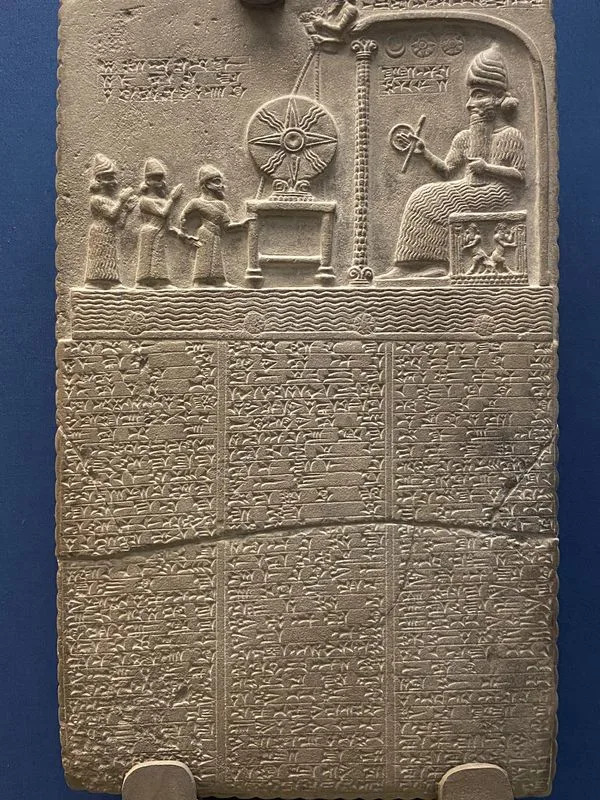
The Tablet of Shamash, a limestone stele dating to the 9th century B.C. from the ancient Babylonian city of Sippar in modern-day Iraq, bears a cuneiform inscription in the Akkadian language, displayed at the British Museum in London, Britain, September 2, 2022. Picture taken with mobile phone. REUTERS/Will Dunham
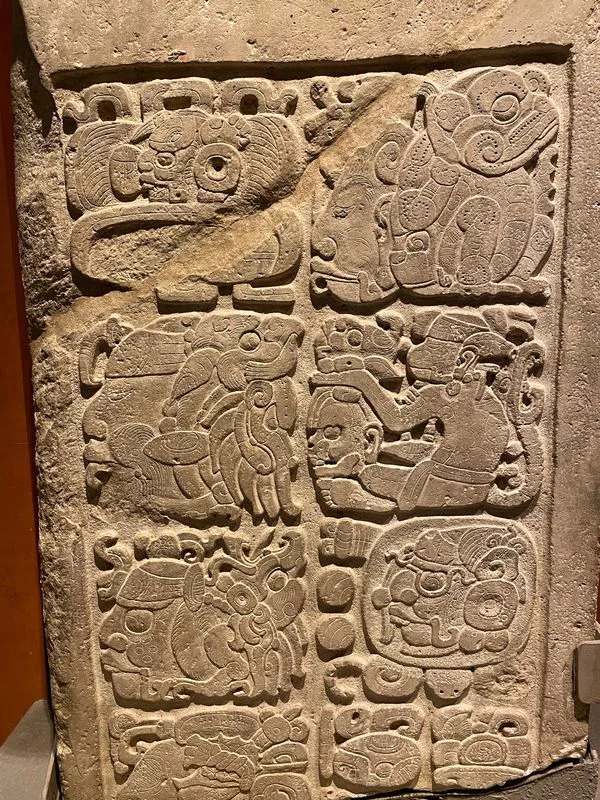
A limestone lintel called Lintel 48, which was set above a door in a structure at the ancient Maya city of Yaxchilan in Chiapas, Mexico, exhibits Maya glyphs and bears a date corresponding to 526 A.D., displayed at Museo Nacional de Antropologia in Mexico City, Mexico, January 25, 2023. Picture taken with mobile phone. REUTERS/Will Dunham
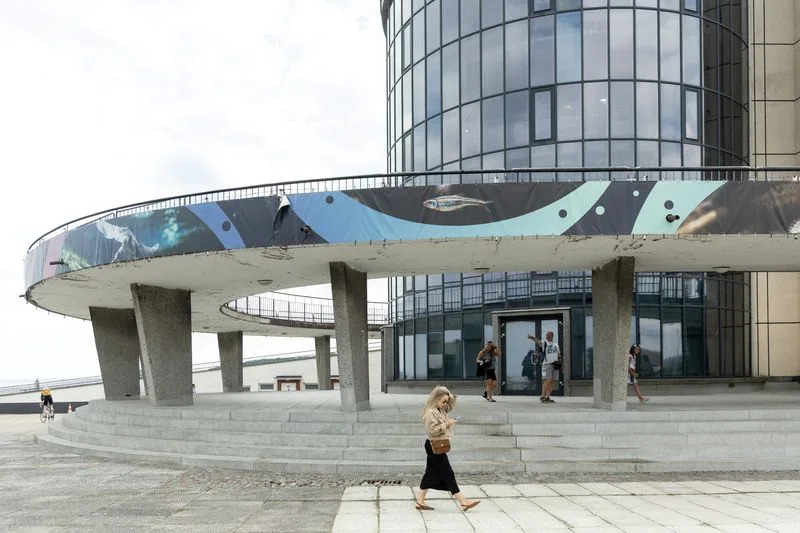
People walk in front of the Gdynia Aquarium building, a site on the Gdynia Modernism Trail, in Gdynia, Poland, July 25, 2026. REUTERS/Lukasz Glowala

An interior view of the modernist Hala Targowa (Market Hall), a key site on the Gdynia Modernism Trail in Gdynia, Poland, July 25, 2026. REUTERS/Lukasz Glowala

People walk along Starowiejska Street showing the Hundsdorff Family Apartment House, a building on the Gdynia Modernism Trail, in Gdynia, Poland, July 25, 2026. REUTERS/Lukasz Glowala

The Ogonczyk-Bloch and Mazalon Tenement House at Swietojanska Street, a building on the Gdynia Modernism Trail, in Gdynia, Poland, July 25, 2026. REUTERS/Lukasz Glowala

The District Court building, a site on the Gdynia Modernism Trail, in Gdynia, Poland, July 25, 2026. REUTERS/Lukasz Glowala

Interior view of Paimio Sanatorium, designed by Finnish architects Alvar and Aino Aalto in 1929 and completed in 1933 as a tuberculosis hospital, is one of the 13 sites included in the Aalto Works nomination seeking inscription on UNESCO's World Heritage List, in Paimio, Finland July 1, 2026. REUTERS/Elviira Luoma

Interior view of Paimio Sanatorium, designed by Finnish architects Alvar and Aino Aalto in 1929 and completed in 1933 as a tuberculosis hospital, is one of the 13 sites included in the Aalto Works nomination seeking inscription on UNESCO's World Heritage List, in Paimio, Finland July 1, 2026. REUTERS/Elviira Luoma

Exterior view of Paimio Sanatorium, designed by Finnish architects Alvar and Aino Aalto in 1929 and completed in 1933 as a tuberculosis hospital, is one of the 13 sites included in the Aalto Works nomination seeking inscription on UNESCO's World Heritage List, in Paimio, Finland July 1, 2026. REUTERS/Elviira Luoma
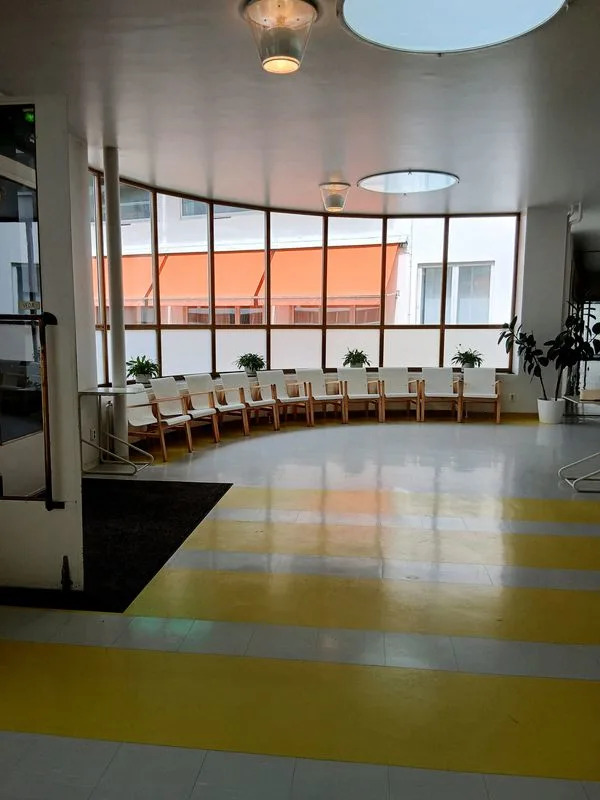
Interior view of Paimio Sanatorium, designed by Finnish architects Alvar and Aino Aalto in 1929 and completed in 1933 as a tuberculosis hospital, is one of the 13 sites included in the Aalto Works nomination seeking inscription on UNESCO's World Heritage List, in Paimio, Finland July 1, 2026. REUTERS/Elviira Luoma

People gather in the exhibition hall during the opening day of Comic-Con International in San Diego, California, U.S., July 23, 2026. REUTERS/Daniel Cole

James Marsden attends the Marvel Panel cast call at the Hilton Bayfront during Comic Con in San Diego, California, U.S., July 25, 2026. REUTERS/Sandy Huffaker

Hannah John-Kamen, Danny Ramirez and Winston Duke attend the Marvel Panel cast call at the Hilton Bayfront during Comic Con in San Diego, California, U.S., July 25, 2026. REUTERS/Sandy Huffaker

Kevin Feige attends the Marvel Panel cast call at the Hilton Bayfront during Comic Con in San Diego, California, U.S., July 25, 2026. REUTERS/Sandy Huffaker

Simu Liu attends the Marvel Panel cast call at the Hilton Bayfront during Comic Con in San Diego, California, U.S., July 25, 2026. REUTERS/Sandy Huffaker

Attendees walk through the exhibition hall during the opening day of Comic-Con International in San Diego, California, U.S., July 23, 2026. REUTERS/Daniel Cole

Attendees gather in the exhibition hall during the opening day of Comic-Con International in San Diego, California, U.S., July 23, 2026. REUTERS/Daniel Cole

FILE PHOTO: Attendees walk through the exhibition hall during the opening day of Comic-Con International in San Diego, California, U.S., July 23, 2026. REUTERS/Daniel Cole/File Photo

Attendees gather in the exhibition hall during the opening day of Comic-Con International in San Diego, California, U.S., July 23, 2026. REUTERS/Daniel Cole

FILE PHOTO: Roman Zaragoza, Jessica Matten, Eric Nam and Dionne Quan, voice cast members of "Avatar Aang: The Last Airbender", attend the opening day of Comic-Con International in San Diego, California, U.S., July 23, 2026. REUTERS/Arafat Barbakh/File Photo

Cast and creators of "Avatar Aang: The Last Airbender" attend the opening day of Comic-Con International in San Diego, California, U.S., July 23, 2026. REUTERS/Arafat Barbakh

Director Lauren Montgomery and co-creators Michael DiMartino and Bryan Konietzko, of "Avatar Aang: The Last Airbender", pose on the opening day of Comic-Con International in San Diego, California, U.S., July 23, 2026. REUTERS/Arafat Barbakh

FILE PHOTO: 82nd Venice Film Festival Director Alberto Barbera poses on the red carpet during the closing ceremony of the 82nd Venice International Film Festival, in Venice, Italy, September 6, 2025. REUTERS/Yara Nardi/File Photo

FILE PHOTO: Workers set up the red carpet a day before the start of the 82nd Venice Film Festival in Venice, Italy, August 26, 2025. REUTERS/Yara Nardi/File Photo

FILE PHOTO: Rome Mayor Roberto Gualtieri speaks in Rome, Italy December 23, 2024. REUTERS/Remo Casilli/File Photo

FILE PHOTO: Tourists queue under the sun outside the Colosseum during hot weather in Rome, Italy, June 20, 2026. REUTERS/Guglielmo Mangiapane/File Photo

FILE PHOTO: A man walks near a billboard reading "The heat can kill you even at work. If they make you work in extreme heat, call the toll-free number" during a heatwave, in Rome, Italy, June 30, 2026. REUTERS/Guglielmo Mangiapane/File Photo
Help us improve.