Chinese scientists led by Wang Kejian report that an endogenous rice gene, HUAXU, can trigger parthenogenesis and enable clonal reproduction of hybrid rice seed at >99% efficiency. The Fix8 lines maintained this rate across varieties, generations, and field trials, potentially allowing farmers to save and replant hybrid seed without losing yield advantages. Because HUAXU is native to rice, the approach may face fewer regulatory hurdles than transgenic methods, and estimates suggest seed costs could fall from 20–100 yuan to about 2–5 yuan per half-kilogram. Further long-term testing and regulatory review are still needed before commercial deployment.
Native HUAXU Gene Enables >99% Clonal Reproduction of Hybrid Rice, Potentially Slashing Seed Costs
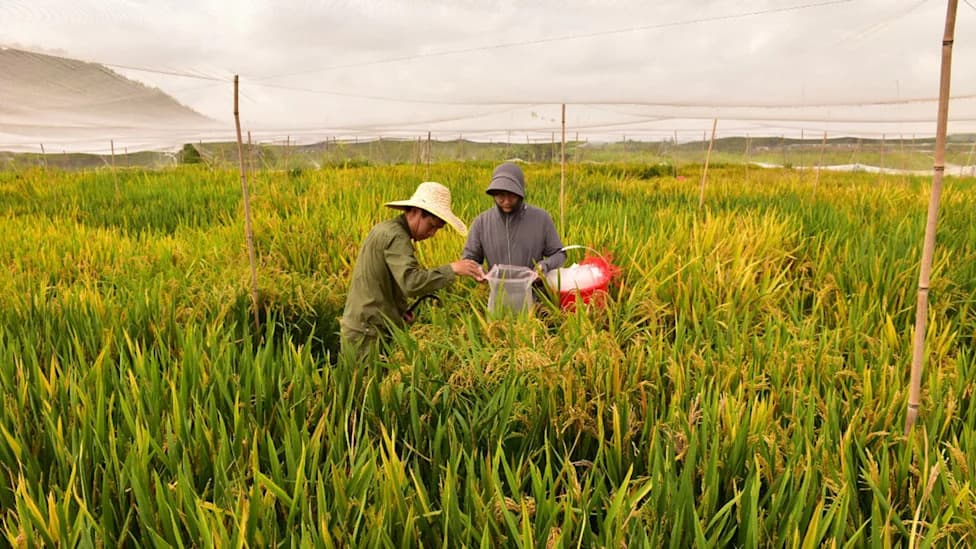
China achieves 99% hybrid rice seed cloning with HUAXU gene, cuts annual seed costs
Chinese researchers led by Wang Kejian at the China National Rice Research Institute report a major advance in hybrid rice breeding: an endogenous rice gene named HUAXU can trigger parthenogenesis in egg cells, enabling clonal seed reproduction at rates above 99% while maintaining normal yields. The work, published in the journal Vita on July 21, was validated across multiple hybrid varieties, generations, planting environments, and large-scale field trials.
How the System Works
The team expressed HUAXU in egg cells of hybrid rice to induce parthenogenesis—development of an embryo without fertilization. Combined with a clonal-gamete breeding strategy, the resulting lines (named Fix8) produced seed that were genetic clones of the parent hybrid in more than 99% of cases, effectively allowing farmers to save and replant hybrid seed without losing hybrid vigor.
Why This Matters
Hybrid rice delivers higher yields through heterosis (hybrid vigor), but those benefits normally disappear if farmers replant hybrid seed because offspring segregate and lose the hybrid combination. Producing hybrid seed is costly—typically 10 to 20 times the cost of conventional seed—so farmers often must buy new seed each season. By enabling reliable clonal reproduction, the Fix8 approach could dramatically reduce seed costs and expand access to high-yield hybrids, particularly in low-income regions.
Key Results and Context
Wang's group began pursuing apomixis in 2013. Their first system (2017) reached only ~5% cloning efficiency; other groups later reported roughly 95% using multiple genetic changes. Identifying an endogenous trigger—HUAXU—offers a higher-efficiency route while avoiding foreign transgenes, which the authors say could simplify regulatory review and commercialization.
In field trials the Fix8 lines maintained >99% cloning efficiency across varieties, successive generations, and diverse planting conditions. The team estimates Fix8 seed production costs could drop to roughly 2–5 yuan per half-kilogram versus 20–100 yuan for typical conventional hybrid seed in China.
Potential Global Impact
Currently hybrid rice covers about 50% of rice area in China but only ~5% globally, despite typical yield gains of 10–30% from hybrids. If clonal one-line hybrids like Fix8 were widely adopted, even a modest increase in global hybrid coverage—for example to 25%—could materially increase rice production and strengthen food security. The one-line system would also give breeders greater flexibility to deploy genetic diversity and build tolerance to climate stress, pests, and disease without the recurring constraint of yearly seed production.
Caveats and Next Steps
While results are promising, several important issues remain: long-term agronomic performance across more environments, potential ecological or evolutionary impacts, intellectual property and seed-distribution models, and national regulatory reviews. Although HUAXU is endogenous to rice (which may ease some regulatory hurdles), any genetic modifications will still face biosafety assessment and commercial validation before broad deployment.
Bottom line: HUAXU-driven Fix8 lines represent a significant step toward practical apomixis in hybrid rice—offering a potentially transformative way to preserve hybrid vigor while cutting seed costs—yet further testing, regulatory review, and commercialization pathways remain to be completed.
Help us improve.