
Mark Zuckerberg's 387-foot Feadship, Launchpad, reportedly travelled nearly 100,000 km and is estimated to have burned about 5.3 million liters of diesel, costing roughly €5.7M (≈$6.5M) and producing ~14,300 tonnes of CO2. The yacht's arrival in Seattle coincided with about 1,400 local Meta layoffs, creating stark optics between luxury consumption and corporate downsizing. Analysts and advocates say the episode underscores the need for stronger corporate disclosure and policy action to curb large, disproportionate emissions.
Zuckerberg’s 387‑Foot Superyacht Burned an Estimated $6.5M in Fuel Before Showing Up in Seattle
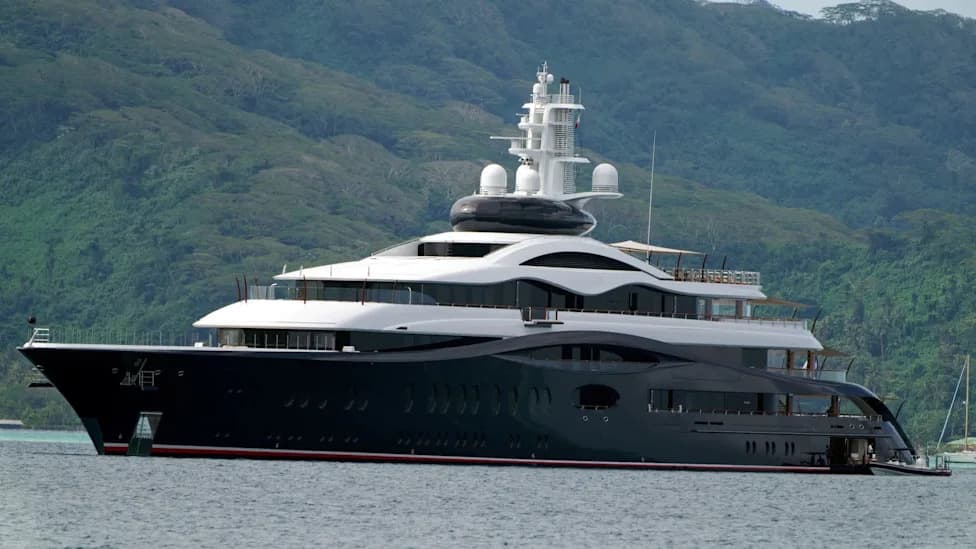
Photo Credit: Getty Images
Mark Zuckerberg's 387-foot Feadship superyacht, Launchpad, drew attention when it passed through Seattle's Ballard Locks and into Lake Union on the same day Meta announced roughly 1,400 local layoffs. The striking image — a luxury vessel tied to massive fuel use arriving amid job cuts — renewed debate about inequality, corporate optics, and climate responsibility.
Tracking data compiled by Luxury Launches, which cites AIS records and reporting from Il Messaggero, indicates the yacht has logged nearly 100,000 km (about 62,000 miles) since delivery in early 2024. Across that distance, analysts estimate Launchpad consumed roughly 5.3 million liters (about 1.4 million gallons) of diesel fuel.
Those estimates translate to a fuel bill on the order of €5.7 million (about $6.5 million) and roughly 14,300 tonnes (about 15,763 short tons) of CO2 emissions. To put that in perspective, that amount of CO2 is comparable to the annual emissions of approximately 800–900 Americans or thousands of years of driving for an average passenger car. Estimates like these depend on assumptions about operating speed, engine efficiency, and time spent underway or at anchor; they should be read as well‑informed approximations rather than exact tallies.
Launchpad: Size and Amenities
The Feadship Launchpad measures about 118 meters (387 feet), accommodates up to 26 guests across 13 cabins, and operates with a crew of roughly 49. Reported amenities include a swimming pool, hot tub, movie room, wellness and fitness areas, a beach club, an onboard lift, and a helipad housed in an enclosed hangar.
Why This Matters
A small number of ultra‑luxury assets can generate outsized emissions, highlighting a tension between public calls for conservation and high levels of private consumption. The optics are particularly stark when a company CEO's high‑consumption lifestyle becomes visible in the same community where employees are losing jobs.
Meta has pledged to reach net‑zero emissions across its value chain by 2030, yet the company reported net emissions of about 8.2 million tonnes of CO2e in 2024. Separately, data shared by Luxury Launches from shareholder advocacy group As You Sow indicates emissions tied to Meta's data center energy use have risen sharply — by roughly 223% since 2019.
Big Picture: Climate pollution drives hotter summers, more severe storms, poorer air quality, and higher costs for housing, insurance, and food. High‑profile displays of extreme fuel consumption can inflame public frustration and intensify calls for stronger corporate accountability.
Addressing disproportionate emissions is unlikely to come from individual offsets alone. Advocates point to collective solutions: stronger corporate disclosure and reporting rules, cleaner public transit, energy‑efficient buildings and vehicles, and policies that curb high‑emissions luxury travel and energy use at scale.
Sources: Luxury Launches (AIS tracking), Il Messaggero, As You Sow, and Meta's published emissions data.
Help us improve.





















