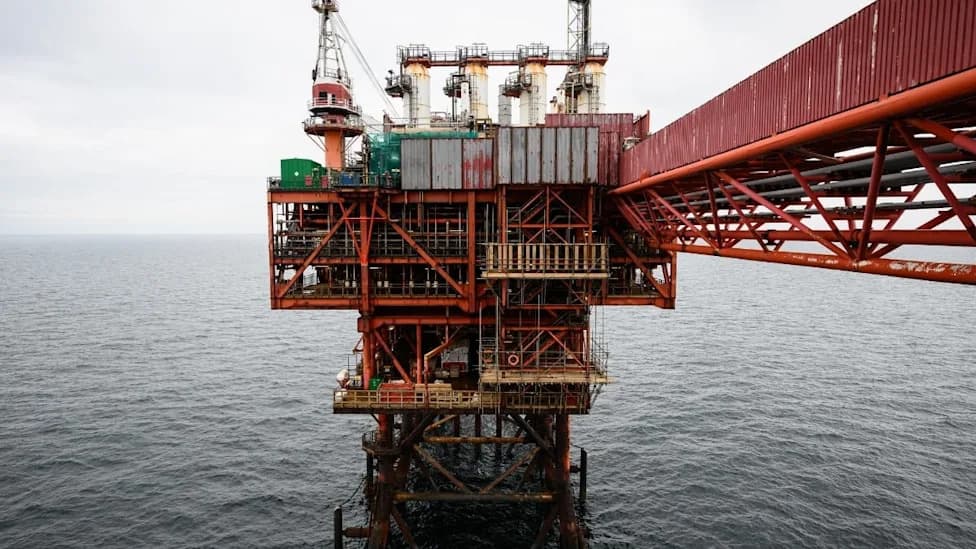
Heriot-Watt University researchers found that many larger microplastic particles retain a "memory" of earlier motion, which alters how they respond to waves and where they drift. Published in Physics of Fluids, the study shows that models assuming only instantaneous conditions may miss important transport behavior. Accounting for these memory effects could improve pollution forecasts, monitoring and risk assessment for marine environments.
Ocean Microplastics Carry a "Memory" That Changes How They Drift, Study Finds
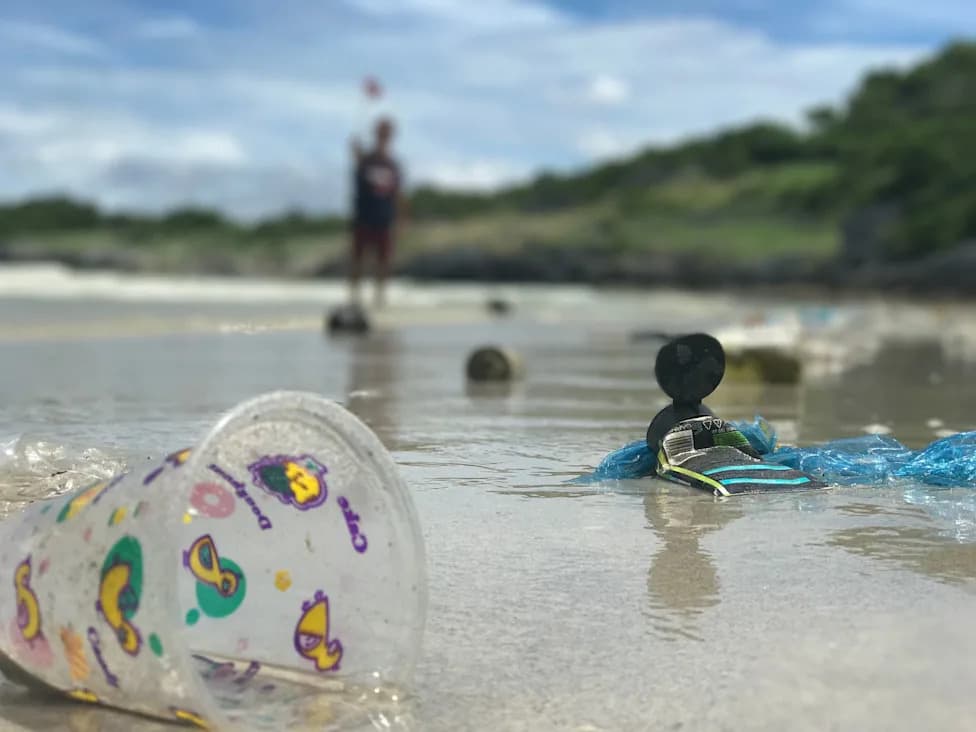
Plastic trash lying on a beach in Ko Sih Chang. (is associated with: «Ocean microplastics carry 'memory' of their movement, study finds») Christoph Sator/dpa
Researchers at Heriot-Watt University report that many larger microplastic particles retain a kind of "memory" of their prior motion that affects how they respond to waves and where they ultimately travel.
Key Findings
A study published in the journal Physics of Fluids shows that, for particles toward the upper end of the microplastic size range, their earlier interactions with waves continue to influence their subsequent trajectories. This contrasts with conventional models that assume particle motion depends only on instantaneous local conditions.
Microplastics are defined as particles under five millimetres in size, typically produced when larger plastic objects fragment. These particles can harm marine life and disrupt ecosystems, making improved transport predictions important for environmental monitoring and mitigation.
Why "Memory" Matters
The research identifies when these memory effects become significant for transport predictions and demonstrates that accounting for them can change estimates of how far and where particles travel. That has practical implications for forecasting accumulation zones, designing cleanup efforts and assessing ecological risk.
Cathal Cummins, associate professor in the School of Mathematical and Computer Sciences at Heriot-Watt University, said: "Our work shows that larger microplastic particles effectively carry a memory of their previous motion through the water. That memory changes how they respond to waves and can have a significant impact on how far they travel."
Mary Eby, a PhD researcher at Heriot-Watt University, added that the findings should help future studies build a more complete picture of microplastic transport and provide additional context for earlier work.
Implications
Incorporating memory effects into mathematical and numerical models can improve the reliability of pollution forecasts, support targeted monitoring and refine risk assessments for marine ecosystems. The study paves the way for more realistic simulations of plastic drift and accumulation in the ocean.
Help us improve.