Bottom line: H.R. 7008 passed the House 232–198 on July 22, 2026. The bill would ban certain stock purchases by Members of Congress and their spouses and dependent children, and it would add a federal photo‑ID requirement for voting in federal elections. Therefore, many votes against the bill could reflect opposition to either the voter‑ID provision, the trading restrictions, or both.
Fact Check: House Passed H.R. 7008 — Stock‑Trading Ban Was Bundled With A Federal Voter‑ID Requirement
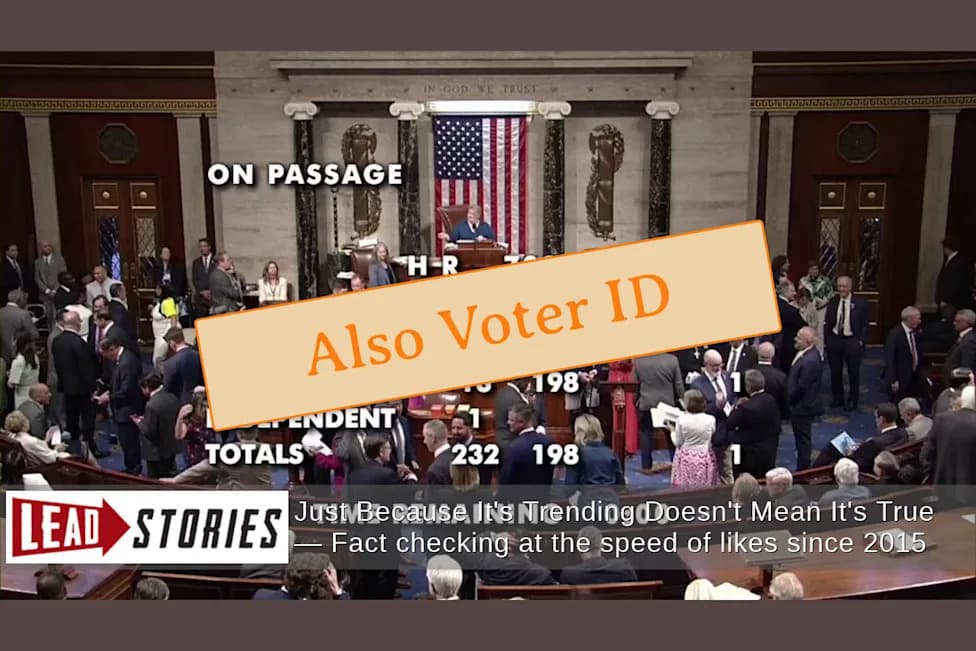
Lead Stories says: Also Voter ID
Summary: The House approved H.R. 7008, the Stop Insider Trading Act, on July 22, 2026, but the measure combined a ban on certain stock purchases by Members of Congress and their families with a separate federal voter‑ID requirement. A lawmaker voting "no" could have been opposing the voter‑ID provision, the trading restrictions, or both — so citing the vote as solely opposition to a stock‑trading ban is incomplete.
What Happened
H.R. 7008 passed the House on July 22, 2026, by a recorded vote of 232 to 198. The vote included many Democratic "no" votes: 198 Democrats voted against the bill, while 13 Democrats and one independent voted in favor.
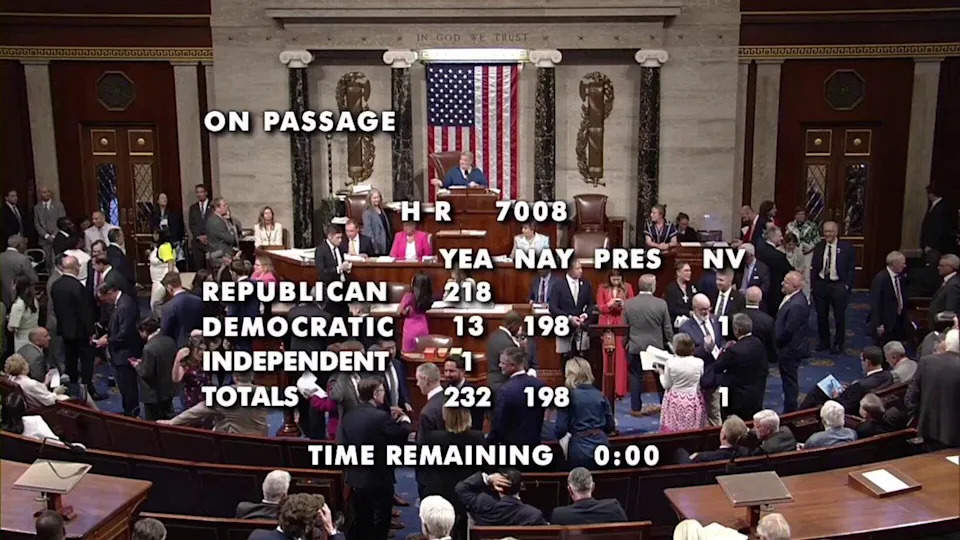
Image source: post by @bennyjohnson on X.
What the Bill Would Do
Stock‑trading restrictions: The bill’s summary says it would generally prohibit Members of Congress and their spouses and dependent children from purchasing certain "covered investments," and would require public notice before those individuals could sell such investments.
Voter‑ID provision (Section 3): Despite the bill’s title, H.R. 7008 also contains a separate section titled "Requiring Voters to Provide Photo Identification." That section would require voters to present a photo ID for federal elections — whether voting in person or by mail — with limited exceptions for military and overseas voters and for some elderly and disabled voters. Acceptable IDs listed include state driver’s licenses, state ID cards, U.S. passports, Department of Defense or Department of Veterans Affairs photo IDs, and tribal government photo IDs that include an expiration date.
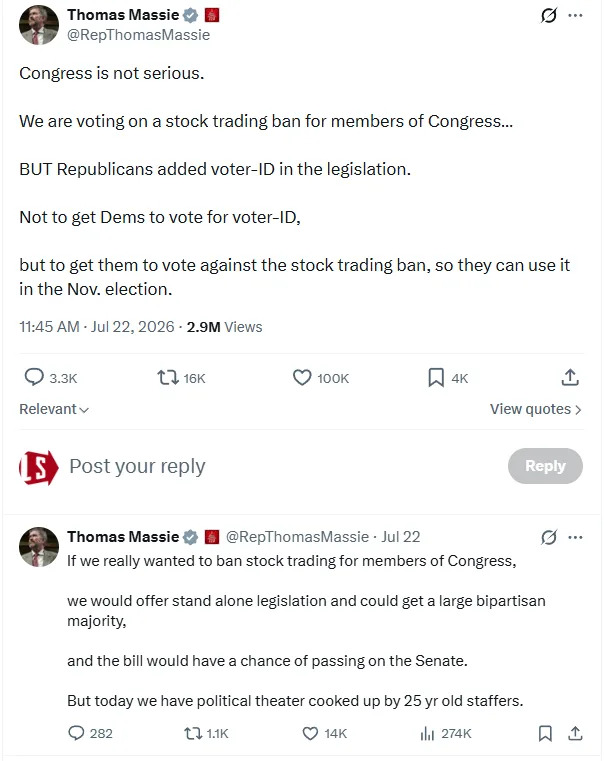
Image source: post by @RepThomasMassie on X.
Why The Simple Claim Misses Important Context
A headline such as "198 Democrats voted against a bill banning members of Congress and their spouses from trading individual stocks" is technically true about the recorded vote, but it omits that the same bill also imposed a federal voter‑ID requirement. Because the two, separate provisions were combined in one bill, a "no" vote could reflect opposition to the voter‑ID text, the trading restrictions, or both. Some critics objected to the political tactic of bundling unrelated measures.
Reaction
Republican Rep. Thomas Massie (KY), who voted for the bill, criticized the package on X (formerly Twitter), arguing the pairing was deliberate political maneuvering. He posted in part:
"Congress is not serious. We are voting on a stock trading ban for members of Congress... BUT Republicans added voter‑ID in the legislation. Not to get Dems to vote for voter‑ID, but to get them to vote against the stock trading ban, so they can use it in the Nov. election."
"If we really wanted to ban stock trading for members of Congress, we would offer stand‑alone legislation and could get a large bipartisan majority... But today we have political theater cooked up by 25 yr old staffers."
Bottom Line
It is accurate that the House approved H.R. 7008 232–198 on July 22, 2026, and that many Democrats voted against the measure. However, reporting that Democrats opposed a bill "banning members of Congress from trading individual stocks" without noting that the bill also included a federal voter‑ID requirement is incomplete. A "no" vote on H.R. 7008 did not necessarily mean opposition to the stock‑trading ban alone.
Help us improve.