Dr Charles Woodburn, CEO of BAE Systems, warned the UK has been complacent about rising security threats and that current funding falls short of the government’s 3.5% of GDP defence ambition by 2035. Speaking at Farnborough, he highlighted the rapid advance of autonomy and drone warfare seen in Ukraine and urged a balanced mix of large crewed platforms and unmanned systems. Woodburn also stressed the industrial and jobs benefits of defence spending and said deterrence — providing troops with the best equipment — remains the company’s core mission.
BAE CEO Warns UK Has Been Complacent as Threats and Autonomous Weapons Rise

[Getty Images]
Dr Charles Woodburn, chief executive of Europe’s largest defence contractor BAE Systems, has warned that the UK has been too complacent about the risk of foreign attack and is facing the highest level of threat he has seen in his lifetime.
In an exclusive interview with the BBC, Woodburn welcomed the recent uplift in defence funding but said far more investment will be required for the government to meet its stated ambition of spending 3.5% of GDP on defence by 2035. Current uplifts — including an additional £13.5bn later reported as around £15bn — are projected to raise spending to roughly 2.68% of GDP by 2030, he noted, short of long‑term targets.
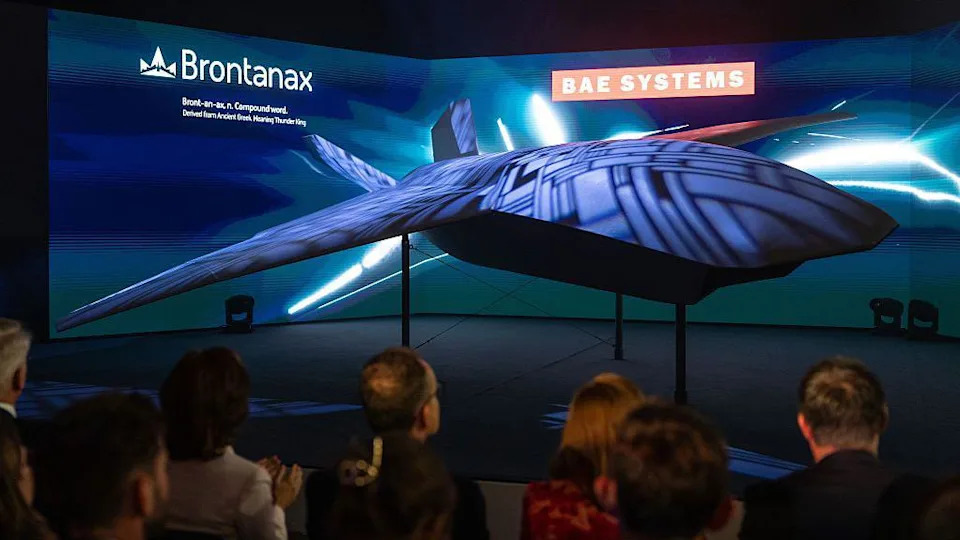
BAE Systems unveiled a model of Brontanax, an uncrewed Collaborative Combat Aircraft at Farnborough International Airshow [Getty Images]
Autonomy, Drones and Modern Warfare
Speaking at the Farnborough International Airshow, where BAE displayed a life‑size model of an uncrewed Collaborative Combat Aircraft called Brontanax, Woodburn warned that autonomous lethal weapons are approaching operational use by some states that may not adhere to the UK policy of retaining human control over lethal decisions.
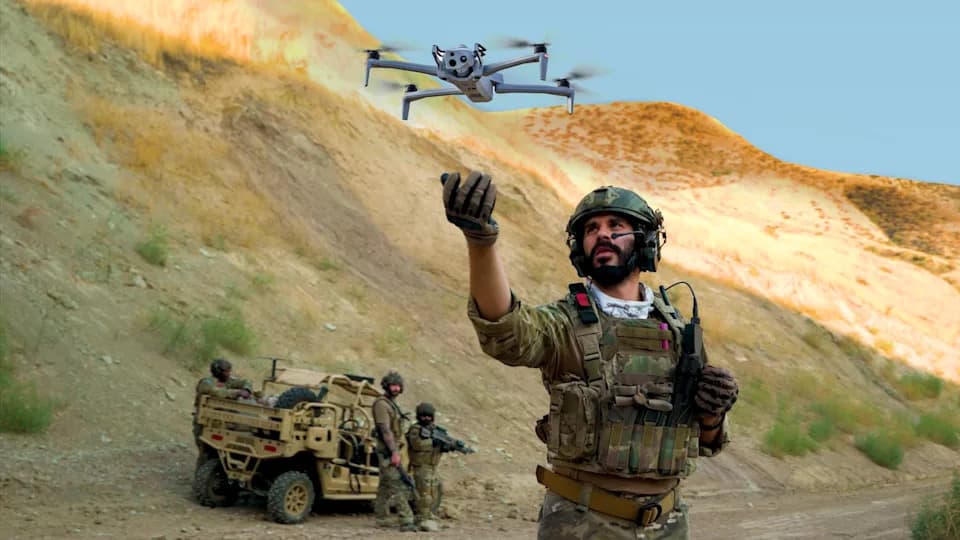
“The reality of modern warfare has changed quite profoundly,” he said, highlighting lessons from the Russia–Ukraine conflict: widespread use of drones, counter‑drone systems and other autonomous capabilities has altered how militaries fight and defend. “It’s something that we now have to really understand and make sure that we’re able to provide the capabilities that can counter that and deter aggression.”
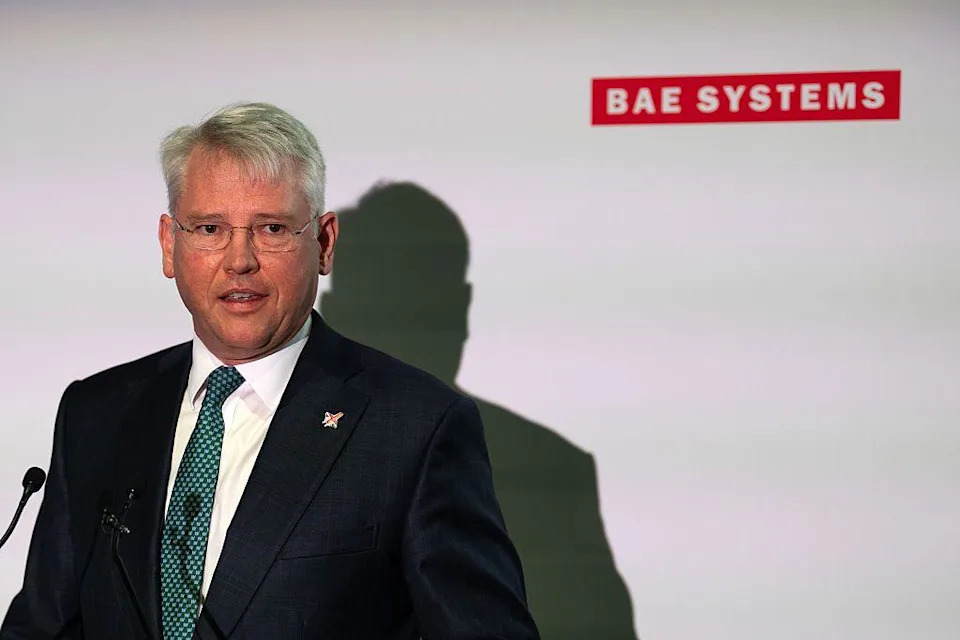
Dr Charles Woodburn CEO of BAE Systems, speaks at Farnborough International Airshow [Getty Images]
Balance Of Manned And Unmanned Systems
BAE’s Brontanax concept envisions several uncrewed collaborative combat aircraft operating alongside a crewed fighter to multiply firepower at a significantly lower unit cost. Woodburn argued that while unmanned systems will be transformational, large crewed platforms — ships, submarines and manned aircraft — remain central to national defence.
“If you look at what our adversaries are building, they’re also building significantly large platforms — aircraft, ships, submarines — and they’re supplemented by some of these unmanned capabilities. It is the combination of the two that gives a winning formula,” Woodburn said.
Readiness And Procurement
Concerns about the UK’s operational readiness have been publicly raised by senior service figures. Recent media scrutiny over delays in mobilising the destroyer HMS Dragon — constructed by BAE — for a mission to provide air cover for Cyprus drew criticism; Woodburn said the company moved quickly once the Ministry of Defence issued a formal request, stressing that industry needs official direction to act.
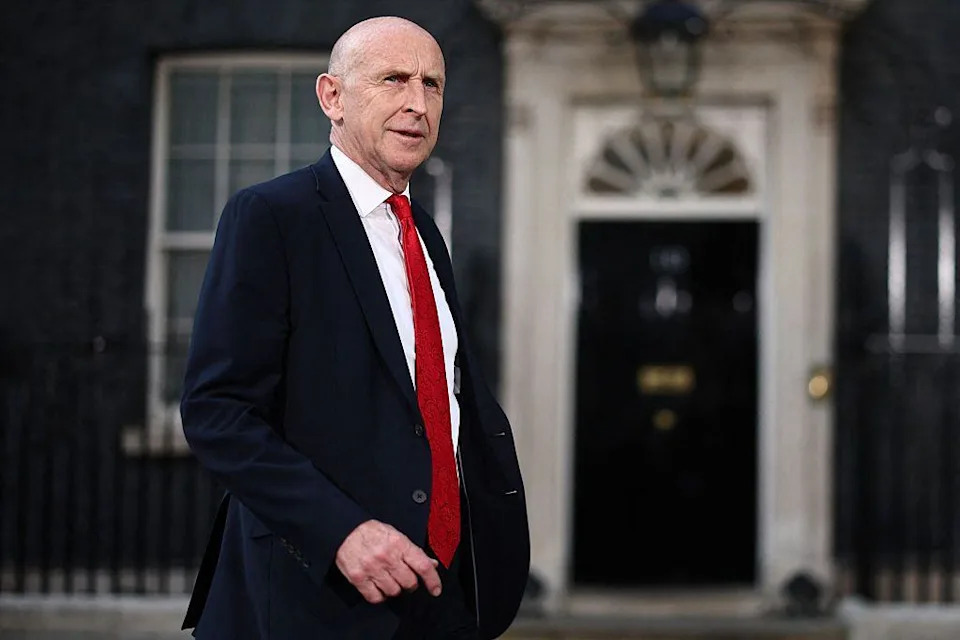
Former defence secretary John Healey has been made Chancellor [Getty Images]
Woodburn also welcomed the appointment of former defence secretary John Healey as Chancellor, saying Healey understands defence requirements. He nevertheless acknowledged the Chancellor will face tough choices across departments as Treasury resources are allocated.
Workforce, Industry And Deterrence
The UK’s armed forces have contracted since the end of the Cold War: the regular British Army numbered about 153,000 in 1990 and around 74,000 today. Woodburn suggested that the right mix of personnel and autonomous systems is now a topic for debate as technology advances.
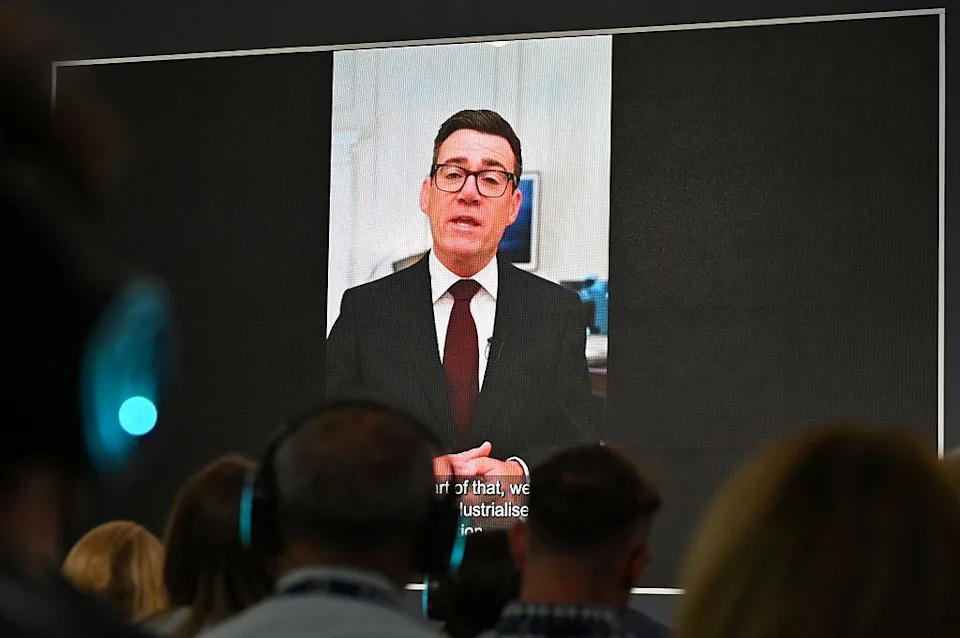
A video message by UK Prime Minister Andy Burnham was played prior a speech by Defence Secretary Wes Streeting during the Farnborough International Air Show [Getty Images]
Asked whether he ever loses sleep over making weapons, Woodburn emphasised deterrence: “The best thing we can do is to deter. Deterring war means our brave men and women have the best kit they could possibly have. Our mission as a business is to protect those who protect us and we take that incredibly seriously.”
At Farnborough, messages from senior politicians framed defence as a driver of industrial renewal and jobs. The prime minister sent a video emphasising defence’s role in reindustrialisation, and Defence Secretary Wes Streeting said defence should be an engine of regional prosperity, not just a recipient of growth.
Woodburn said he will continue to make the case for the wider economic benefits of defence investment — jobs, skills and supply‑chain activity — while pressing for the sustained funding needed to meet long‑term capability commitments.
Note: This article reflects the views and reporting presented in the original interview and at the Farnborough International Airshow.
Help us improve.