Australia successfully fired an SM-2 interceptor from a hybrid ground-based air-defence prototype during Exercise Taipan Strike 2026 at Woomera. The test paired a virtualised Aegis combat system with a Derringer trailer-mounted launcher and a CEA Technologies phased-array radar to intercept a BQM-74E target drone. Canberra views this modular, cost-conscious approach as a faster way to field medium-range GBAD by reusing naval weapons and sensors ashore. Defence officials say the prototype reduces technical risk but remains a work in progress as integration continues.
Australia Tests Hybrid 'Frankenstein' Air-Defence Prototype, Fires SM-2 During Woomera Trial
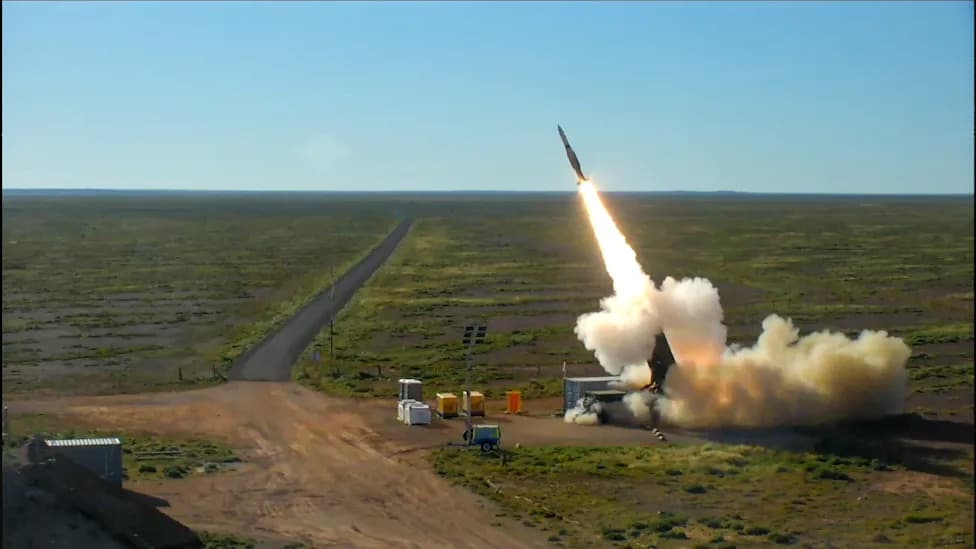
Australia launched an SM-2 missile at an aerial target in June 2026, as part of a test of a hybrid medium-range air defense solution. (ADF)
CHRISTCHURCH, New Zealand — Australia has successfully tested a novel hybrid medium-range ground-based air-defence (GBAD) prototype that integrates shipboard systems, land launchers and Australian sensors in a configuration not previously fielded.
The live firing took place during Exercise Taipan Strike 2026 at the Woomera test range in South Australia, where an SM-2 interceptor launched from a Derringer trailer-mounted launcher (the Expeditionary Launch System) intercepted a BQM-74E target drone. The missile was controlled by a virtualised Lockheed Martin Aegis combat system and guided by a phased-array radar supplied by Australian firm CEA Technologies.
What Was Tested
Hybrid Integration: The prototype pairs a small, expeditionary form of the Aegis combat system (normally deployed aboard warships) with a mobile Derringer launcher and Australian radar. This first-of-its-kind integration demonstrates cross-domain use of naval weapons ashore.
Live-Fire Details: An SM-2 interceptor successfully engaged the BQM-74E target. Lockheed Martin and the U.S. Navy collaborated closely with the Australian Department of Defence in designing, virtualising and executing the test.
Why It Matters
This modular approach—sometimes nicknamed a “Frankenstein” solution—offers Canberra a faster, lower-cost alternative to acquiring heavy fixed systems such as Patriot batteries by reusing sensors, software and munitions already in Australian inventories.
"This prototype system leverages existing weapons, launchers and command and control," said Jeremy King, chief executive of Lockheed Martin Australia and New Zealand. "It unlocks cross-service integration and interoperability, delivering greater capability and value."
Inventory And Future Options
The Royal Australian Navy already fields SM-2 Block IIIB and Block IIIC missiles and also has SM-6 interceptors. Officials say SM-6 could be considered for land-based ballistic-missile defence if a strike-length Mk 41 Vertical Launching System can be adapted for the mobile Derringer launcher.
Policy And Strategic Context
Australia’s 2023 Defence Strategic Review advocated prioritising timely, affordable initial capability over waiting for an ideal but costly long-term solution. The 2026 National Defence Strategy called for accelerated introduction of medium-range, ground-based active missile defence by investing in launchers, munitions and command-and-control integration.
The government announced the test on July 9, roughly a month after the trial itself. The timing drew attention because it came three days after reports of a Chinese submarine launch of a long-range ballistic missile into the South Pacific, a development that prompted opposition warnings about the vulnerability of some Australian bases.
Limitations And Next Steps
Defence officials caution the hybrid system remains a prototype and a work in progress. Nevertheless, the successful SM-2 firing reduces technical risk, validates key system concepts and supports further integration work as Australia weighs cost-effective medium-range GBAD options.
Lockheed Martin described the demonstration as a "robust air-defence capability option" that could be tailored to meet other countries’ regional requirements, potentially offering a configurable path to improved missile defence at lower cost and shorter timelines than some conventional alternatives.
Help us improve.