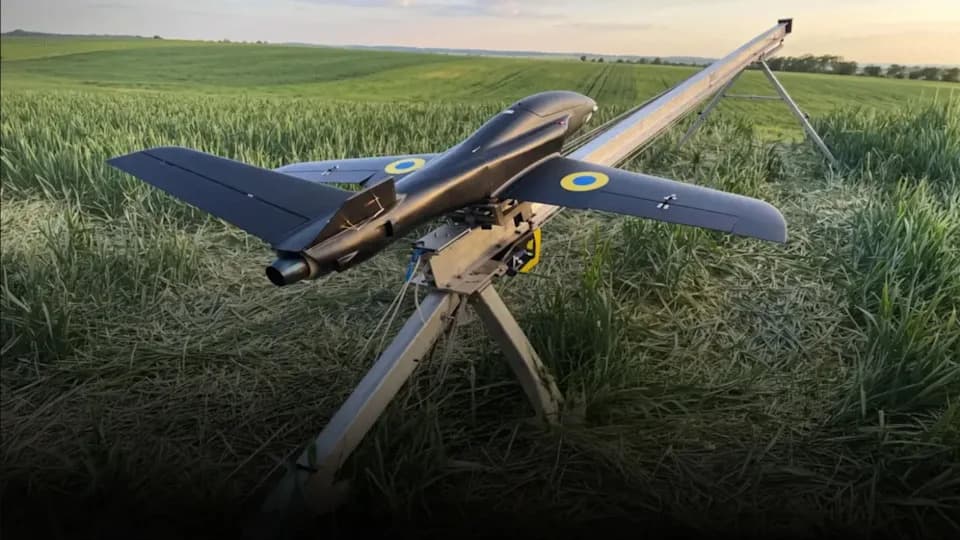
Directed-energy weapons are transitioning from experiments to operational defensive tools that disable drones, rockets and missiles by heating or damaging critical components. This article highlights seven prominent systems: the megawatt-class US YAL-1, Lockheed Martin’s 500 kW JLWS, China’s LY-1, Israel’s ~100 kW Iron Beam, the US Navy’s ~60 kW HELIOS, the UK’s DragonFire and a German naval demonstrator. Each balances power, beam quality, tracking and atmospheric limits; electrically powered designs are becoming the norm, offering low per-shot costs but demanding substantial power and cooling.
Seven Deadliest Laser Weapons That Are Reshaping Modern Combat
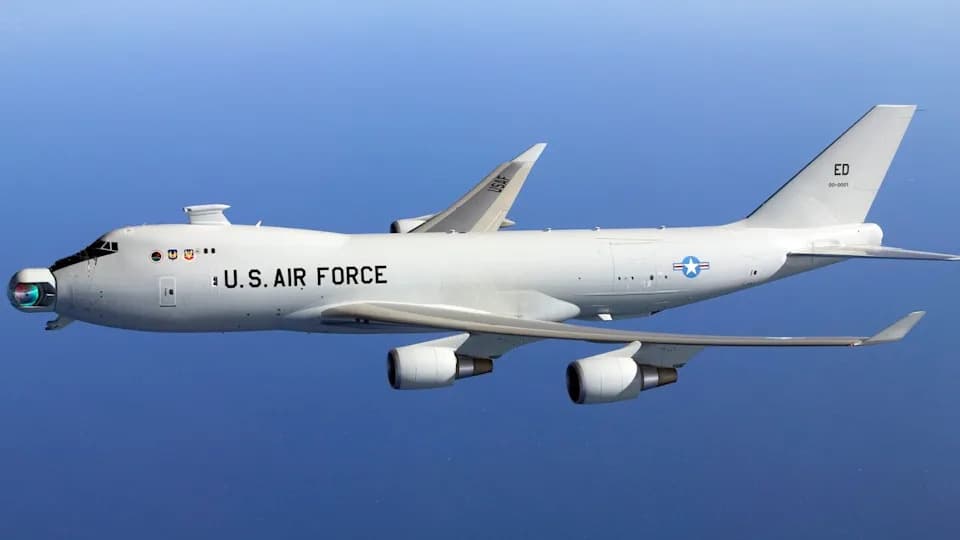
Laser weapons have moved rapidly from laboratory experiments to practical defensive tools able to disable drones, rockets, missiles and other airborne threats. Rather than relying on kinetic interceptors, these directed-energy systems concentrate electromagnetic energy on a vulnerable component of a target until it overheats, deforms or fails.
The battlefield performance of any laser weapon depends on several variables: raw power output, beam quality, tracking precision, atmospheric conditions (fog, dust and precipitation), and the dwell time the beam can maintain on the same spot. Below are seven of the most notable military laser systems that have been tested, deployed or announced for development.
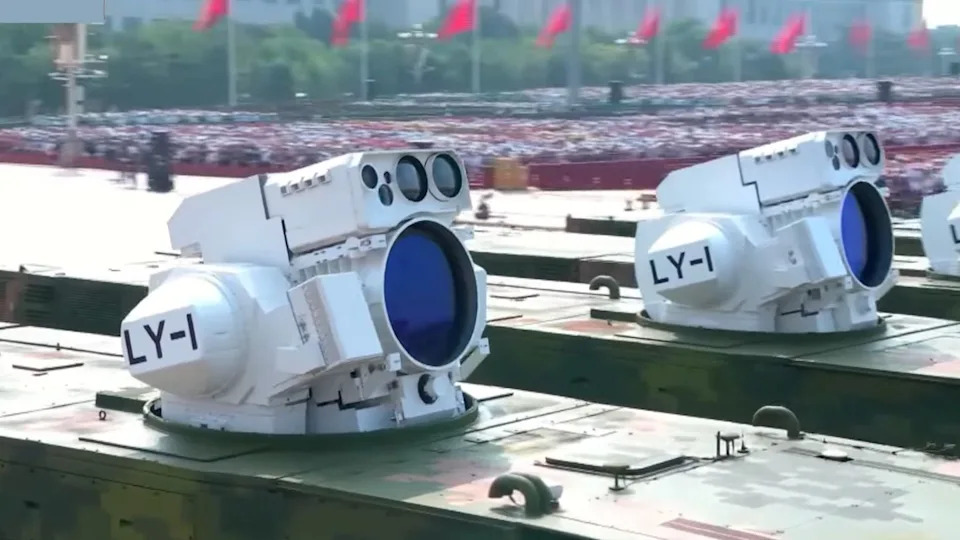
YAL-1 (United States)
Although cancelled in 2011, the Airborne Laser Testbed YAL-1 remains the most powerful military laser ever flown on an aircraft. Housed in a modified Boeing 747-400F, its megawatt-class Chemical Oxygen Iodine Laser (COIL) produced an infrared beam at a 1.315 µm wavelength projected through a steerable nose turret. In 2010 trials, the aircraft successfully engaged and destroyed liquid- and solid-fuel ballistic missile targets during their boost phase, demonstrating the concept under controlled conditions.
Lockheed Martin Joint Laser Weapon System (United States)
Lockheed Martin announced a 500-kilowatt Joint Laser Weapon System (JLWS) in July 2026. The tactical design packages the laser into a transportable container intended for multiple platforms and employs spectral beam combining to merge several fiber-laser modules into a single high-power output. The electrically powered system is intended to provide a scalable, lower-cost-per-shot interception capability against unmanned aircraft and cruise missiles.
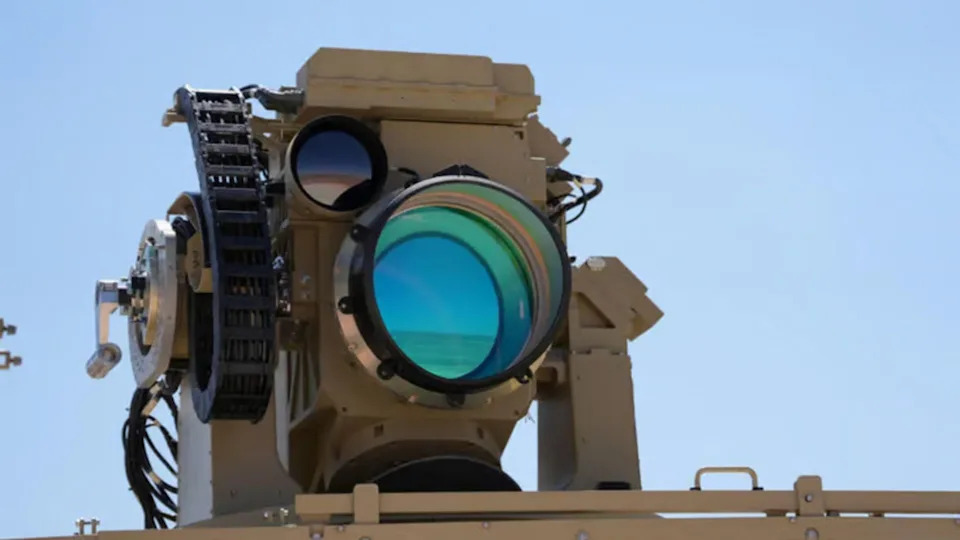
LY-1 (China)
China’s LY-1 is a large directed-energy weapon publicly unveiled in September 2025 and shown in truck-mounted and shipborne variants. A unit believed to be an LY-1 was observed aboard the Type 071 amphibious ship Qilianshan during drills near Scarborough Shoal in August 2026. Official output figures remain classified; open-source estimates commonly range from about 180 to 300 kilowatts, though those numbers cannot be independently confirmed. The system’s substantial turret suggests significant cooling and power requirements.
Iron Beam (Israel)
Rafael Advanced Defense Systems’ Iron Beam is a roughly 100-kilowatt-class air-defense laser developed with technology contributions from Elbit Systems. Designed as part of a multilayered defensive network, Iron Beam aims to engage rockets, mortar rounds, unmanned aircraft and other short-range aerial threats by sustaining focused energy on a vulnerable spot until the object is disabled. Rafael states the system can operate from a few hundred meters to several miles, though performance declines in fog, dust, heavy cloud or rain.
HELIOS (United States Navy)
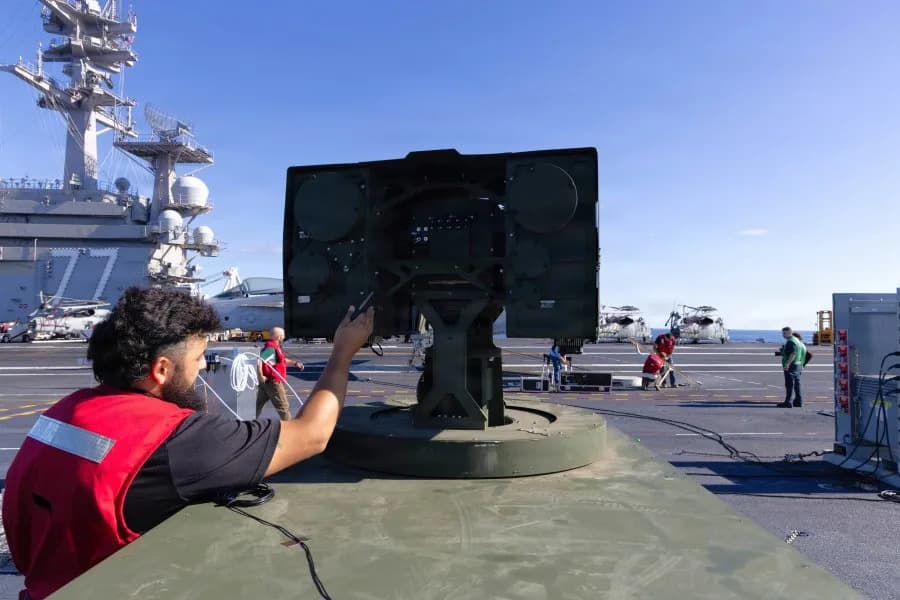
The Navy’s HELIOS package integrates a high-energy laser, long-range surveillance sensors and an optical dazzler in a single shipboard system. Installed aboard the Arleigh Burke–class destroyer USS Preble, HELIOS (commonly reported near 60 kilowatts) can physically damage small unmanned aircraft or degrade electro-optical sensors without expending missiles. The US Navy confirmed in 2026 that the Preble remains fitted with the system as sailor training in directed-energy operations expands.
DragonFire (United Kingdom)
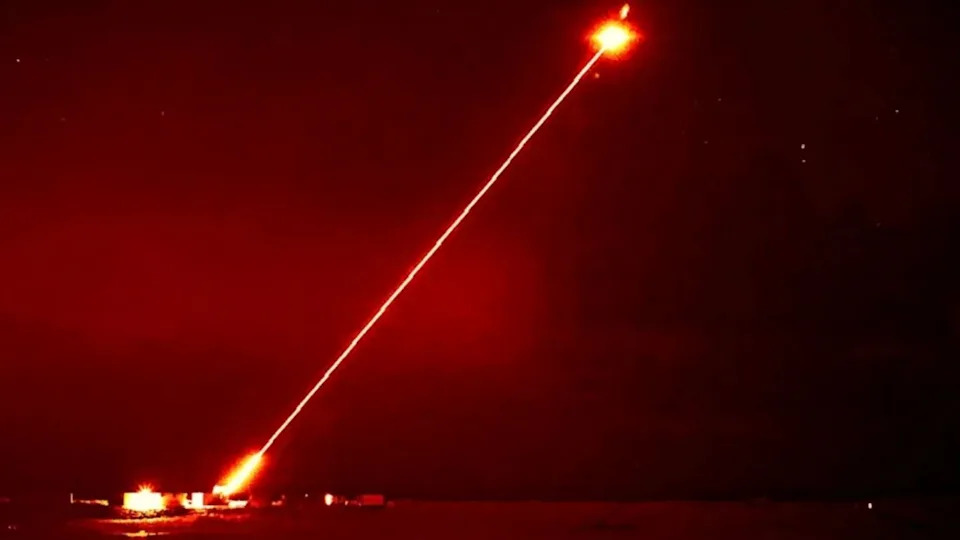
DragonFire is a UK-led directed-energy weapon developed by a consortium led by MBDA UK with Leonardo UK and QinetiQ. It combines multiple laser sources and advanced targeting systems to maintain an intense beam on fast-moving airborne targets. UK authorities claim DragonFire can strike an object the size of a coin at roughly 0.62 miles. A production contract worth £316 million (about $410.8 million) will support installation on a Royal Navy Type 45 destroyer from 2027, with each firing estimated to cost roughly £10 (about $13).
Rheinmetall / MBDA Germany Naval Laser Demonstrator
Rheinmetall and MBDA Germany developed a naval laser demonstrator to defeat drones and other small, fast-moving targets. The demonstrator completed a year of trials aboard the German frigate Sachsen, testing tracking, command and engagement functions in maritime conditions. The companies are also pursuing technologies for a future 100-kilowatt-class system; Rheinmetall has said an operational German naval laser could be available after further land-based testing, potentially from 2029.
Why Lasers Matter—and Their Limits
Laser weapons offer near-instant engagement, deep magazines limited mainly by available electrical power, and much lower per-shot costs than many missile interceptors. However, sustained operation requires robust electrical generation, significant cooling capacity, precise tracking and favorable atmospheric conditions. While the YAL-1 highlighted what chemical lasers could achieve in sheer power, most newer systems favor compact, electrically powered architectures optimized for ships, ground vehicles and fixed defenses.
Together, these programs illustrate how directed-energy technology is maturing into an additional layer of modern air and missile defense—even as technical, tactical and environmental challenges remain.
Help us improve.