Rep. Jen Kiggans warns that seasoned fighter pilot experience cannot be generated quickly in a crisis and that current retention losses undermine U.S. military readiness. Pilots depart for a mix of reasons including family strain, high operational tempo, aging infrastructure and better civilian opportunities. Kiggans secured a provision in the House Fiscal 2027 NDAA requiring a comprehensive Navy assessment of fighter pilot retention and calls for coordinated, creative policies beyond bonuses to preserve experience across full careers.
America Cannot Surge Experience: Why Retaining Seasoned Fighter Pilots Is a Strategic Imperative
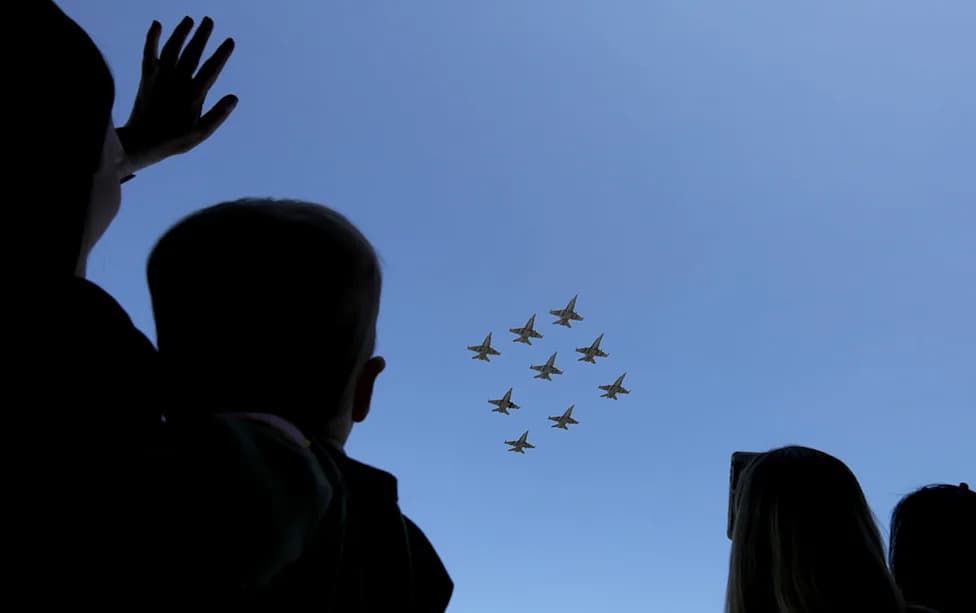
The "Blueblasters" of Strike Fighter Squadron 34 do a flyover for family and friends as they return home to Naval Air Station Oceana on Wednesday, April 11, 2018. (Steve Earley/The Virginian-Pilot via AP)
When the next major confrontation arrives, the United States will not have the luxury of time to create fully seasoned fighter pilots. There will be no years available to cultivate instructor pilots, squadron commanders or tactical leaders. The judgment, leadership and tactical expertise that give our military its decisive edge must be built long before the first engagement.
The Problem: Experience Leaving the Cockpit
Each year, just as many of our most experienced aviators are poised to lead squadrons, mentor younger pilots and shoulder greater responsibility, far too many opt to leave active service. This trend is not merely a personnel challenge; it is a strategic vulnerability. Every departure takes with it years of operational knowledge that cannot be recreated overnight.
Why Pilots Depart
Most fighter pilots do not leave because they reject the mission. By the midpoint of a career, however, repeated deployments, relentless operational tempo, missed family milestones, prolonged separation and uncertainty about the future accumulate and exact a heavy toll. Compensation, aging infrastructure, family stability, quality of life and attractive civilian opportunities all factor into a veteran aviator's decision. No single change will reverse the trend; retention depends on addressing this mix of pressures together.
Why This Matters
Loss of experienced pilots reduces the pool of potential instructors, department heads, commanding officers and air wing leaders. Those roles are essential to training and preparing the next generation. The number of aircraft on a flight line matters, but it is the people who fly and lead them whose experience determines combat effectiveness.
Steps Already Taken
For nearly four years I have argued that readiness begins long before an aircraft leaves the runway. At Naval Air Station Oceana, I have supported investments from replacing aging fuel systems to improving quality of life for service members and their families. Recognizing the retention challenge, I pushed to include a provision in the House version of the Fiscal 2027 National Defense Authorization Act directing the Navy to conduct a comprehensive assessment of fighter pilot retention.
What Must Come Next
An assessment is only the first step. Retention will require coordinated, creative solutions that treat career longevity as a system problem: compensation and targeted bonuses, predictable and family-friendly career paths, improved base infrastructure and housing, reduced cumulative operational strain, and greater career flexibility across active and reserve components. Congress, the Department of Defense, Navy leadership and military communities must collaborate to design policies that keep experienced aviators in uniform for full careers.
We cannot recruit our way out of a retention problem. Recruiting brings talent in; retention lets them become the leaders our military needs.
America faces competitors who measure advantage not just by platforms, but by the experience, judgment and leadership of the men and women who fly them. That experience takes years to build and can be lost one retirement, one resignation and one difficult career decision at a time. We know what is at stake. We must act with urgency, creativity and resolve to ensure our best fighter pilots can continue serving for full careers.
Because America cannot surge experience.
Rep. Jen Kiggans, R-Va. represents Virginia's Second District, home to Naval Air Station Oceana. She served 10 years as a U.S. Navy helicopter pilot.
Help us improve.