
Burmese pythons have established a new population in western Charlotte County, Florida, marking a noteworthy expansion beyond the Everglades. Officials say the pattern points to human introductions—escapes or deliberate releases—rather than natural migration. Surveys likely detect only 1%–3% of pythons, so a few sightings could indicate a much larger hidden population. Authorities urge the public to report sightings and never release exotic pets.
Burmese Pythons Establish New Colony Beyond the Everglades in Western Charlotte County, Florida
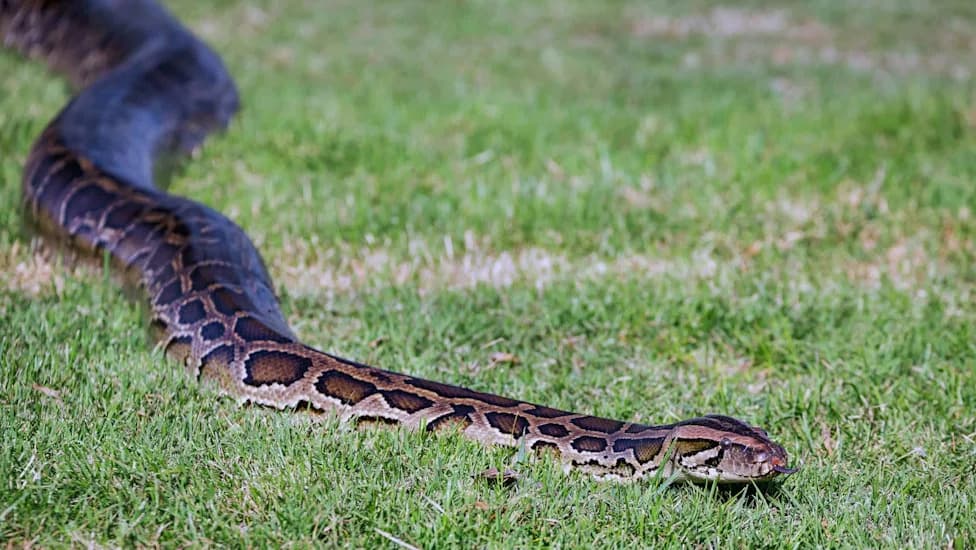
Photo Credit: iStock
Burmese pythons have formed an established population in western Charlotte County on Florida's Gulf Coast, north of Naples and Fort Myers, wildlife officials say. The discovery marks a notable expansion of the invasive snake beyond its long-recognized core range in the Everglades.
What Officials Found
State biologists with the Florida Fish and Wildlife Conservation Commission (FWC) and partner agencies have documented a distinct python population in parts of western Charlotte County, particularly around Rotonda West and nearby neighborhoods. Reports of pythons in the area increased beginning in 2020, prompting focused monitoring and survey efforts.
How Pythons Likely Arrived
FWC officials say the detection pattern does not look like slow, natural migration from the Everglades. Instead, the evidence points toward human-mediated introductions—animals escaping from captivity or being intentionally released. Ian Bartoszek, a wildlife biologist with the Conservancy of Southwest Florida, told reporters that the spread appears driven by people placing pythons into new local ecosystems.
Scope and Risks
Burmese pythons are large, nonnative constrictors and are considered among the most destructive invasive predators in the United States. The U.S. Fish and Wildlife Service has estimated that roughly 180,000 Burmese pythons were imported into the U.S. between 1975 and 2018—imports and the pet trade that helped create conditions for today’s infestations.
As apex predators, pythons prey on a wide range of native animals including birds, raccoons, bobcats and even alligators. When a nonnative predator becomes established, it can disrupt food webs, reduce native populations, and weaken the ecological and economic benefits that healthy wildlife communities provide, from tourism to flood resilience.
Detection Challenges
Survey teams detect only a small fraction of pythons present in a landscape. Research cited by officials suggests search crews may find only about 1%–3% of the animals in an area. In Everglades National Park, the U.S. Fish and Wildlife Service estimates the detection rate at roughly one python per eight hours of searching. Because detection rates are so low, a handful of sightings can indicate a much larger, hidden population.
"This is a pattern we have not yet found a way to stop or reverse at the scales needed to address the problem," said Robert McCleery, a wildlife ecologist at the University of Florida.
What Officials Are Doing
The FWC and its partners are continuing monitoring, surveys and public outreach in Charlotte and Lee counties. Efforts include responding to reports, targeted searches, and educating owners about responsible pet ownership and the legal consequences of releasing exotic animals.
What You Can Do
Never release exotic pets into the wild. If you spot a Burmese python or other large nonnative reptile, report the sighting to local wildlife authorities so trained personnel can respond. Preventing new introductions is one of the most effective ways communities can slow the spread while scientists and managers work on longer-term solutions.
Help us improve.





















