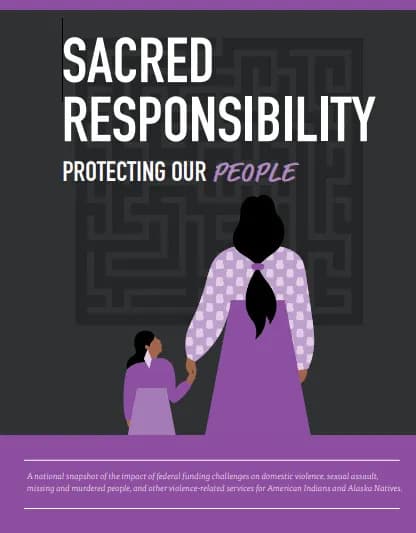
The Urban Indian Health Institute's report, Sacred Responsibility, Protecting Our People, finds that federal funding cuts since early 2025 have forced many Tribal and Native-serving organizations to scale back or end vital victim services. A nationwide survey of 201 programs shows 64% were substantially affected and 84% rely on federal funds for the majority of their budgets. UIHI calls for stable long-term funding, legal safeguards against DEI-related cuts, expanded Tribal law enforcement resources, and reauthorization of VAWA and FVPSA.
Federal Funding Cuts Force Tribal Victim Services To Shrink, New UIHI Report Warns
Federal Funding Cuts Threaten Tribal Victim Services, New UIHI Report Finds
A new report from the Urban Indian Health Institute (UIHI), Sacred Responsibility, Protecting Our People, warns that federal funding reductions since early 2025 are undermining programs that provide support to American Indian and Alaska Native survivors of domestic violence, sexual assault and the Missing and Murdered Indigenous People (MMIP) crisis.
Key Findings
The report is based on a nationwide survey of 201 Tribal and Native-serving programs, including Tribal governments, Tribal organizations, Tribal coalitions, Native nonprofits and Urban Indian organizations. Major findings include:
- 64% of surveyed programs reported being substantially affected by federal funding cuts that began in January 2025.
- 44% said victim services have already been reduced or are expected to be cut.
- 84% of organizations rely on federal funding for more than half of their operating budgets.
Legal Context And Impact
UIHI highlights that federal funding for Tribal health and public safety programs is tied to the United States' treaty and trust responsibilities to Tribal Nations. The report argues that some cuts implemented across federal agencies since early 2025 — including reductions linked to efforts to eliminate diversity, equity, and inclusion (DEI) initiatives — have disrupted essential services for Native communities. Although some funding streams were later restored after Tribal objections, UIHI says uncertainty remains.
"Tribal leaders and advocates spent decades building support, raising awareness, and passing legislation to protect our people—all it took was the snap of a finger for the money to disappear," said Abigail Echo-Hawk, director of UIHI and co-author of the report.
"Last year, the Administration claimed it would prioritize Native health, but this report shows that's just not the case," said Rose Lashawaat Quilt, director of policy for the Southwest Indigenous Women's Coalition.
Disparities And Urgency
The report also underscores longstanding disparities in violence affecting Native communities. Citing CDC data, UIHI notes that 2023 homicide rates among American Indian and Alaska Native people were nearly five times those for non-Hispanic White people. The CDC further reports high lifetime rates of intimate partner violence and sexual violence among Native women and men.
Recommendations
UIHI urges Congress to act to prevent further erosion of Tribal victim services. Key recommendations include:
- Stable, long-term federal funding for Tribal victim services and public safety programs.
- Legal protections to prevent Tribal services from being targeted by DEI-related funding rollbacks.
- Expanded resources for Tribal law enforcement and public safety capacity.
- Reauthorization and full funding of key laws such as the Violence Against Women Act (VAWA) and the Family Violence Prevention and Services Act (FVPSA).
Advocacy And Testimony
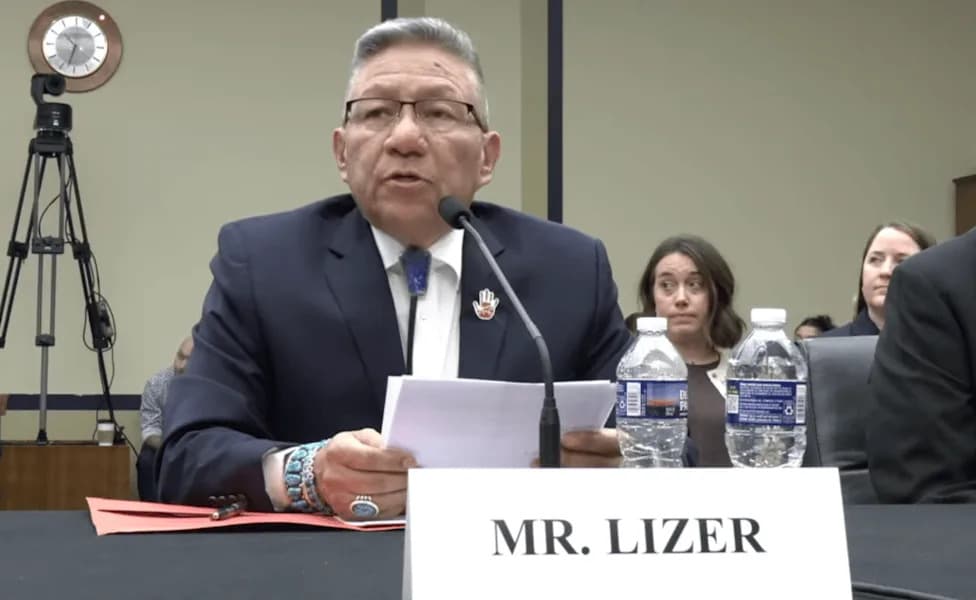
The report was released the same day UIHI director Abigail Echo-Hawk testified before a House oversight hearing on efforts to address the MMIP crisis. In her written testimony she emphasized the federal government's longstanding failure to meet treaty obligations and warned that inadequate resources translate directly into harms for Tribal communities.
UIHI intends the report to inform lawmakers as Congress considers future funding decisions impacting Tribal public safety and victim services.
Note: This article is based on the UIHI report and related testimony and originally appeared on Native News Online.
Help us improve.