Gadugi — the Cherokee value of working together — underpins how the Cherokee Nation approaches health and community. A new economic report shows Cherokee Nation Health Services supported roughly $2 billion in statewide output in 2025, sustaining 11,492 jobs and $781.7 million in wages. Direct impacts included 5,916 CNHS jobs and $418 million in income; indirect spending multiplied those benefits across rural Oklahoma. The Nation has over $600 million in new facilities planned and committed $100 million from opioid settlements to behavioral health.
How Gadugi and Health Investments Are Powering the Cherokee Nation’s Economy
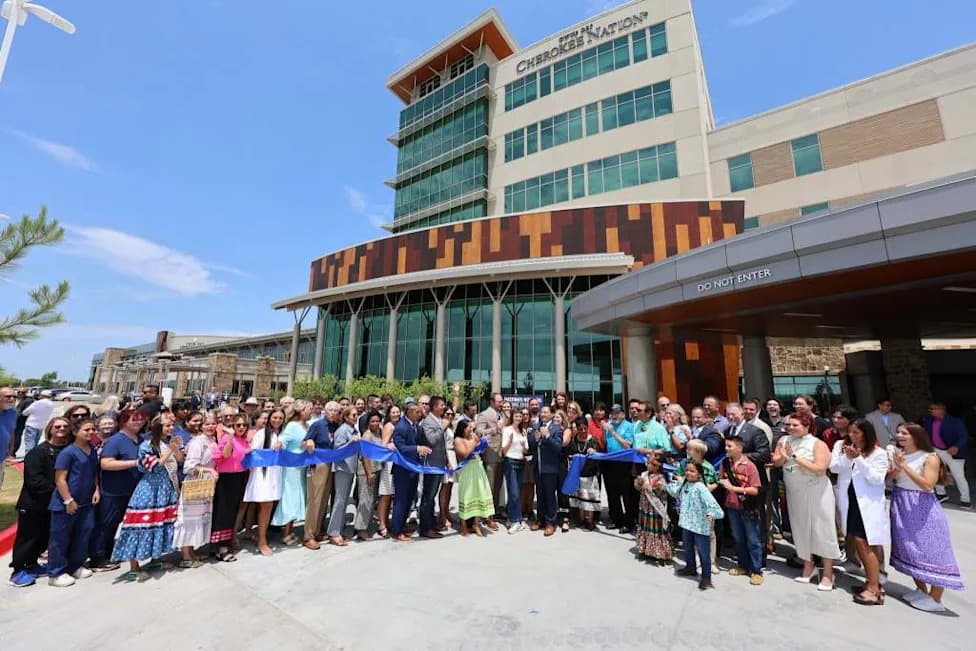
Grand Opening Celebration for the new W.W. Hastings Hospital on July 9, 2026, on the Cherokee Nation Health Services campus in Tahlequah.
At the core of the Cherokee Nation’s story is Gadugi — the Cherokee value of working together for the common good. This deep-rooted commitment to community links every citizen and shows up daily in community centers, eldercare and childcare programs, language classes, tribal meetings and many other places.
Gadugi: Community That Goes Beyond Measurement
Gadugi is more than a word; it’s a force that shapes daily life. While it cannot be measured directly, its impact is visible in cultural gatherings, community programs and the long-term well-being of Cherokee communities across northeastern Oklahoma.
New Report Shows Broad Economic Impacts
At a recent tribal event, the Cherokee Nation released an economic impact report on Cherokee Nation Health Services (CNHS) — the Nation’s first comprehensive look at how health investments reverberate through broader communities. The report reveals that in 2025 CNHS supported approximately $2 billion in statewide economic output, sustained 11,492 jobs and generated $781.7 million in wages.
Those totals reflect both direct and indirect effects. CNHS directly employed 5,916 people and paid about $418 million in direct income. That income flows into local economies — driving spending on groceries, services, home repairs and other needs — which in turn creates additional hiring and income growth beyond the Nation’s initial investment.
Filling Rural Gaps and Creating Career Paths
As other industries retreat from rural Oklahoma, CNHS is expanding. By operating hospitals and clinics across northeastern Oklahoma, the tribe provides high-wage careers in medically underserved areas, fills critical gaps in care and stimulates local economies.
Those efforts are reinforced by strategic partnerships and workforce investments. Collaborations with the Oklahoma State medical school and the University of Oklahoma nursing school, together with career-technology programs, are training the next generation of healthcare professionals to serve rural and underserved populations.
Historic Investments Continue
While the Cherokee Nation has built one of the largest and most comprehensive tribal healthcare systems, the work is far from finished. The Nation has more than $600 million in new facilities under development and has committed $100 million from opioid-settlement funds to behavioral health — signaling continued, historic investments in the healthcare system.
“The health of our citizens is the foundation for a prosperous and vibrant future,” said Chuck Hoskin, Jr., Principal Chief of the Cherokee Nation. “These investments reflect Gadugi in action — working together to improve lives and strengthen our communities.”
By hiring Cherokees to serve Cherokees and reinvesting in rural communities, the Cherokee Nation demonstrates how culturally rooted values and strategic health investments can generate both stronger communities and meaningful economic growth for Oklahoma.
Author: Chuck Hoskin, Jr., Principal Chief of the Cherokee Nation.
Help us improve.