Greece has launched a buyback program paying fishermen 5.33 euros per kilogram to catch the invasive silver-cheeked toadfish (Lagocephalus sceleratus), a toxic puffer that has moved north into the Mediterranean as waters warm. The species has damaged nets and eaten catches off Crete and other islands; authorities plan to freeze and incinerate captured fish. The Greek Red Cross warned about the fish’s neurotoxin and first-aid for bites, while local medical and tourism groups urged calm and said swimmers are not at immediate risk.
Greece Pays Fishermen to Remove Toxic Silver-Cheeked Toadfish Invading the Mediterranean
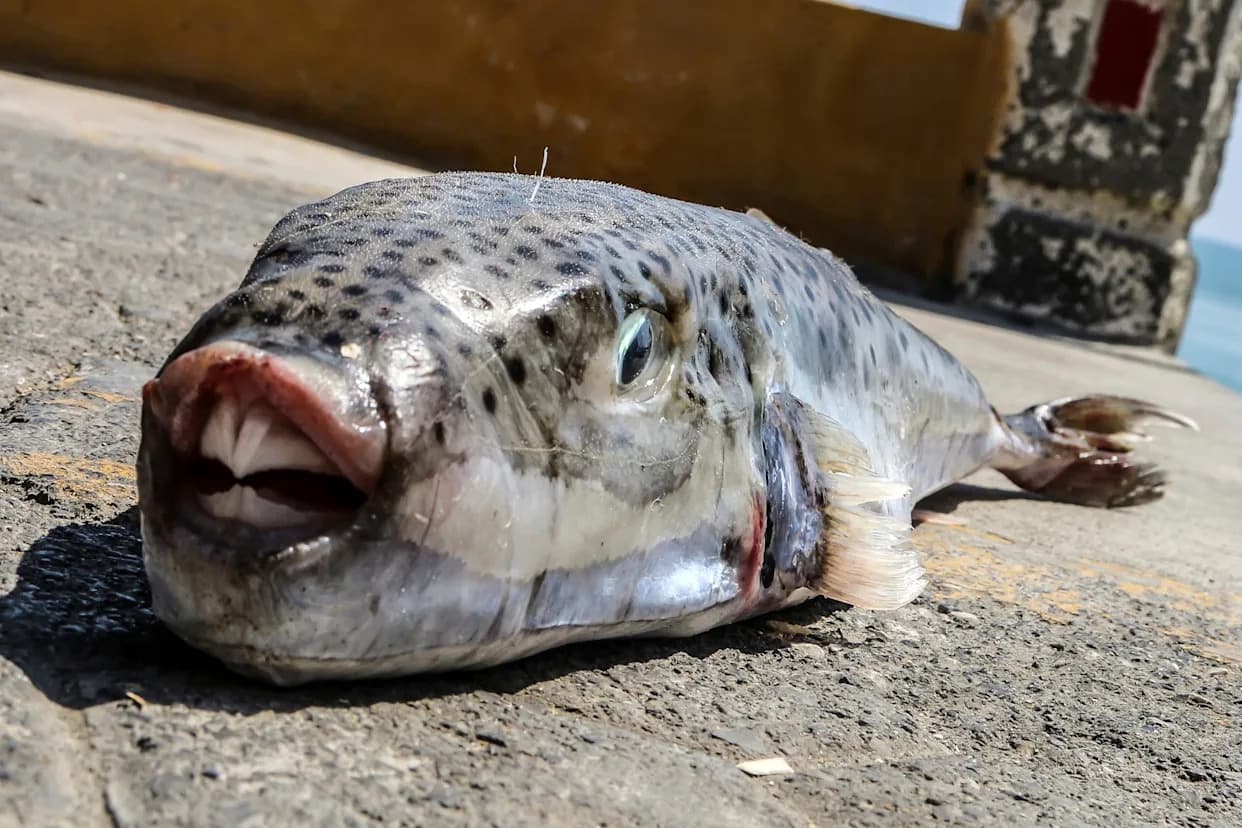
A silver-cheeked toadfish placed on the ground after being caught by fishermen on the southern island of Crete, Greece, Monday, June 22, 2015. (InTime News via AP)(undefined/INTIME NEWS via AP)
ATHENS — Greek authorities have begun paying fishermen to remove an invasive, toxic pufferfish that has been moving north into the Mediterranean as sea temperatures rise.
The species, known as the silver-cheeked toadfish (Lagocephalus sceleratus), is torpedo-shaped with conspicuous, almost humanlike teeth. Its skin and internal organs contain a potent neurotoxin — tetrodotoxin — that can cause severe poisoning and even heart failure if consumed.
Why Authorities Are Acting
Officials say the fish have not been observed in resort bathing areas, but they have inflicted significant damage on commercial fisheries around Crete and several other Greek islands by tearing through nets and eating catches. Fishermen report costly repairs and lost income after encounters with the species.
“It’s got to the point where we might go out fishing one day and then spend the next three days fixing our nets,” said Giorgos Kyriakakis of a Cretan fishermen’s association, speaking to Greek public broadcaster ERT.
Government Response
Starting Friday, Greece's government will pay 5.33 euros per kilogram (about $2.75 per pound) for caught silver-cheeked toadfish. Captured fish will be frozen and incinerated at local government facilities. Agriculture Minister Margaritis Schinas said the measure is the first of its kind in Greece and may be extended beyond the currently affected islands to cover all Greek waters.
Scientists and officials believe the species migrated from tropical waters through the Suez Canal — a process often called Lessepsian migration — and has expanded northward as Mediterranean waters warm. Cyprus launched a similar buyback and removal program earlier this year.
Public Health And Tourism
The Greek Red Cross has issued a public-health advisory outlining first-aid steps for bleeding from possible bites and reminding the public that the fish’s organs contain a deadly neurotoxin. Meanwhile, 16 medical and tourism associations on Crete urged calm, noting the species’ presence in the Mediterranean has been known for years and that there is no immediate threat to swimmers in resort areas.
Online videos showing the fish biting into soda cans and pieces of wood have heightened public attention, but authorities and local businesses emphasize that exaggerated claims can unnecessarily alarm visitors and residents.
What To Know: The removal program aims to protect fisheries and public safety by incentivizing the capture of an invasive, toxic species that damages gear and poses a risk if eaten. Caught fish will be handled by authorities for safe disposal.
Help us improve.