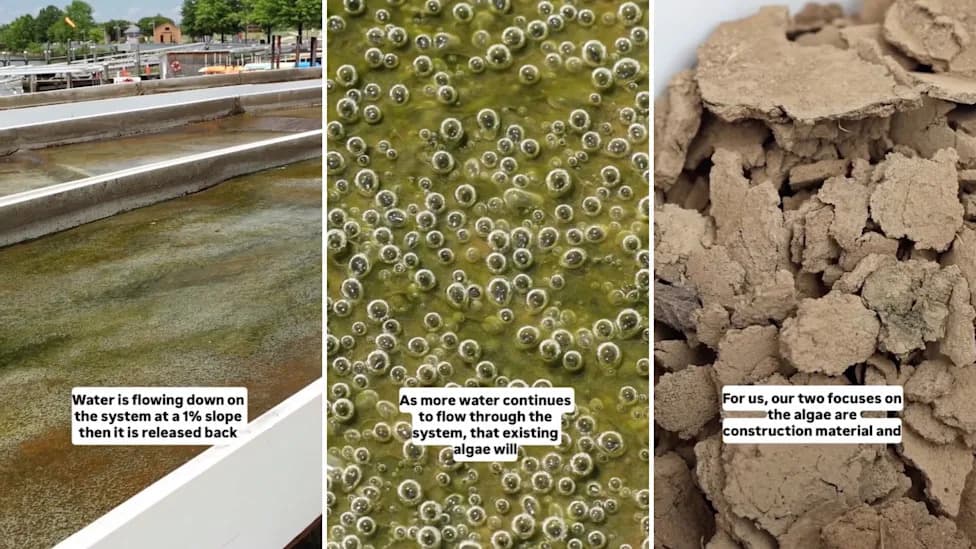
The Lincoln Memorial Reflecting Pool turned bright green after a US$15 million renovation because shallow, darker-painted water warmed quickly and was refilled from a nutrient-rich source. Chemical and mechanical treatments are often temporary and can damage both structures and helpful organisms. Nature-based solutions—protecting grazers like Daphnia, planting rooted aquatic vegetation, reducing nutrient inputs, and promoting habitat diversity—offer safer, more durable control of algal blooms.
Skip the Chemicals: How Nature Can Clear Algae From the Lincoln Memorial Reflecting Pool and Community Ponds
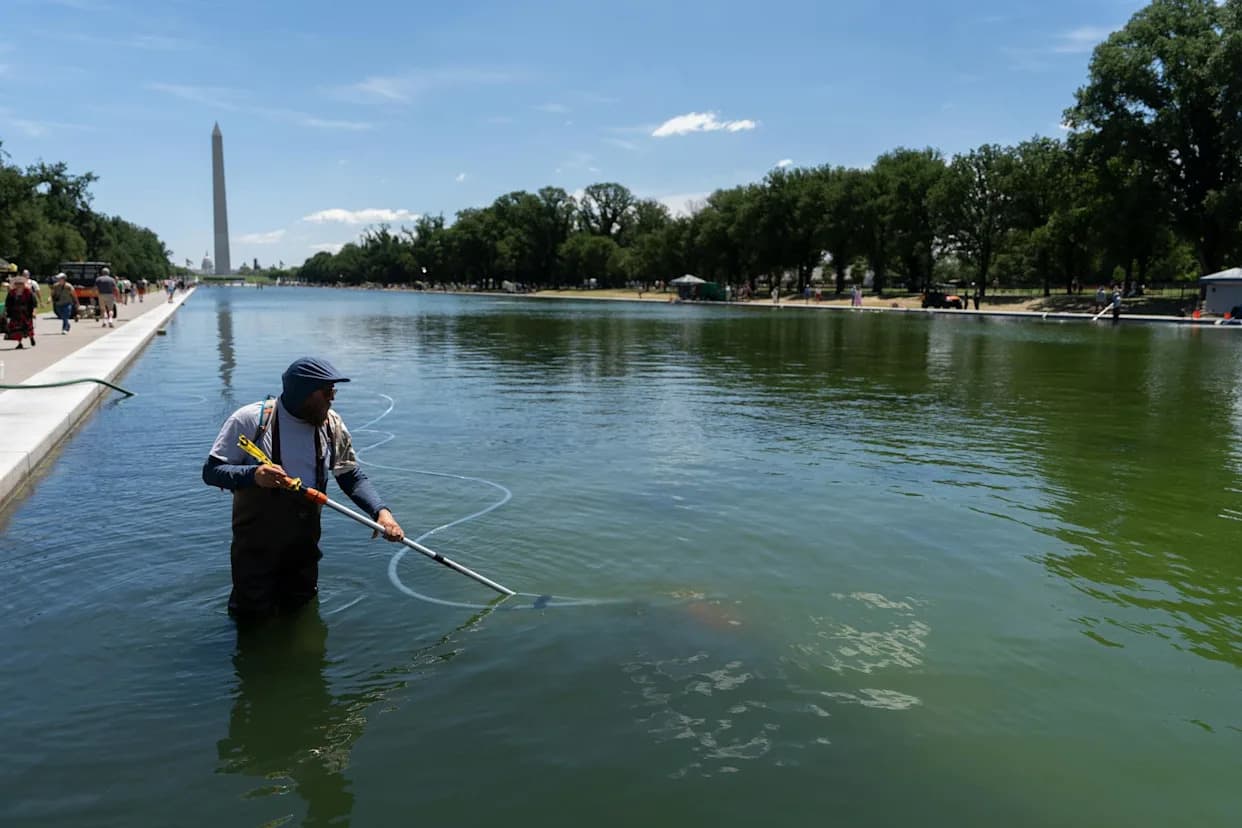
A National Park Service employee uses a vacuum to clean the Lincoln Memorial Reflecting Pool on June 20, 2026.AP Photo/Mark Schiefelbein
When the Lincoln Memorial Reflecting Pool turned pea-soup green days after a US$15 million renovation, the quick impulse was to reach for chemicals and costly technical fixes. But ecological research shows there are safer, cheaper, longer-lasting solutions that work with nature rather than against it.
Why the Reflecting Pool Bloomed
The bloom was predictable. The pool is large—more than a third of a mile long and roughly 165 feet wide—but shallow, so it warms quickly in sunlight. During spring 2026 the pool was repainted a darker "American flag blue," which increases heat absorption. It was then refilled with water drawn from the nutrient-rich tidal basin of the Potomac River. Warm, nutrient-loaded water is an ideal recipe for algae to flourish.
Why Chemicals and Draining Often Fail
Chemical algaecides and heavy mechanical treatments can produce immediate visual improvement, but they have important drawbacks. They are typically short-term fixes, can damage the physical lining or features of a pond, and may harm fishes, insects, birds, pets and other wildlife. Repeated draining and refilling also erase the locally adapted community of organisms that naturally help control algae—so the next bloom often returns more easily.
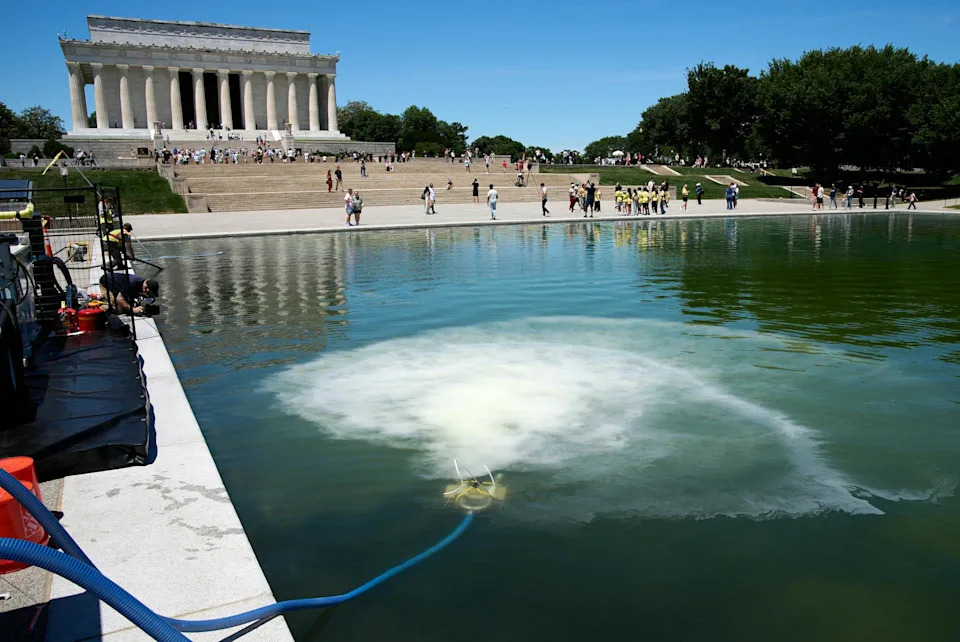
In addition to hydrogen peroxide and vacuums, the government ordered nanobubble ozone technology to break up the algae. The nanobubbler contract was for $1.7 million.AP Photo/Jacquelyn Martin
Nature-Based Alternatives That Work
Grazing Zooplankton (Daphnia): Tiny crustaceans called Daphnia (water fleas) graze on algae and can keep water clear even when nutrient levels rise. Crucially, Daphnia can adapt rapidly to urban stressors—higher temperatures, low oxygen and some pollutants—so resident populations often become especially effective at controlling blooms.
Rooted Aquatic Plants: Submerged and emergent plants take up nutrients that algae would otherwise use. Shallow ponds with dense beds of native aquatic vegetation tend to resist sudden algal surges because plants sequester nutrients in stems and roots.
Habitat Diversity and Connectivity: Ecosystems are most resilient when diverse and connected. Promoting a variety of species and genotypes, and allowing movement between habitats, supports populations that can adapt to local conditions and resist outbreaks.
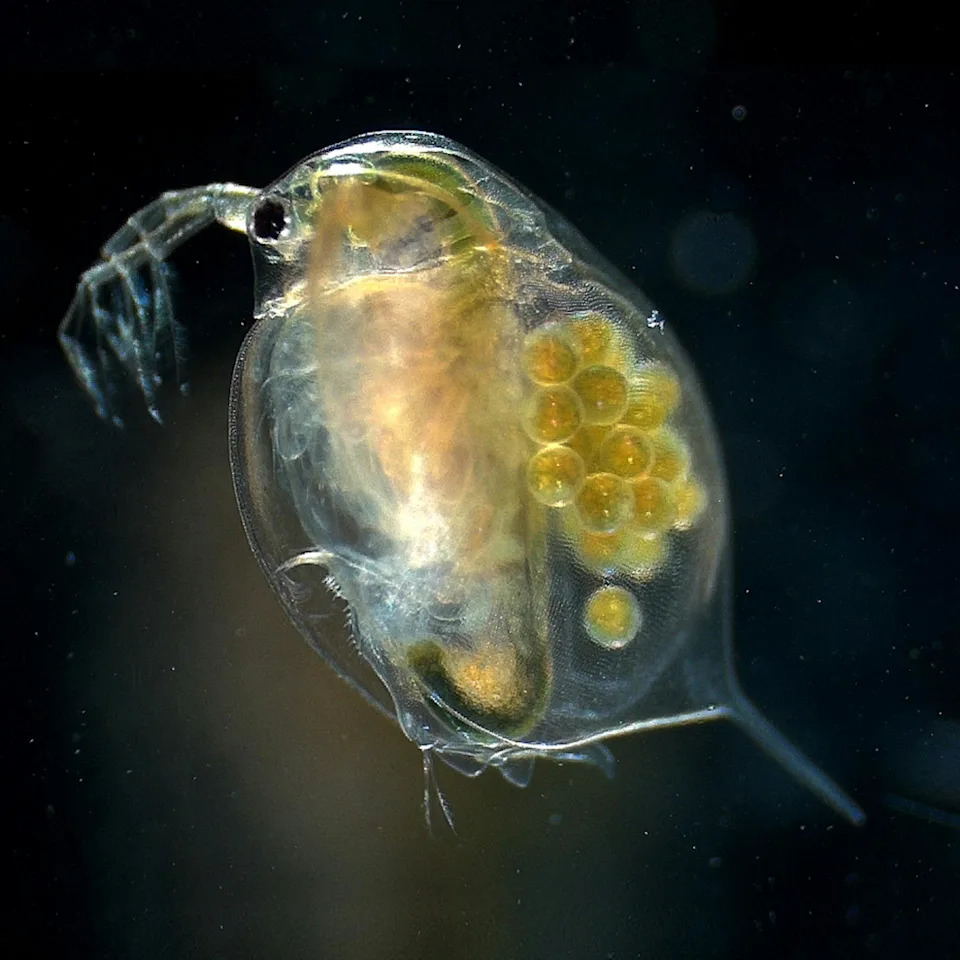
Daphniaare a genus of hundreds of species of tiny, see-through crustaceans that happen to be voracious algae eaters. A femaleDaphnia magna’seggs are visible in this magnified image.Hajime Watanabe, PLoS Genetics, March 2011,CC BY
Reduce Nutrient Inputs: Long-term water quality improves when managers address sources of nutrients—stormwater runoff, fertilizer, and sewage—rather than only treating symptoms. Simple measures include vegetated buffer strips, better stormwater management, and preventing direct discharges into decorative water features.
Practical Recommendations for Managers
- Prioritize planting and protecting native aquatic vegetation and minimizing deep dredging or complete draining when possible.
- Avoid broad-use chemical algaecides; consider targeted, minimal interventions only after ecological options are exhausted.
- Encourage or reintroduce healthy grazer communities (such as Daphnia) where appropriate, and avoid actions that remove locally adapted populations.
- Manage the watershed: reduce nutrient runoff into source waters and consider alternative refill sources if incoming water is nutrient rich.
- Where mechanical or engineering fixes are needed (aeration, circulation), design them to complement, not replace, biological controls.
Broader Lessons: Nature-Based Solutions
Using ecological processes to solve urban problems scales beyond ponds. Urban forests cool cities and improve air quality, wetlands reduce flooding and recharge groundwater, and coastal marshes buffer storms while supporting fisheries. These green approaches often cost less over time and deliver added benefits for biodiversity and human well-being.
Conclusion: The hubbub over the Reflecting Pool is an opportunity to rethink reflexive, engineered responses. Understanding ecology—and protecting the plants and animals that deliver natural regulation—produces more sustainable outcomes for landmarks, parks, and neighborhood ponds alike.
By Eric Palkovacs, University of California, Santa Cruz. Republished from The Conversation.
Disclosure: The author reports no relevant financial conflicts.
Help us improve.