Researchers at the Université Polytechnique Hauts-de-France used high-resolution 3D surface mapping on eight Van Gogh paintings to measure the texture of his impasto. They found a distinctive, quantifiable pattern — a fractal score — that can reliably identify his brushwork. The method supported the authenticity of “Sunset at Montmajour” and exposed “The Plowmen” as a forgery. Paired with provenance and chemical analysis, this technique strengthens authentication and helps deter art forgers.
Scientists Discover Van Gogh’s Hidden ‘Fingerprint’ — A New Tool That Exposes Forgeries
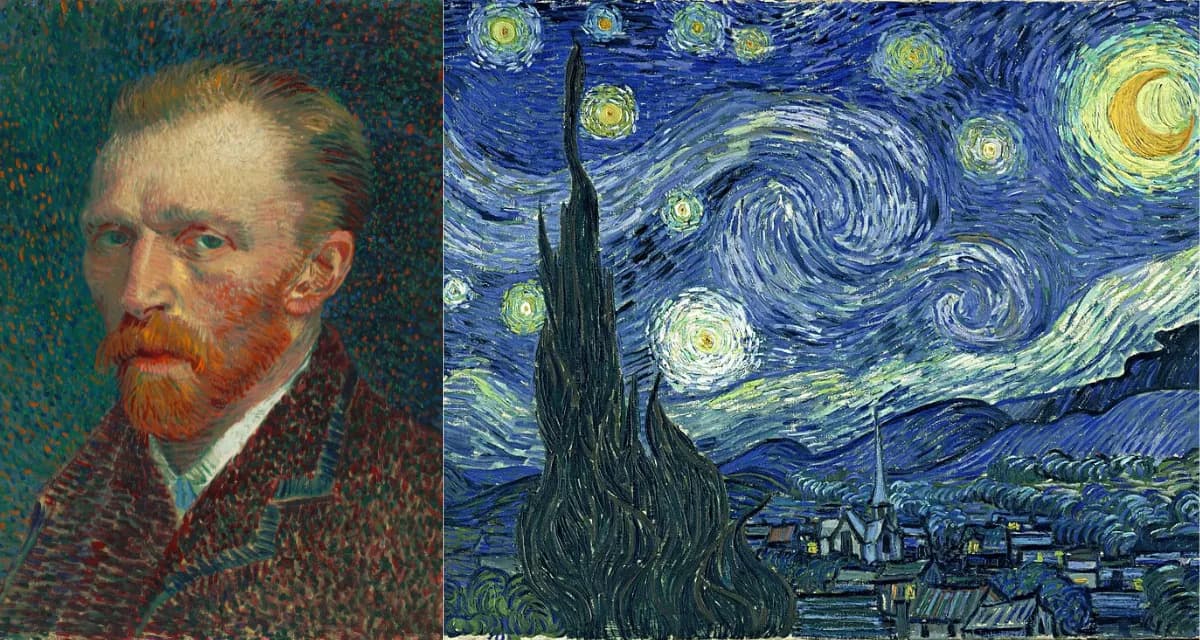
Vincent van Gogh's self portrait (1887) and his Starry Night (1889)
Vincent van Gogh’s paintings are immediately recognizable: whorled skies, vivid sunflowers and thick, sculpted layers of paint that give many canvases a near three-dimensional presence. Those hallmarks of his technique have long defined his visual signature — but researchers say the artist left another, subtler mark: a measurable imprint in the paint itself.
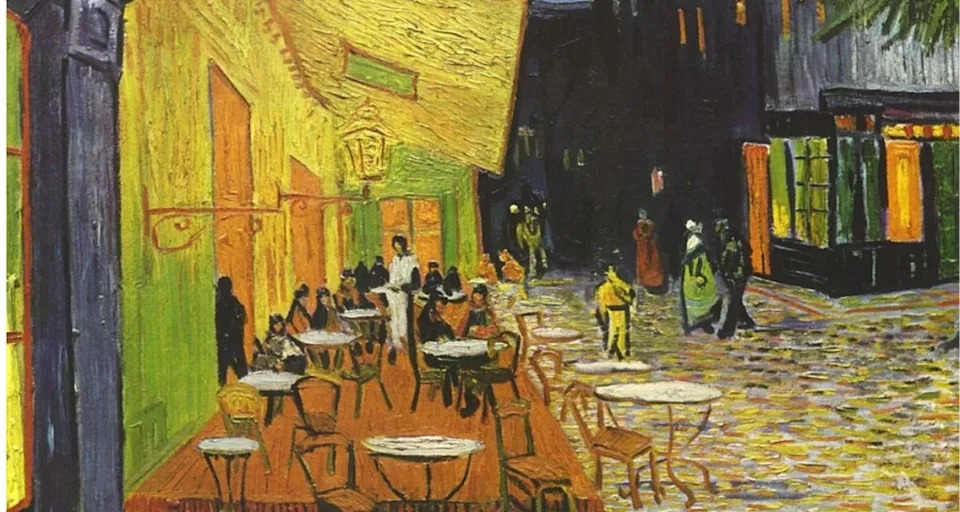
Photo credit:Public domain–Van Gogh's "Café Terrace at Night"
The Method: Reading How a Painting Was Made
Using recent advances in high-resolution 3D imaging and surface-mapping, a team at the Université Polytechnique Hauts-de-France examined the texture of Van Gogh’s brushwork in eight well-known paintings. Rather than focusing on subject matter or composition, the scientists measured the topography of the surface — the ridges, peaks and valleys left by Van Gogh’s brushstrokes and the thick layers of paint known as impasto.
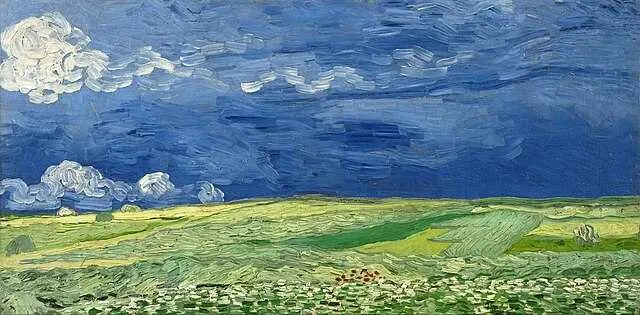
Van Gogh painted wheatfields in the weeks before his death.
The key finding: Van Gogh’s impasto produces a distinctive mathematical pattern that behaves like a fingerprint. The pressure, direction, speed and layering of his strokes create consistent texture patterns that can be quantified into a fractal score. That numerical signature helps distinguish works that were actually made by Van Gogh from careful imitations.
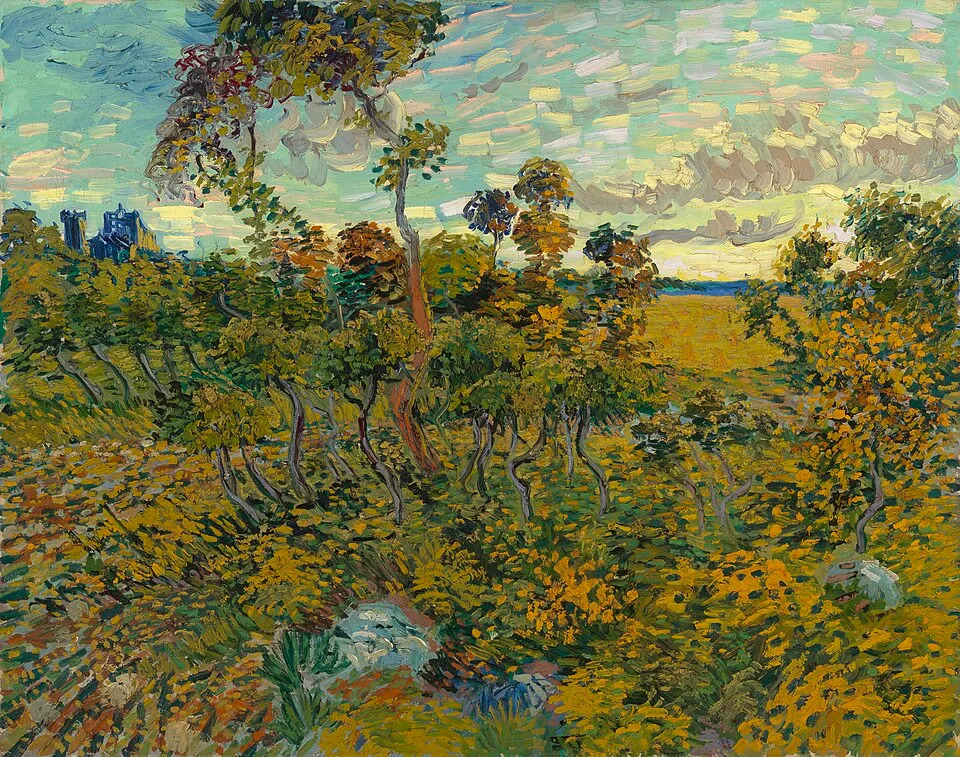
Sunset at Montmajour, painted in 1888. (Media Credit:Wikimedia Commons)
Real-World Tests: Confirmations and Exposures
The researchers tested the method against historical cases. “Sunset at Montmajour”, a painting with archival evidence and chemical pigment tests supporting its authenticity, fell inside Van Gogh’s established fractal range — reinforcing the museum’s conclusions. By contrast, a small oil-on-wood panel known as “The Plowmen” scored well outside the reference range, corroborating earlier expert doubts and effectively exposing the work as a forgery.
Importantly, the fractal-score approach is not intended to replace traditional scholarship. Instead, it complements provenance research, archival documentation and chemical analysis of pigments and supports. Combined, these methods provide a far stronger case for authentication than any single approach alone.
Implications for the Art World
By quantifying how a painting was made rather than only what was painted, this blending of art history and scientific imaging gives curators, conservators and collectors a powerful new tool. As the technique becomes more widely used, it should help protect cultural heritage, speed up investigations and make it harder for forgers to succeed.
While no test is infallible, the fractal-score method marks a major step forward in distinguishing genuine Van Goghs from skillful imitations — and offers a promising model for applying similar techniques to other artists.
Help us improve.