Researchers at Uppsala University used laser-based Raman spectroscopy, microscopy and X-ray imaging to study a panel signed "L daVinci" that depicts the Roman emperor Domitian. Technical analysis identified 13 pigments: 12 are consistent with Medieval or Renaissance palettes, but the presence of Prussian blue — a synthetic pigment from the early 18th century — indicates later retouching. X-rays show alterations where Prussian blue occurs. While the findings clarify restoration history, chemical evidence alone cannot definitively attribute the painting to Leonardo or Titian.
Lasers and Raman Spectroscopy Reveal Later Retouches on Painting Signed “L DaVinci”
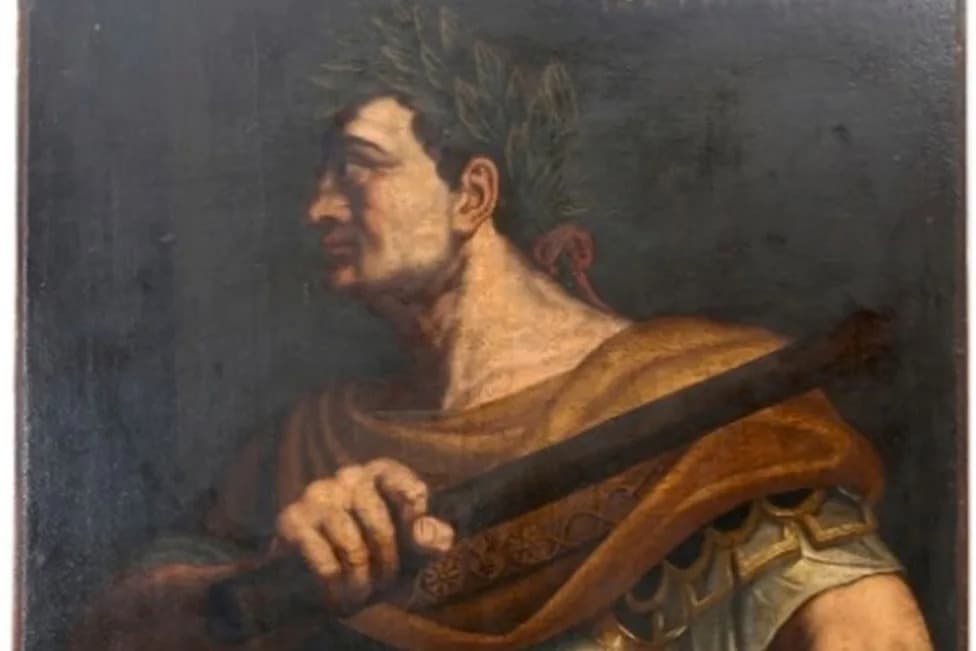
Scientists use lasers to test whether painting ‘signed by Leonardo Da Vinci’ is genuine
Scientists at Uppsala University have used laser-based Raman spectroscopy, microscopy and X-ray imaging to analyse the pigments and layers of a panel bearing the signature "L daVinci". The panel depicts the Roman emperor Domitian and was sold at Christie's in London in 1928 and 1929, when it was attributed to Titian.
Technical analysis and findings
Researchers led by Jakob Thyr applied Raman spectroscopy to identify the chemical and structural properties of paints across the panel and examined microsamples under a microscope to map pigments and layer structure. In total they identified 13 distinct pigments. Twelve of these are traditional inorganic pigments known from the Middle Ages and the Renaissance and therefore would have been available to artists such as Leonardo da Vinci and Titian.
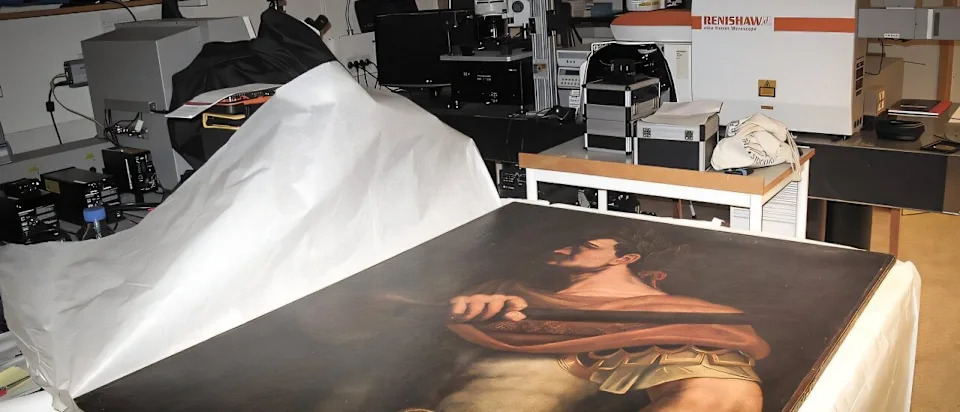
Painting depicts the Roman emperor Domitian and has been analyzed using Raman spectroscopy (Uppsala University)
The dark pigment used in the area thought to contain the inscription was identified as carbon black, a material used since antiquity. However, the team also detected Prussian blue — a synthetic pigment first produced in the early 18th century (around 1704) and therefore not available during the lifetimes of Leonardo or Titian.
Evidence of later intervention
Because Prussian blue postdates the Renaissance, the researchers conclude it was most likely introduced during a later restoration or retouching campaign. X-ray imaging revealed alterations in at least one of the zones where Prussian blue was detected, consistent with later interventions rather than original paint from the 15th–16th centuries.
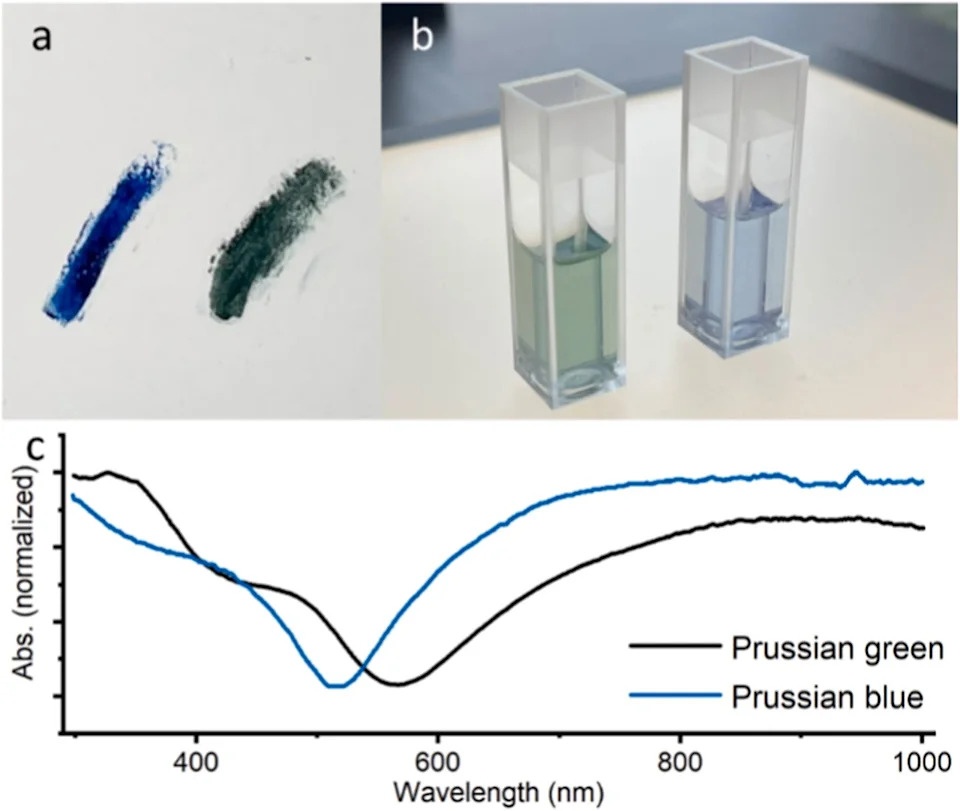
Optical properties of Prussian blue and Prussian green (Materials Today Advances (2026))
Signature, attribution and limits of materials analysis
A technical study uncovered a low-contrast inscription reading "L daVinci" followed by a word the team interprets as the Latin pinxit ("painted"). The inscription is difficult to see and becomes visible only when the surface is lit from particular angles.
Importantly, the presence of later pigments and retouches does not prove or disprove attribution to any individual artist. As Dr Jakob Thyr notes, retouching is common and small, modern additions can appear during routine repairs. Material analysis clarifies the painting's conservation history and helps experts interpret what is original and what was added, but chemical evidence alone cannot definitively attribute the work to Leonardo, Titian or another artist.
Significance
The study, published in Materials Today Advances, demonstrates how analytical methods from materials science—including Raman spectroscopy combined with microscopy and X-ray imaging—can reveal restoration history and inform debates about authenticity. The authors suggest these techniques will become increasingly common tools in the technical examination of historic artworks.
Help us improve.