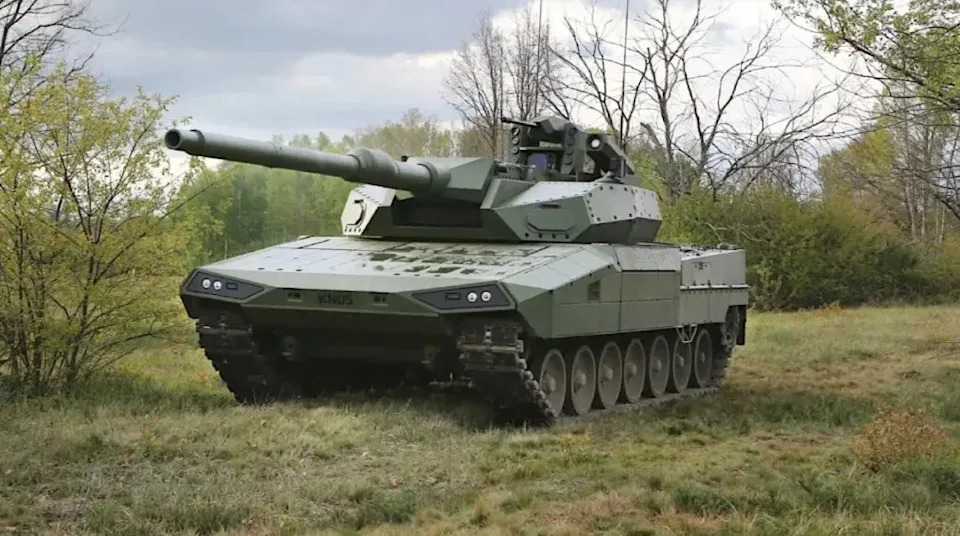
KNDS unveiled CAPINT — an interim tank concept pairing a French uncrewed turret and the 120 mm ASCALON gun with a Leopard 2 hull — offered to France to replace Leclercs while the MGCS programme is delayed into the mid‑2040s. CAPINT keeps compatibility with NATO 120 mm ammunition, is designed to accept a future 140 mm cannon, and features a forward armoured citadel plus layered passive, reactive and active protection. KNDS aims for a demonstrator by 2030, series production by 2035 and frontline deployment around 2037; success of interim designs could complicate the future of the longer‑term MGCS project.
KNDS Unveils CAPINT Interim Tank as European Next-Generation Project Faces Long Delay
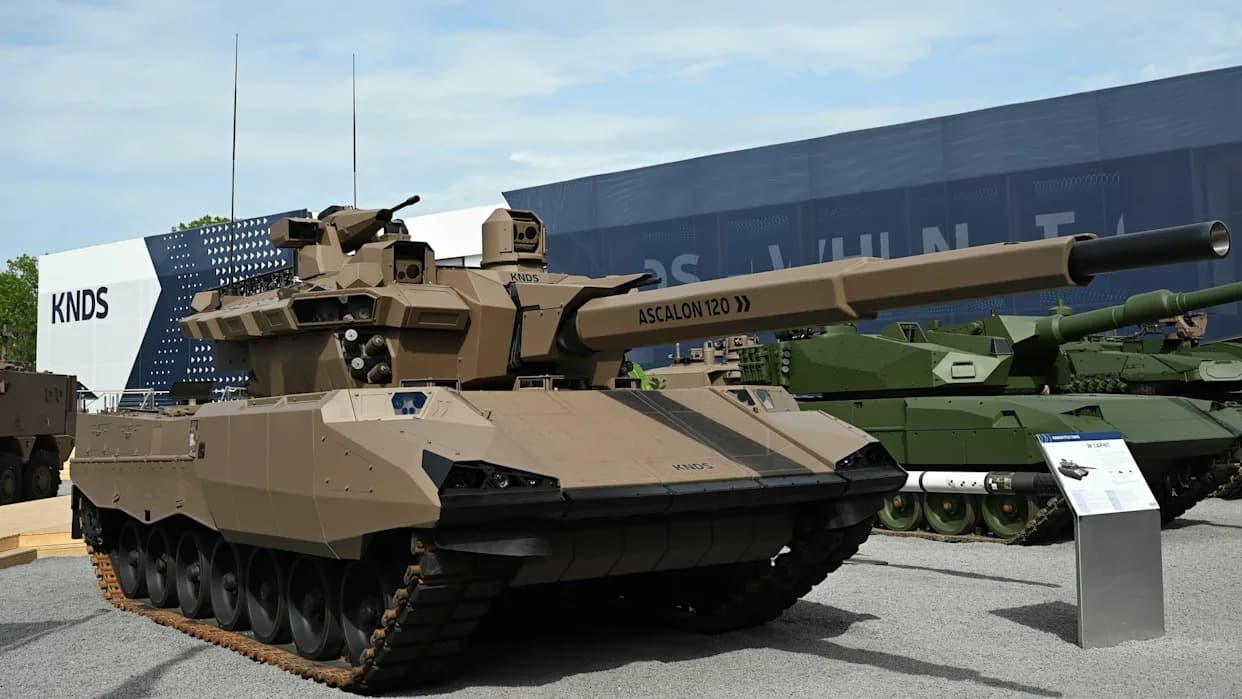
15 June 2026, France, Paris: A Capint tank, manufactured by the Franco-German defense contractor KNDS, is on display at the company's booth at the Eurosatory defense exhibition. The newly developed model is intended to replace the French Leclerc main battle tank currently in service with the French military.
KNDS, the Franco-German defence group, has unveiled CAPINT — an interim main battle tank offered to France to bridge a capability gap while the Franco‑German Main Ground Combat System (MGCS) is delayed into the mid‑2040s. The concept, shown at the Eurosatory exhibition near Paris, pairs a French uncrewed turret and KNDS’s 120 mm ASCALON gun with a German Leopard 2 hull and is designed to accept a future 140 mm cannon.
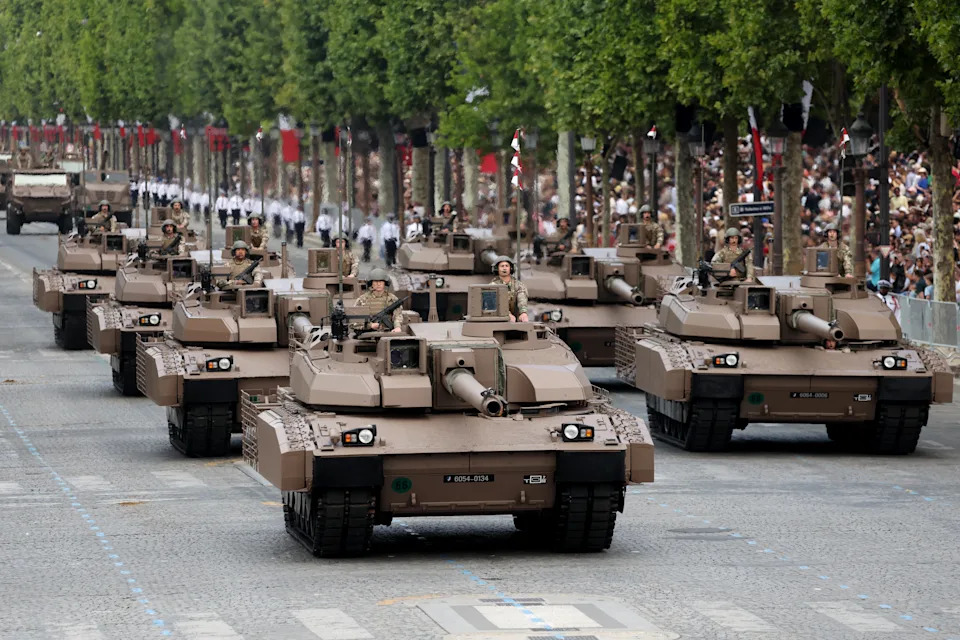
French Army Leclerc tanks during the annual Bastille Day military parade on the Champs-Elysees Avenue in Paris on July 14, 2025.Photo by Ludovic MARIN / AFP
Background
The MGCS programme, launched in 2017 as a flagship Franco‑German effort to produce a next‑generation tank and supporting systems, is now expected to enter service around the mid‑2040s. That delay creates a looming shortfall: France’s Leclerc fleet is scheduled for retirement by 2038 if no successor enters service. Meanwhile, Germany is pursuing its own near‑term solution with the Leopard 3 (also called Leopard 2AX) for early‑2030s service.
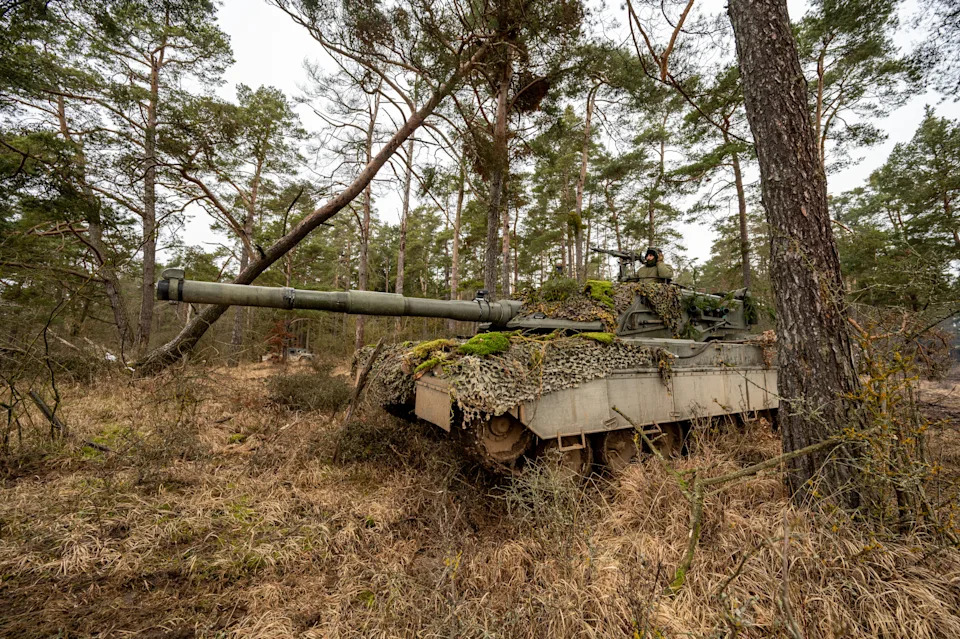
An Italian Ariete main battle tank during the Allied Spirit 2022 military exercise at the Hohenfels military training area in Germany.Photo by Armin Weigel/picture alliance via Getty Images
What CAPINT Proposes
CAPINT (CAPacité INTérmédiaire) is intended as a stopgap solution. Key design choices include:
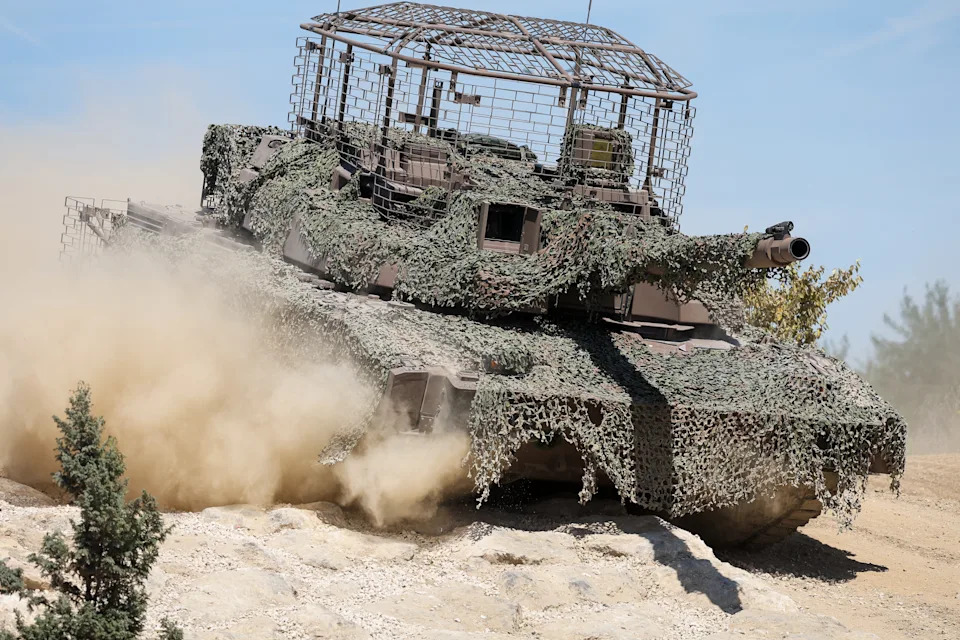
A Leclerc main battle tank with an anti-drone “cope cage” during a dynamic demonstration of military equipment at Eurosatory this week.Photo by Kenzo TRIBOUILLARD / AFP
- Turret and Gun: An uncrewed French turret mounting the 120 mm ASCALON smoothbore gun, with a growth path to a 140 mm weapon planned for MGCS.
- Hull: A Leopard 2 hull as the baseline platform — a proven chassis already in production for multiple customers.
- Crew Protection: A three‑person armoured citadel in the front hull with layered passive composite armour, reactive armour and an integrated active protection system (APS) distributed around hull and turret.
- Systems Integration: Plans to bring forward MGCS technologies such as fully integrated AI, counter‑drone capabilities, beyond‑line‑of‑sight engagement, and support for uncrewed ground vehicles (UGVs) as “robotic wingmen.”
Technical and Operational Notes
The 120 mm ASCALON is notable for being fully compatible with NATO‑standard 120 mm ammunition, allowing armies to use existing stocks while retaining an upgrade path to larger calibres. KNDS has already tested firing the 120 mm ASCALON from an uncrewed turret on a moving vehicle.
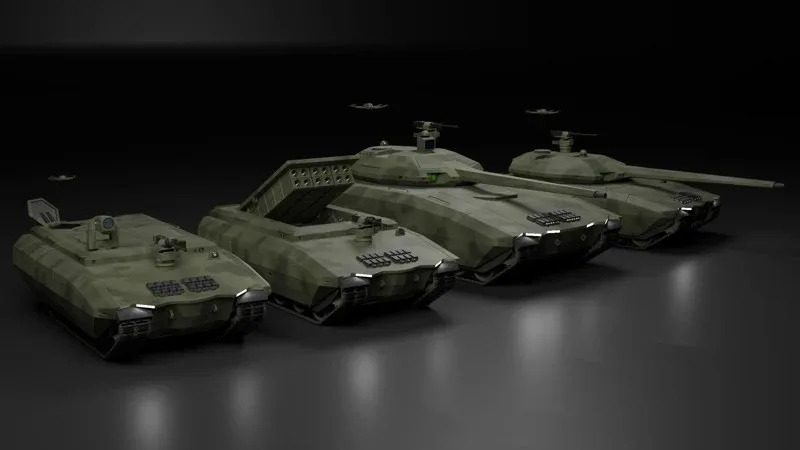
Concept artwork showing four different MGCS vehicles all based on the same main battle tank chassis. The vehicle second from left includes a pop-up launcher for some kind of rocket artillery or possibly loitering munitions.Hensoldt
MGCS documentation envisions the broader programme as a “system of systems” that includes crewed and uncrewed platforms for electronic warfare, air defence, drone and loitering‑munition deployment, and potentially directed‑energy weapons. In the interim, smaller, affordable UGVs are planned to accompany manned tanks, offering varying protection and capability levels to control costs.
The Leopard 2 A-RC 3.0 technology demonstrator will feed into the future Leopard 3.KNDS
Timeline and Industrial Considerations
KNDS says a CAPINT demonstrator could be ready by 2030, with series production starting around 2035 and frontline service by about 2037 if France adopts the design. Germany’s Leopard 3 programme targets an operational vehicle in the early 2030s. If CAPINT uses newly built Leopard 2 hulls, industrial arrangements would likely include production or final assembly in France.
Strategic Implications
The renewed emphasis on heavy armour across Europe follows lessons from Russia’s full‑scale invasion of Ukraine: modern conflicts have exposed tanks to drones, loitering munitions and precision anti‑tank weapons, but have also reaffirmed the role of protected, mobile firepower in combined‑arms operations. That shift has driven fragmented, accelerated programs across Europe — from national upgrades to multinational efforts such as MARTE (Main ARmored Tank of Europe) and MGCS.
“We are already working to create what will be the combat of tomorrow. Maybe the combat of tomorrow, the ambition of MGCS, will come a little bit earlier than the project itself,” said KNDS CEO Jean‑Paul Alary at Eurosatory.
There is a risk that capable interim solutions — including CAPINT and Germany’s Leopard 3 — could reduce political momentum for the more ambitious and costly MGCS. A German government spokesperson has signalled a potential reorientation toward “platform‑independent” technologies, leaving the future format of MGCS uncertain.
Outlook
CAPINT is a pragmatically minded concept: it aims to field modern features quickly by combining proven chassis technology with advanced, upgradeable weapon and protection systems. Its success will depend on industrial agreements, demonstrated performance (especially against contemporary threats like drones), the cost of adoption, and how policymakers weigh near‑term needs against long‑term multinational ambitions such as MGCS.
Contact the author: [email protected]
Help us improve.