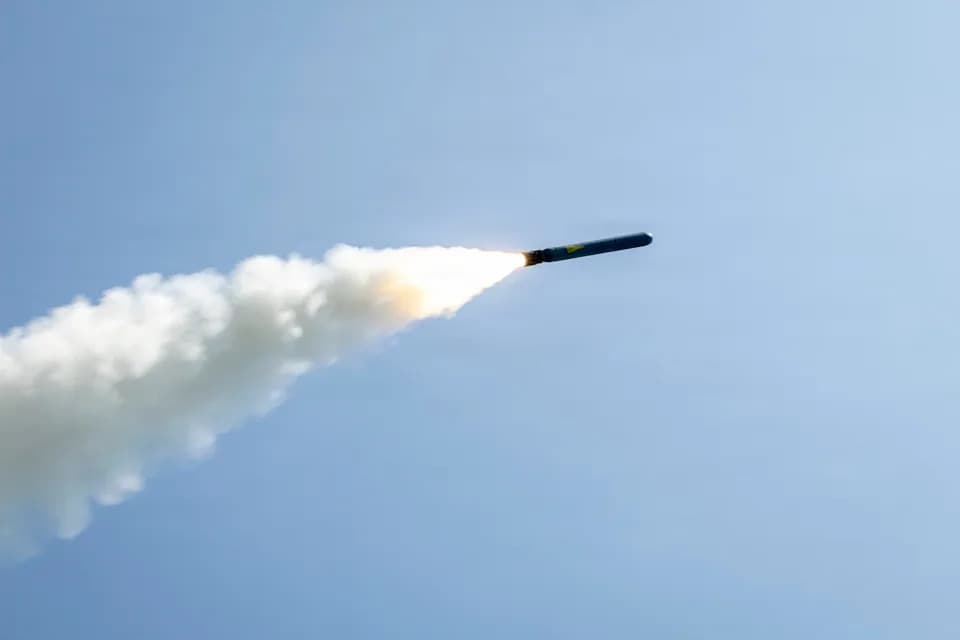
The US Army has advanced the TITAN targeting system into initial production with a $192 million award split between Palantir ($127M) as lead integrator and Anduril ($65M) for hardened vehicle-mounted hardware. Four advanced and four basic units must be delivered within 18 months to supplement nine prototypes already in service. Further production is planned for FY2027, dependent on funding and operational performance.
US Army Moves TITAN From Prototype to Production With $192M Award to Palantir and Anduril
Credit: Quartr
The US Army this week transitioned its Tactical Intelligence Targeting Access Node (TITAN) program from prototype status into initial production, awarding a combined $192 million contract to Palantir Technologies and Anduril Industries.
Who Won the Work
Palantir was awarded $127 million and will serve as the lead contractor managing production and software integration, supported by partner firms including L3Harris Technologies, Sierra Nevada Corporation, Strategic Technology Consulting and World Wide Technology. Anduril received $65 million to build hardened, vehicle-mounted TITAN units and to integrate power and thermal-management systems for reliable field operation.
What TITAN Is Designed To Do
TITAN is a next-generation targeting node designed to streamline how ground forces collect, fuse and act on targeting data — including sensor feeds from space — to shorten the sensor-to-shooter timeline. The system links space-based sensors with vehicle-mounted terminals to give commanders faster, more actionable targeting information.

Google logo on a black background next to text reading 'Click to follow TechRadar'
Configurations, Deliverables and Timeline
The program specifies two configurations: an advanced kit for mounting on tactical trucks (capable of ingesting data from orbital sensors) and a basic variant tailored for the Joint Light Tactical Vehicle (JLTV) to equip smaller units. Under the current award, contractors must deliver four advanced and four basic production units within 18 months. These will augment nine prototype systems already in use during Army exercises.
Program Outlook and Risks
Army officials expect additional production contracts during fiscal year 2027, contingent on requirements, funding and the systems' operational performance. The split across multiple vendors distributes technical risk and can increase resilience, but it also raises program-management and coordination challenges as production scales up.
Bottom line: Moving TITAN into production marks steady progress in modernizing ground targeting capabilities, but whether the system significantly accelerates targeting cycles in contested, large-scale operations will be proven only in operational evaluations and further fielding.
Source: Defense contract announcements and reporting via Defense News (syndicated).
Help us improve.