New Economist/YouGov tracking shows President Trump’s approval among 30-to-44-year-olds at a record-low 26% (65% disapprove, net -39) in a June 5–8 poll of 1,568 adults (±3.5%). National approval in the same survey is 35% approve/60% disapprove (net -25). The result marks roughly a 40-point net swing among millennials since January 2025 and reflects a steady decline across April–June rather than a single drop, raising potential challenges for Republicans heading into the 2026 midterms.
Trump’s Approval Among Millennials Falls to Record Low, Economist/YouGov Tracking Shows

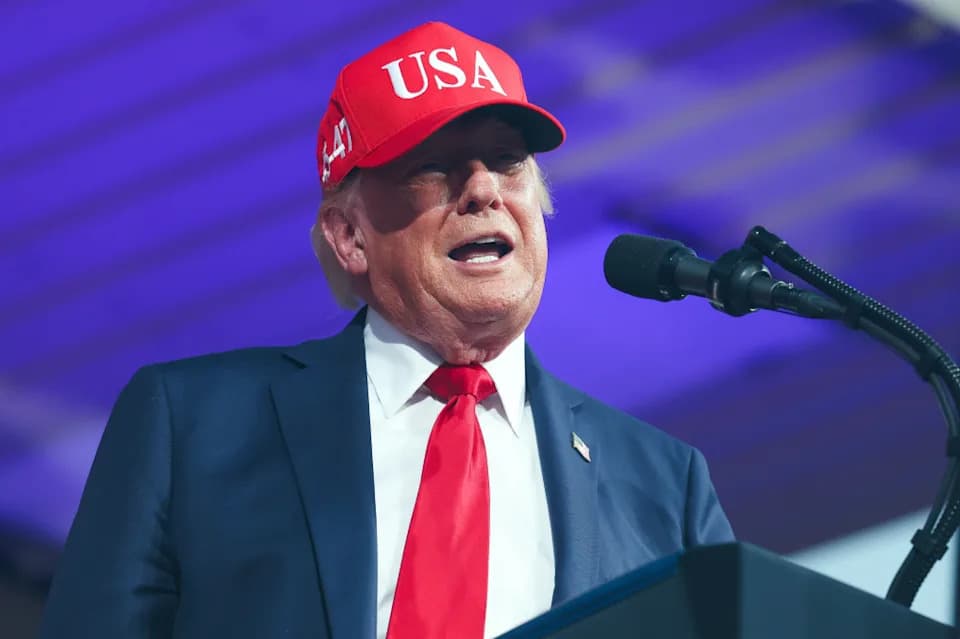
President Donald Trump speaks during a meeting on the sidelines of the G7 summit in Evian, France, on June 15.
President Donald Trump’s approval rating among Americans in their 30s and early 40s has dropped to the lowest level recorded in the Economist/YouGov tracking series, reflecting a steady erosion of support among a key voting bloc as the 2026 midterms approach.
Key Poll Findings
The June Economist/YouGov poll, fielded June 5–8 among 1,568 U.S. adults, finds approval for the president among 30-to-44-year-olds at 26% with 65% disapproving, producing a net rating of -39. Nationally, the survey shows Trump with 35% approval and 60% disapproval (net -25). The poll’s margin of error is ±3.5 percentage points.
How This Compares Over Time
At the start of Trump’s second term (January 26–28, 2025), the Economist/YouGov series showed millennials nearly evenly split: 44% approved and 45% disapproved (net -1, margin of error ±3.2). That change represents an approximate 40-point swing in net approval for this age group since early 2025.
Weekly tracking has shown a gradual decline rather than a single collapse: late April readings put millennial approval near 29%, a mid-May poll recorded 28%, and the June result moved into the mid-20s. Taken together, the pattern suggests a durable shift rather than short-term volatility.
Broader Context
Multiple aggregated models mirror the downward national trend. The New York Times polling average places Trump’s approval near 39% (58% disapprove), CNN’s poll-of-polls shows roughly 37% approval (61% disapprove), and Nate Silver’s Silver Bulletin noted a second-term net low near -21.2 in late May before edging slightly higher.
Analysts point to economic pressures—housing affordability, inflation and stagnant wages—as major drivers of weak support among younger voters. Foreign policy concerns have also been cited in open-ended responses across surveys of younger cohorts, including both millennials and Gen Zers.
Political Implications
Millennials now represent one of the largest voting blocs in the United States. Sustained weakness with this demographic could create structural headwinds for Republicans down-ballot in the 2026 midterms, particularly in competitive districts and states where younger voters are a decisive share of the electorate.
Administration Response
White House: The administration has downplayed short-term polling, pointing to Trump’s 2024 victory—77 million votes—as the ultimate measure of public support and emphasizing ongoing economic priorities like job creation and cost-of-living relief.
Methodology Note
The Economist/YouGov tracking series uses a web-based panel weighted to match the U.S. adult population by gender, age, race, education, region and past voting behavior. While any single poll has limits, the consistency across weekly tracking and alignment with broader aggregates strengthens confidence that the decline reflects a meaningful trend.
For interactive visuals and state-level breakdowns, see the Economist/YouGov visualization embeds referenced in the original report.
Help us improve.