Three consecutive Economist/YouGov waves show President Trump’s approval among college graduates falling from 34% to 30% while disapproval rose to 69%. College-educated voters now favor Democratic congressional candidates by a wide margin and report higher intended turnout (78% vs 67%). YouGov did not publish subgroup margins of error and pollsters have sometimes underestimated Trump, so the results are a noteworthy warning rather than a definitive prediction.
College-Graduate Support for Trump Falls to 30% Across Three Polls — A Potential Warning For Republicans

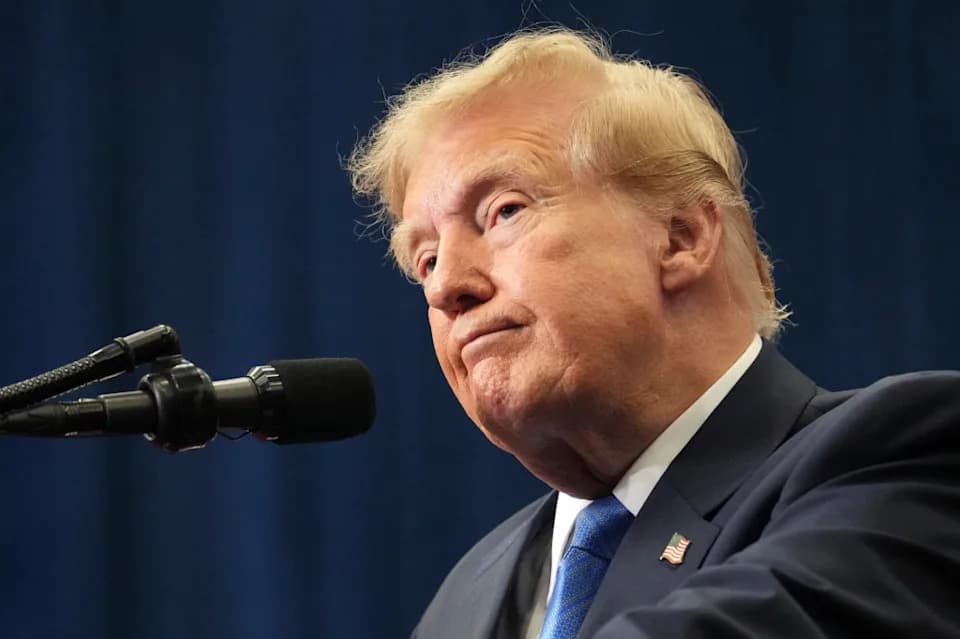
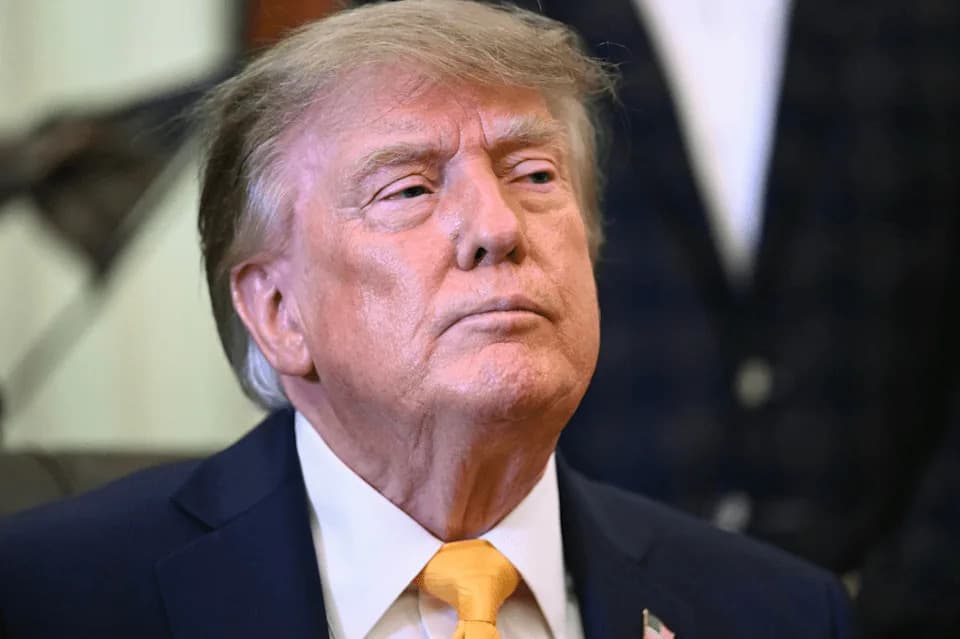
U.S. President Donald Trump during a meeting with Ireland's Prime Minister Micheál Martin at Farmleigh House in Dublin, Saturday, September 12, 2026.
Recent Economist/YouGov tracking surveys show President Donald Trump's approval among Americans with college degrees slipping from 34% (Aug. 21–24) to 31% (Aug. 28–31) and then to 30% (Sep. 4–8). Over the same period, disapproval among college graduates rose from 63% to 69%, widening Trump's net deficit with this group by roughly 10 points.
Key Findings
All three waves recorded increases in strong disapproval within the college-educated subgroup: 54% strongly disapproved in Aug. 21–24, 57% in Aug. 28–31, and 61% in Sep. 4–8. Sample sizes for the full surveys were 1,536 (504 college graduates), 1,592 (563 college graduates) and the Sep. 4–8 wave produced similar subgroup counts. Among respondents without four-year degrees in the Sep. 4–8 wave, 41% approved and 57% disapproved, leaving Trump with an 11-point approval edge in that group.
On specific issues in the latest poll, college graduates rated Trump negatively: 28% approved of his handling of the economy (72% disapproved), and just 25% approved of his handling of inflation (73% disapproved). Taxes and government spending also received net-negative ratings from college-educated respondents.
Political Implications And Caveats
The college-educated demographic appears to be leaning heavily toward Democrats for congressional contests: in the Sep. 4–8 wave, 57% of college graduates said they planned to vote for the Democratic candidate in their district, versus 28% for the Republican. College graduates also reported higher stated turnout: 78% said they would definitely vote in November, compared with 67% of Americans without college degrees. These patterns could influence competitive House and Senate races, particularly where margins are narrow.
Pollting Caveats: YouGov did not publish separate margins of error for the college-graduate subgroup; the polls' overall margins of error ranged roughly from ±3.4 to ±3.5 points. That means some week-to-week movement within the subgroup could reflect normal sampling variation. Still, three consecutive readings moving in the same direction are notable. Analysts also point out that pollsters have sometimes underestimated Mr. Trump’s support in past campaigns, so these results are a warning sign rather than a definitive predictor of election outcomes.
White House spokesperson Davis Ingle previously told Newsweek: "The ultimate poll was November 5, 2024, when nearly 80 million Americans overwhelmingly elected President Trump to deliver on his popular and commonsense agenda."
Photo: U.S. President Donald Trump during a meeting with Ireland's Prime Minister Micheál Martin at Farmleigh House in Dublin, Saturday, September 12, 2026.
Overall, the sequence of polls suggests growing resistance to the president among college-educated voters. How that trend translates into actual election results will depend on turnout, local dynamics and candidate strength in individual districts.
Help us improve.