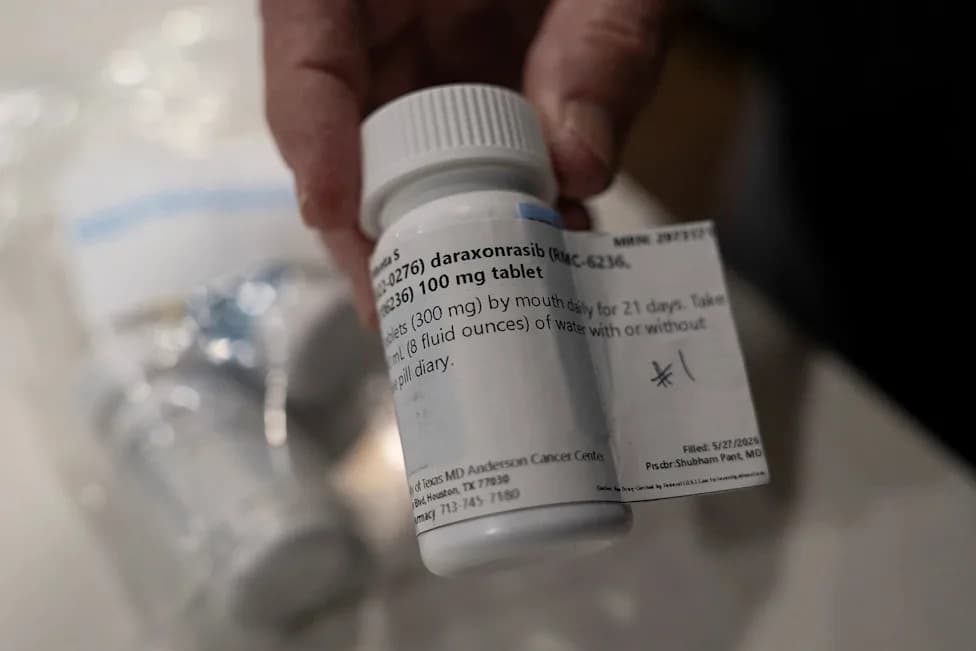
Daraxonrasib, an oral KRAS‑targeting drug, significantly improved survival in a global trial of 500 patients with metastatic pancreatic cancer. The pill reduced the risk of death by about 60%, with median survival near 13 months versus under seven months for physician‑selected chemotherapy. Published in the New England Journal of Medicine and led by Dana‑Farber's Brian Wolpin, the study supports a move toward genetically targeted treatments; the FDA has authorized an expanded access program while regulatory review continues.
Daily KRAS‑Targeting Pill Dramatically Extends Survival in Metastatic Pancreatic Cancer

Photo Credit: iStock
After decades of limited progress against pancreatic cancer, researchers report a major breakthrough: a once‑daily oral drug, daraxonrasib, significantly extended survival for people with advanced, treatment‑resistant disease.
In a global randomized trial of 500 patients with metastatic pancreatic cancer whose disease progressed after prior therapy, daraxonrasib outperformed physician‑selected chemotherapy. About half the participants received the pill and half received chemotherapy; investigators reported that daraxonrasib reduced the risk of death by roughly 60%. Median overall survival was about 13 months for people taking daraxonrasib versus just under 7 months for those on chemotherapy, according to a trial summary reported by Earth.com.
Why This Matters
The study, published in the New England Journal of Medicine and led by Brian Wolpin of the Dana‑Farber Cancer Institute, focused on tumors driven by mutations in the KRAS gene. KRAS has long been difficult to target because its protein structure makes it hard for drugs to bind, earning it the label "undruggable". A targeted oral therapy that meaningfully improves survival would represent a major advance in pancreatic cancer care.
"It is exciting to see that we may soon be able to help patients with metastatic pancreatic cancer in ways we haven't been able to before, improving both survival and quality of life," said Brian Wolpin in a Dana‑Farber release.
Clinical and Regulatory Context
Pancreatic cancer remains one of the deadliest cancers: the National Cancer Institute estimates a five‑year survival rate of about 13.7%, and nearly 2% of people will be diagnosed with the disease in their lifetimes. Many patients are diagnosed at an advanced stage when surgery is not possible and chemotherapy offers only modest benefit.
The Dana‑Farber release notes that the U.S. Food and Drug Administration has authorized an expanded access program for the company Revolution Medicines to provide daraxonrasib to some patients before formal approval, while regulatory review continues.
What Comes Next
These results point toward a shift from one‑size‑fits‑all chemotherapy to genetically tailored therapies for pancreatic cancer, potentially improving survival and quality of life. Important caveats remain: full regulatory review is required, longer follow‑up and additional studies will help define safety and which patients benefit most, and access will depend on approval and rollout plans.
Overall, the trial offers cautious optimism that a long intractable target—KRAS—may finally be tractable for a meaningful subset of patients with metastatic pancreatic cancer.
Help us improve.