The Court of Appeal has ruled that the UK lawfully proscribed Palestine Action as a terrorist organization, overturning an earlier High Court decision. Chief Justice Sue Carr said evidence showed the group used covert cells to target defence and military sites, undermining claims it was purely non-violent civil disobedience. The ban followed a June 2025 break-in at an RAF base and other incidents at Elbit Systems UK; proscription carries penalties of up to 14 years' imprisonment. Supporters and civil liberties groups say the move suppresses free speech, while some activists have already been jailed in related cases.
Court Of Appeal Upholds UK Ban On Palestine Action, Rules Proscription Lawful
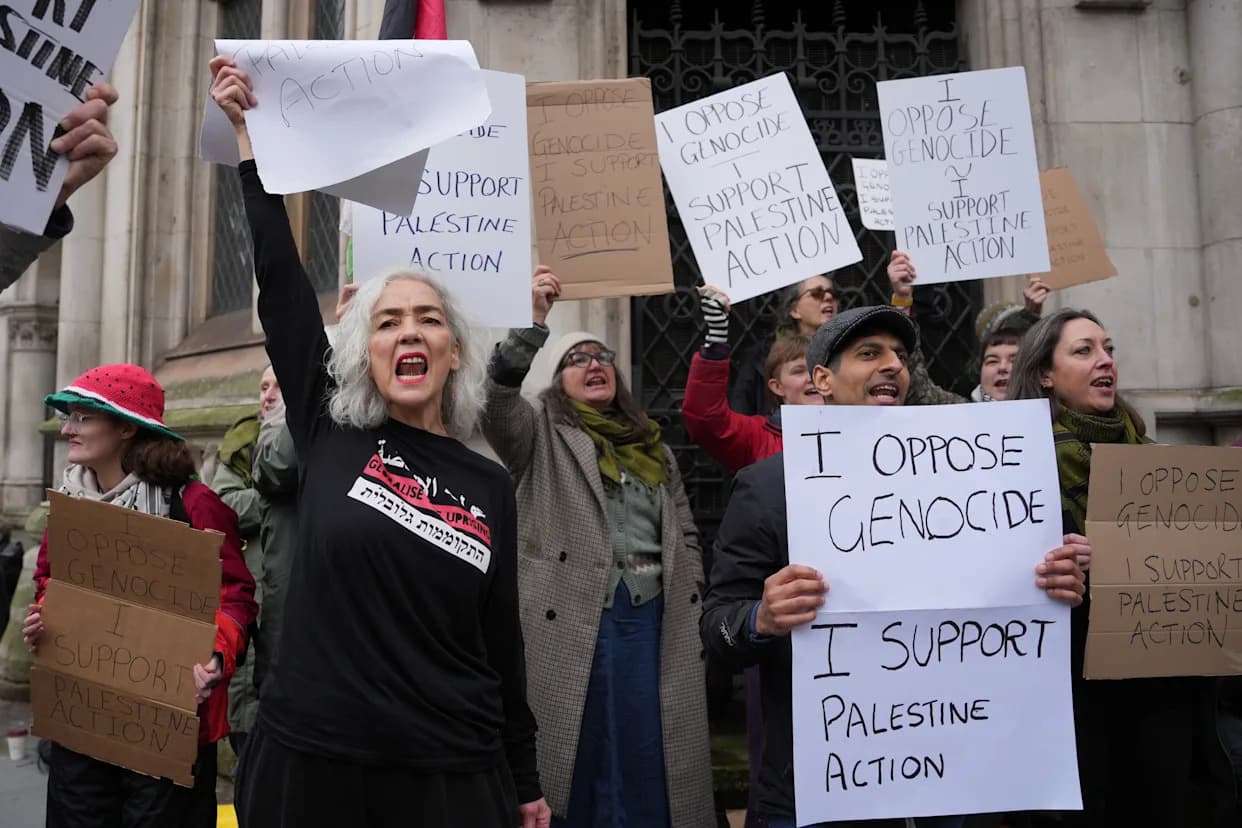
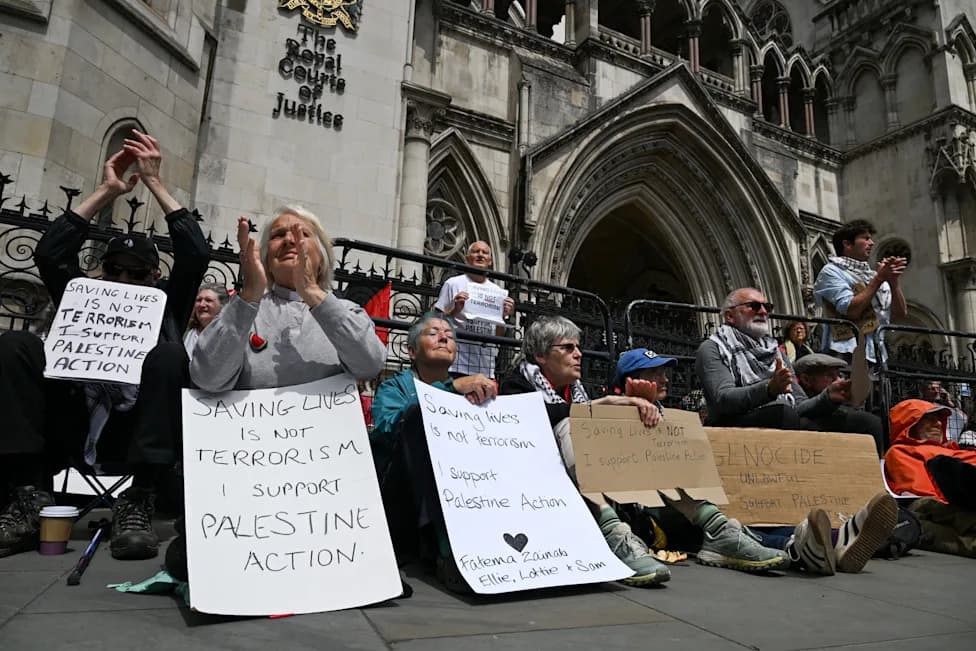
FILE - Supporters of Palestine Action stage a protest outside the Royal Court of Justice in London, Friday, Feb. 13, 2026. (AP Photo/Kin Cheung, File)(AP Photo/Kin Cheung)
The Court of Appeal in London has ruled that the UK government acted lawfully when it proscribed the protest group Palestine Action under terrorism legislation.
Chief Justice Sue Carr rejected the group's contention that it was solely a civil disobedience campaign, finding that investigators had shown Palestine Action operated through covert cells that targeted defence companies and military sites to cause damage.
'In our judgment, that premise was seriously flawed. It was not a sustainable proposition to portray Palestine Action as a non-violent organization,' Chief Justice Carr said.
The appeal court's decision overturns a February ruling by three senior High Court judges, who had concluded that although the group advanced a political cause and had committed crimes, the overall scale of activity at that time did not justify full proscription. The government maintained the ban while it appealed.
The proscription followed a high-profile incident in June 2025, when activists linked to Palestine Action broke into a Royal Air Force base to protest Britain's military support for Israel's offensive against Hamas in Gaza. That incident, together with a series of break-ins and vandalism at sites including facilities operated by Elbit Systems UK, prompted ministers to place the group on the list of proscribed organizations—alongside groups such as al-Qaida and Hamas—making membership or support an offence punishable by up to 14 years in prison.
Authorities say more than 3,300 people have been arrested at protests where placards reading 'I oppose genocide. I support Palestine Action.' were seen; over 700 people have been charged under the U.K.'s Terrorism Act, although the majority of those prosecutions have not yet resulted in convictions.
Palestine Action co-founder Huda Ammori said the group will continue to challenge the ban "all the way" to the Supreme Court and the European Court of Human Rights, calling the proscription 'one of the most extreme attacks on free speech and the right to protest in modern British history.'
Supporters and civil liberties groups argue the arrests and the proscription amount to a significant curtailment of free expression and the right to peaceful protest. Groups such as Defend Our Juries warned the ruling could lead to further use of police resources to detain demonstrators they describe as peaceful.
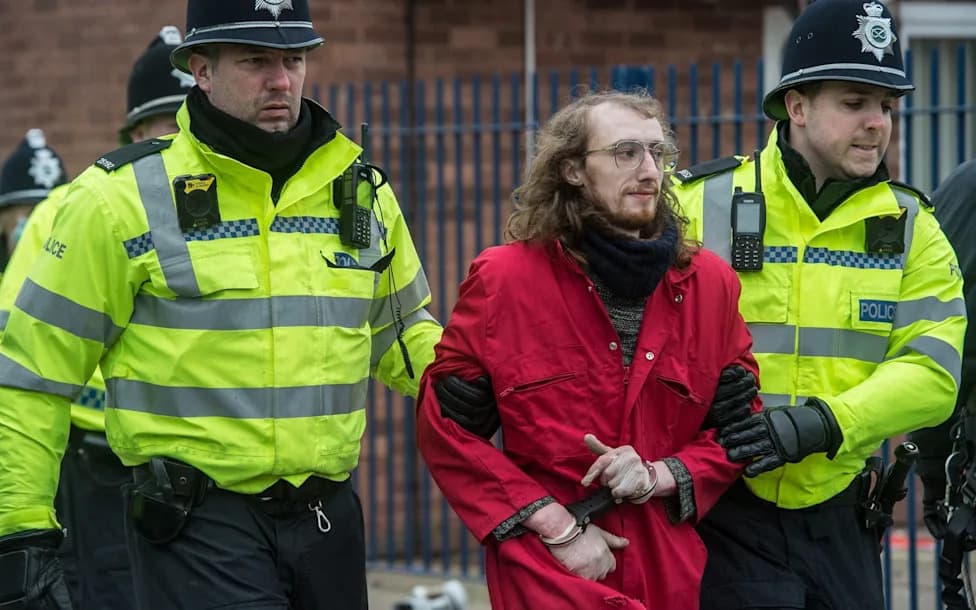
Ministers and security officials counter that Palestine Action's tactics have caused millions of pounds in damage and raised national security concerns. In a related development, four activists who broke into Elbit Systems UK's Bristol factory in 2024 and smashed equipment were jailed after a judge concluded they had acted as terrorists; more than 100 supporters were arrested outside the court during that sentencing.
The Court of Appeal's judgment clarifies the legal threshold for proscription and is likely to shape how authorities and courts approach politically motivated direct action in the future.
Help us improve.