Victoria, identified by NDTV, posted a viral Instagram video saying a six‑pill prescription quoted at $1,000 in the U.S. cost $25 after a Canadian pharmacy sourced it from an Indian manufacturer ($10 + $15 shipping). She called the U.S. healthcare system a “scam” after her insurer denied coverage. Research from RAND and polling from KFF underscore large international price gaps and widespread concern about affordability, while the FDA warns of legal and safety risks when buying medicines abroad and recommends verifying pharmacies and consulting prescribers.
Woman Calls U.S. Healthcare a “Scam” After $1,000 Prescription Costs $25 Through India
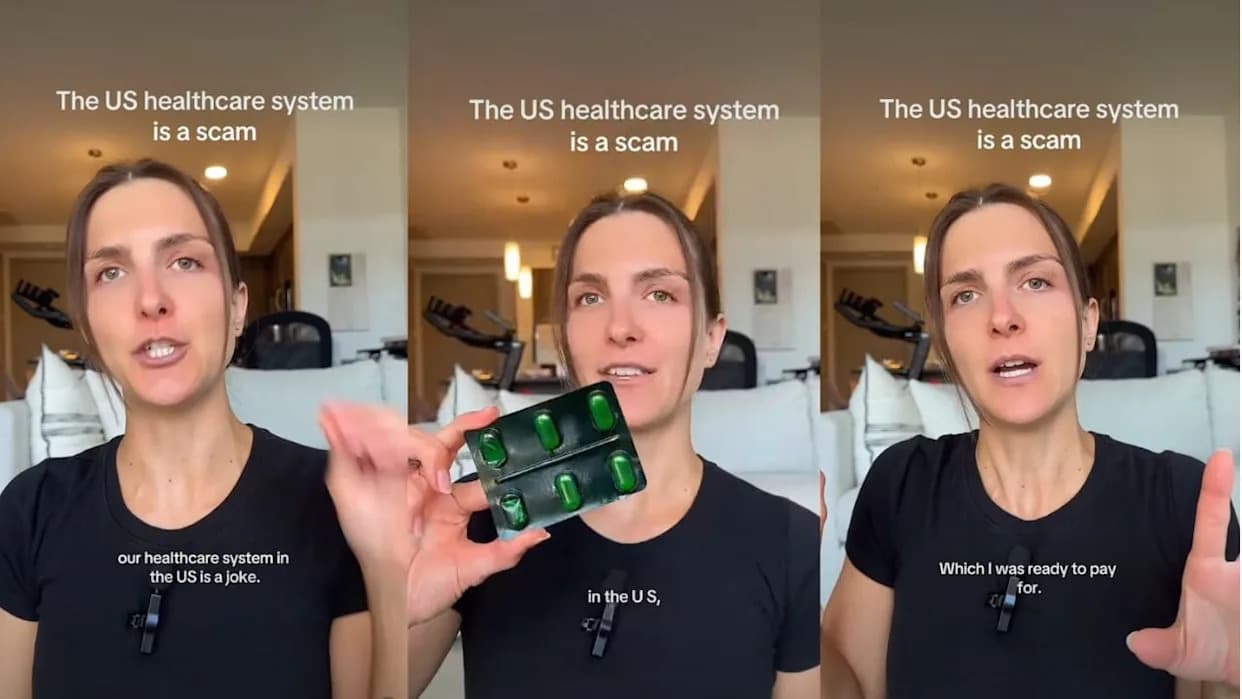
Image Credit: lemonsnlyme/Instagram.
An American woman identified by NDTV as Victoria posted a viral Instagram video saying a six‑pill prescription that was quoted at $1,000 out‑of‑pocket in the United States ended up costing $25 after being sourced through an international pharmacy route.
Victoria says her insurer refused to cover the medication. Her doctor recommended sending the prescription to a Canadian pharmacy; she expected a quote of roughly $100–$200. Instead, the Canadian pharmacy apparently sourced the medication from an Indian manufacturer, charging about $10 for the drug and roughly $15 for international shipping, for a total of $25.
“This medication was going to cost me $1,000 out‑of‑pocket in the US and I bought it for $25,” Victoria says in the clip, which NDTV reported went viral. She described the experience — and the wider cost gap it revealed — as a breaking point and called the U.S. healthcare system a “scam.” The article preserves that characterization as her personal reaction rather than a legal finding.
Why the Story Resonated
The video struck a chord because it put a familiar frustration into a stark, easy‑to‑understand comparison: a prescription, a doctor and insurance, yet vastly different prices depending on the fulfillment route. Social media users reported similar experiences or noted specific drugs that are dramatically cheaper when sourced internationally. NDTV reported commenters pointing to medicines such as rifaximin as examples.
Broader Price Context
Research supports that U.S. drug prices are often much higher than prices elsewhere. A 2024 RAND report using 2022 data found that U.S. gross prescription drug prices averaged 278% of prices in 33 comparison countries across all drugs, and for brand‑name originator medicines U.S. prices averaged 422% of comparator countries.
Polling from KFF shows widespread concern about prescription affordability: 82% of U.S. adults say drug costs are unreasonable, 59% worry about affording prescriptions for themselves or family members, and 43% reported not taking medicine as prescribed in the past year because of cost.
Safety, Legal and Practical Considerations
Victoria’s video is not a how‑to guide for buying medication abroad. U.S. consumers who consider ordering prescription drugs online or from foreign suppliers face legal, safety and verification risks. The U.S. Food and Drug Administration (FDA) urges caution and promotes its BeSafeRx resources to help people identify safer online pharmacies. The FDA warns specifically about sites that dispense prescription medicines without requiring a valid prescription or that offer deals that seem too good to be true.
The FDA’s personal importation guidance describes limited circumstances under which prescription drugs may be brought into the United States. Officials advise anyone considering an international or lower‑cost option to:
- Talk with the prescribing doctor before pursuing alternate fulfillment routes,
- Verify the pharmacy’s legitimacy and licensing,
- Avoid websites that do not require a valid prescription, and
- Confirm the medicine’s manufacturer and source before paying.
Victoria’s case highlights both the intensity of public concern about drug prices and the complex tradeoffs patients face when seeking more affordable care.
Help us improve.