
Argentine black-and-white tegus — large invasive lizards up to 4 feet long — are spreading beyond Florida into several Southern states. EDDMapS records show nearly 11,800 reports in Florida, with isolated sightings in Georgia, South Carolina, Texas and Alabama. Officials warn tegus raid bird and reptile nests, eat a wide variety of foods and reproduce rapidly, making early detection and professional removal crucial to protect native wildlife and local economies.
Invasive 4-Foot Argentine Tegu Spreads Across the U.S. South — Officials Urge Early Detection
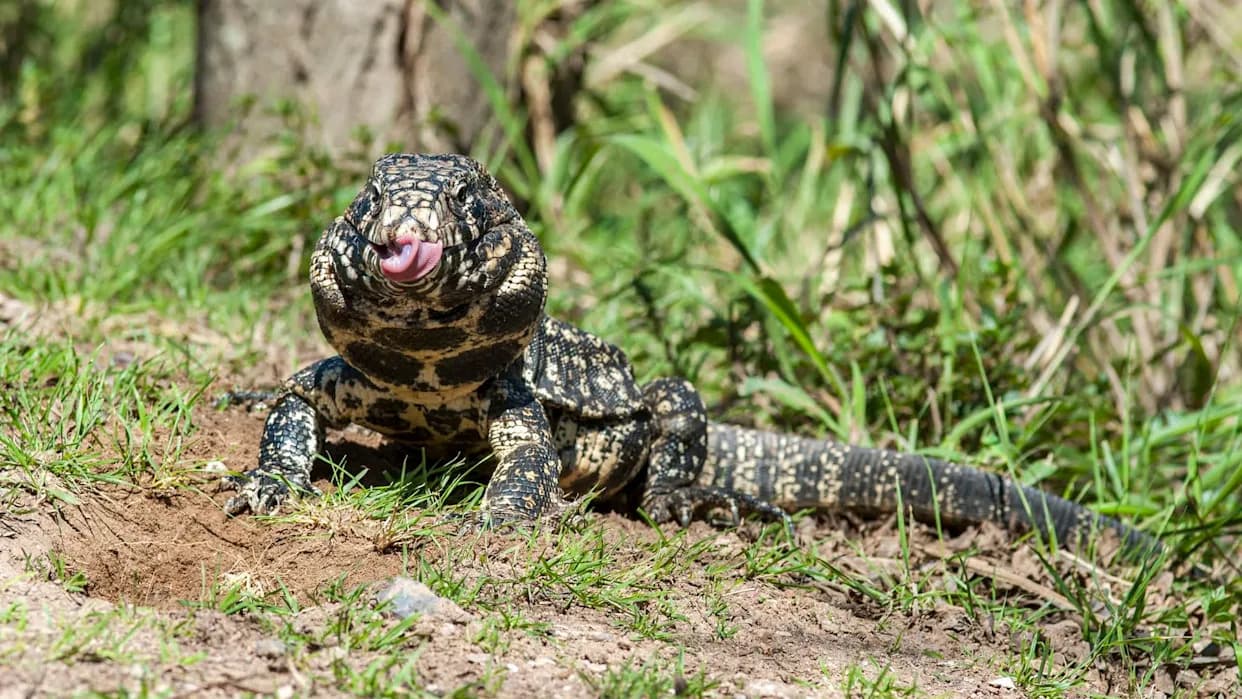
Photo Credit: iStock
Wildlife agencies across the U.S. South are racing to slow the spread of the Argentine black-and-white tegu, a large invasive lizard that can grow to about 4 feet long and weigh 10 pounds or more. Conservationists warn the species can harm native wildlife, agriculture and local ecosystems if allowed to establish breeding populations outside Florida.
Where Tegus Are Appearing
Native to South America, the Argentine black-and-white tegu was introduced to Florida through the pet trade and became established there after 2006. Florida remains the primary hotspot, with roughly 11,797 confirmed reports in the University of Georgia’s EDDMapS database. Isolated sightings have also been recorded in Georgia (23), South Carolina (5), Texas (4) and Alabama (1). At the time of the database check, Louisiana had no EDDMapS reports, but the state took action in 2023 to restrict possession of several non-native reptiles, including tegus.
Why Officials Are Concerned
Tegus are omnivores with an opportunistic diet that includes eggs from ground-nesting birds (quail, turkey, chickens), reptile eggs (including those of American alligators and gopher tortoises), fruit, garden produce, pet food and small animals. Their egg-raiding behavior can reduce populations of native species and alter food webs. Because tegus reproduce rapidly and have few natural predators in the region, early detection and removal are critical to preventing long-term ecological and economic damage.
Safety, Legal Status and What Landowners Can Do
Tegus generally do not seek out people but can defend themselves with sharp teeth, claws, strong jaws and tail strikes when threatened. According to the Georgia Wildlife Resources Division, tegus are not protected in Georgia and may be killed on private property with the landowner’s permission or on Wildlife Management Areas with appropriate firearms during hunting season; however, local ordinances and animal-cruelty laws still apply. Other states and agencies may have different rules, and Louisiana lists the species as invasive and has tightened possession rules.
How To Help
If you see a tegu or signs of one (large holes, tracks, or missing eggs), report the sighting to your state wildlife agency or a local conservation authority and avoid handling the animal yourself. Proper reporting and removal by trained professionals give the best chance of stopping new populations from becoming established.
Key agencies cited: Florida Fish and Wildlife Conservation Commission, Georgia Wildlife Resources Division, and the University of Georgia EDDMapS database.
Help us improve.





















