Hawick campaigners have commissioned a black, gold-trimmed post box to honour Tom Jenkins, regarded as Britain’s first known black schoolteacher, after Royal Mail declined to include him in its 2020 Black History Month pillars. Jenkins arrived in Hawick in 1803 from the Upper Guinea Coast, taught himself the classics while herding cattle, studied Greek and Latin at the University of Edinburgh, helped found a school in Pimlico and later taught in Mauritius for 37 years. The local group has also commemorated Frederick Douglass's 1846 visit and will introduce a Frederick Douglass Prize for pupils.
Black Post Box To Honour Britain’s First Known Black Schoolteacher, Tom Jenkins
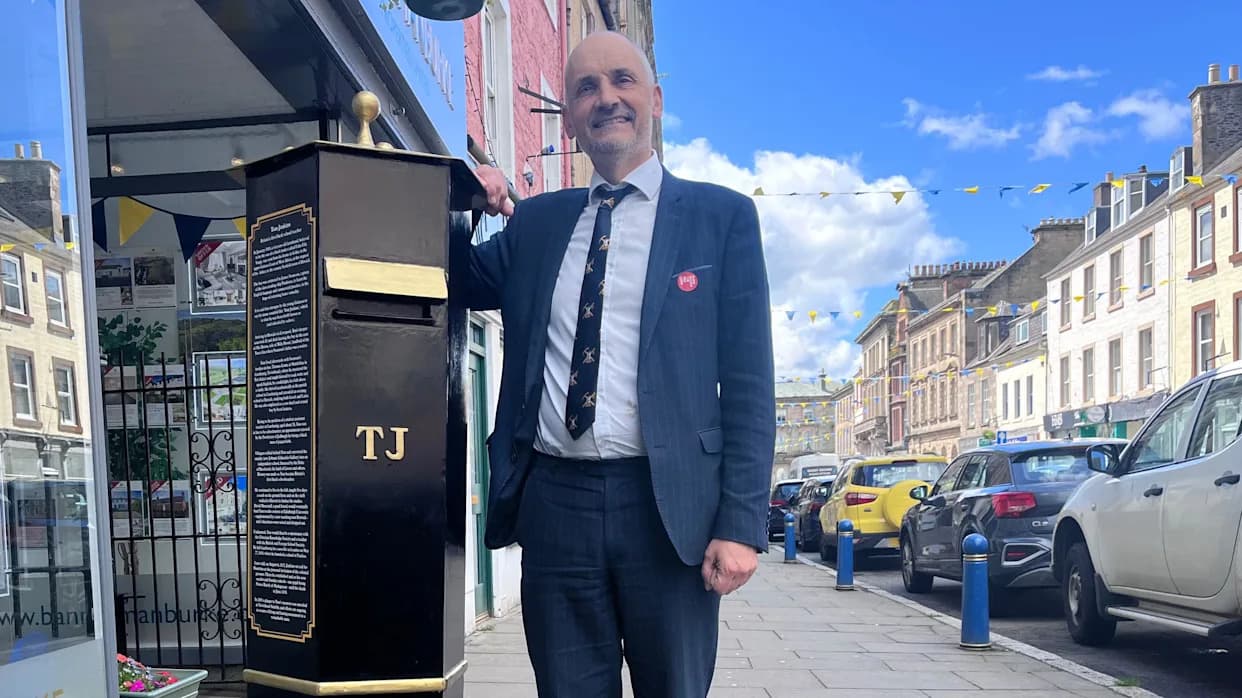
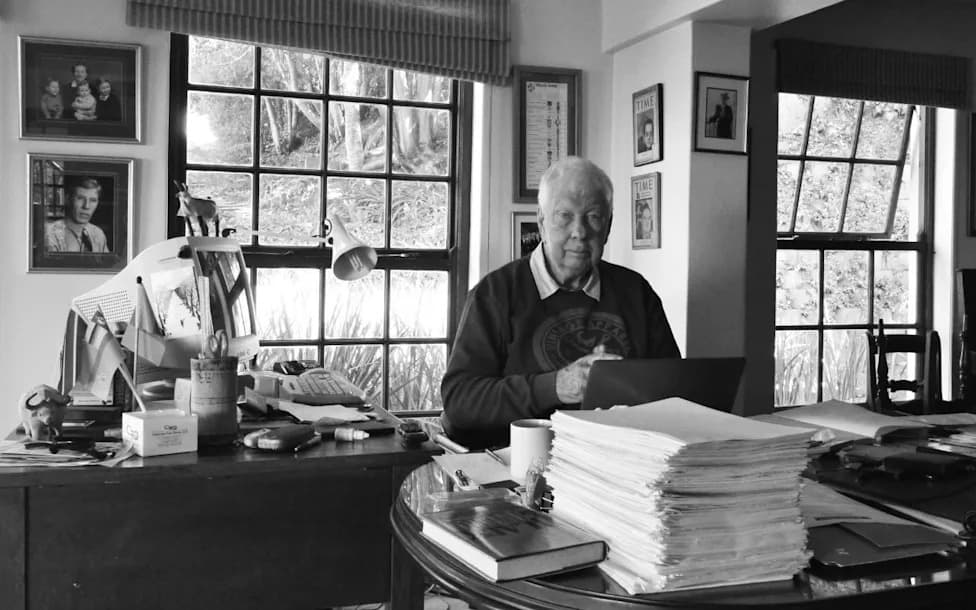
Hawick lawyer Rory Bannerman with the Tom Jenkins pillar box [BBC]
A black, gold-trimmed post box will be installed outside Hawick's Heritage Hub later this year to honour Tom Jenkins, widely recognised as Britain’s first known black schoolteacher. The tribute was commissioned by a local anti-racism group after Royal Mail declined a request to include Jenkins in its 2020 Black History Month pillar box programme.
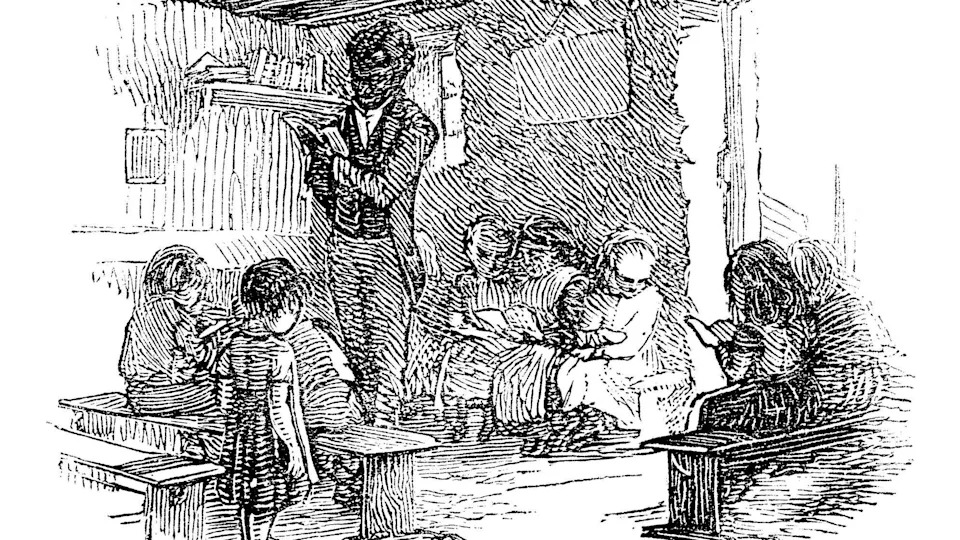
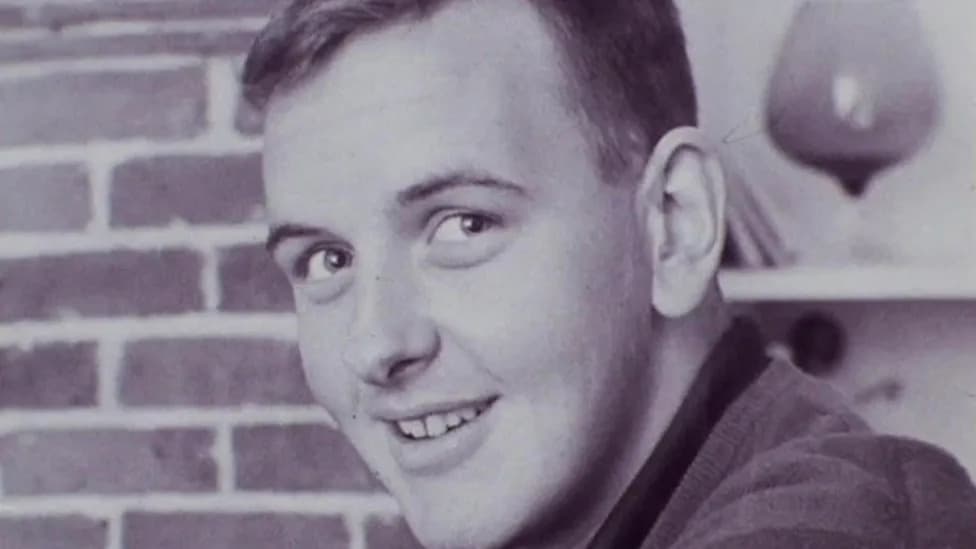
A vintage etching of Tom Jenkins teaching at Teviothead, near Hawick [Getty Images]
The custom post box mirrors the design of Royal Mail's commemorative boxes — painted black with gold trim — and includes a short biography of Jenkins. Local metalworker and designer Bernie Armstrong donated his time to make the box.

Historian Alistair Redpath wrote the brief biography of Jenkins that features on the black pillar box [BBC]
From The Upper Guinea Coast To Hawick
Jenkins arrived in Hawick in 1803 as a six-year-old accompanied by a local naval surgeon, James Swanson, who died shortly after their arrival. Contemporary accounts suggest sailors aboard the ship Prudence found the boy's original name difficult to pronounce and rendered it as "Tom Jenkins." Initially fostered by the Broon family, Jenkins later moved to the Swanson in-laws at Teviothead, a rural settlement about 10 miles (16 km) from Hawick.

Rory Bannerman is storing the post box in his office until it is moved to a site outside the Hawick heritage hub [BBC]
Self-Education And Teaching
While working as a cowherd Jenkins taught himself the classics by candlelight, attended the local school and became a pupil teacher. Historian Alistair Redpath notes that Jenkins progressed from pupil to teacher while continuing his studies at night, eventually attending the University of Edinburgh to study Greek and Latin.
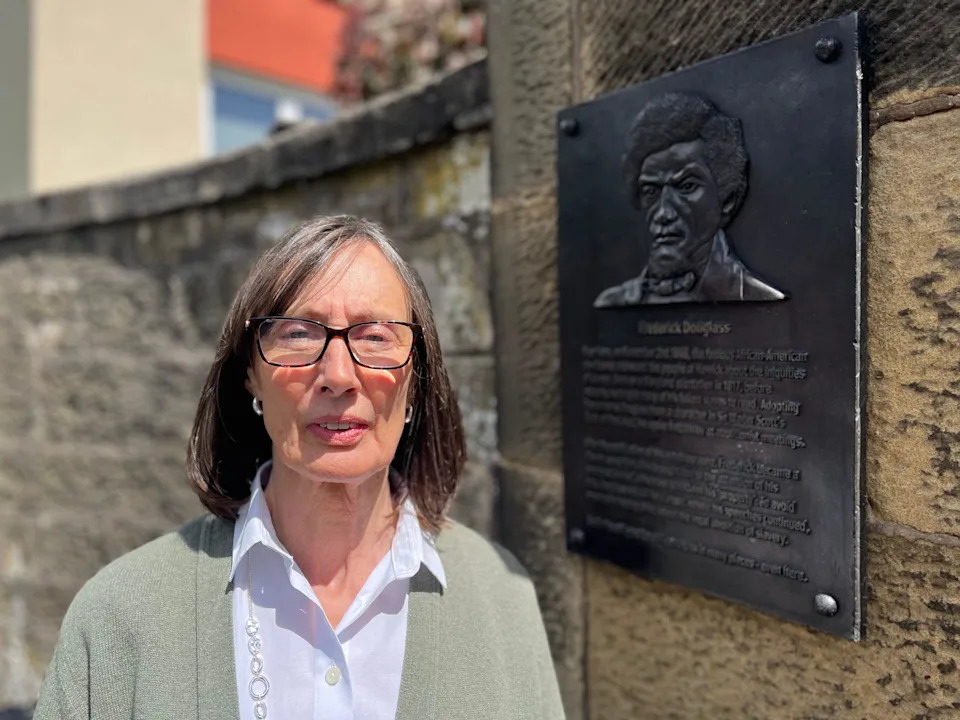
Evelyn Jackson from Hawick Archaeological Society stands next to the town's Alfred Douglass commemoration plaque [BBC]
Rory Bannerman, a lawyer and member of the Hawick anti-racism group, said: "This will act as a permanent reminder of what an important person Tom Jenkins was - not just in Hawick but in Britain as a whole."
Later Life
In 1818 Jenkins moved to London and helped establish a school in Pimlico. Three years later he accepted an invitation from Sir Robert Townsend Farquhar, Governor of Mauritius, to teach on the island. Jenkins remained in Mauritius for 37 years, serving the colonial administration until his death in 1858. He was survived by his wife, Augustine Jenkins, and their four children: Samuel, Thomas, Daniel and Mary.
Local Campaign And Legacy
The post box is the latest initiative by Hawick's anti-racism group, which in 2023 unveiled a plaque commemorating abolitionist Frederick Douglass's 1846 visit. The group runs black history walking tours, produces school education packs and will award the inaugural Frederick Douglass Prize to a secondary pupil who best exemplifies the group's anti-racism values.
The campaign aims both to resurrect a neglected story from British history and to embed that history visibly in Hawick's public space.
Help us improve.