Richard William "Bill" Johnson (1943–2026) was a Magdalen College, Oxford, politics fellow and a fearless commentator on South Africa. As Senior Bursar he exposed serious financial mismanagement and led the renovation and modernisation of Magdalen's historic buildings. A Rhodes Scholar and author of several influential books, he predicted a negotiated end to apartheid, returned to South Africa in 1995, and became the first director of the Helen Suzman Foundation, where he warned of corruption and one-party risks to democracy. He continued to write widely after a life-changing accident in 2009 and is survived by his wife and two children.
RW Johnson, Fearless Commentator on South Africa and Reforming Senior Bursar at Magdalen, Dies Aged 82
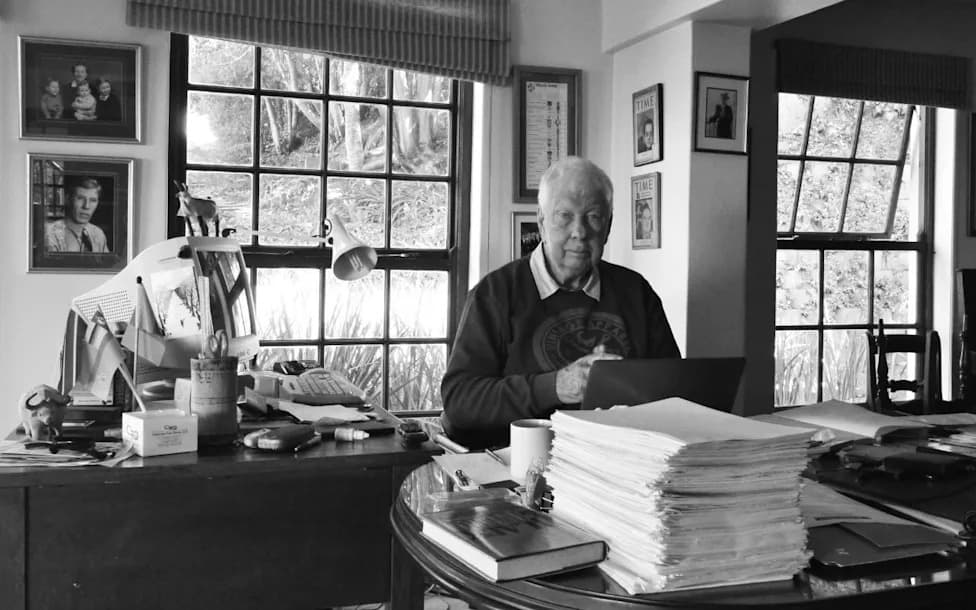
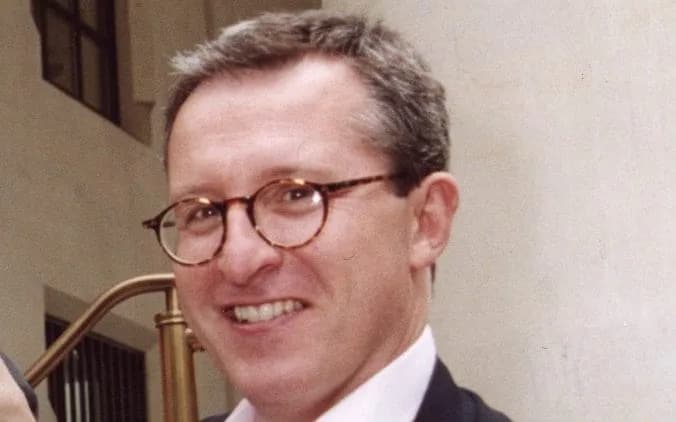
Johnson: believed the crucial break in his life was the Rhodes Scholarship that whisked him from Durban to Oxford just in time to evade the security police
Richard William "Bill" Johnson, an Oxford politics fellow renowned for his trenchant commentary on South Africa and for reforming the finances and fabric of Magdalen College, has died aged 82. A Rhodes Scholar from Durban, he combined rigorous scholarship with outspoken public intervention throughout a long career in academe and public life.
Born on 21 September 1943 in Wallasey, Merseyside, Johnson was the second of six children of Elsie and Stanley, a merchant seaman who survived the Arctic convoys and later worked as a marine engineer for Mobil Oil. In 1956 the family moved to Durban, where the 13-year-old Johnson left St Anselm's, a Catholic grammar school in Birkenhead, to attend the all-white Northlands Boys' High School. He went on to read Latin, English, history and political science at the University of Natal.
The turning point in his life came at the end of 1963 when he won a Rhodes Scholarship to Magdalen College, Oxford. His mother later recalled that South African security police arrived at the family home intending to detain him only weeks after he had left—an escape from the interrogation and imprisonment suffered by some of his anti-apartheid contemporaries at Natal University. He completed an MPhil in 1967.
Johnson lectured first at the newly established University of East Anglia for two years before returning to Magdalen, where he spent 26 years as a Fellow in politics. His early scholarship on French politics—summarised in The Long March of the French Left (1981)—and his energetic, often witty lectures (frequently given with his colleague David Goldey) drew large audiences.
At Magdalen he earned particular renown for the three years he served as Senior Bursar beginning in 1980. Confronted with deteriorating Grade I-listed buildings and precarious finances, Johnson uncovered a level of mismanagement that shocked the college: senior officers were driving luxury cars paid for by the college while historic fabric crumbled. "This was a breathtaking revelation," he recalled, since the Bursarial Committee had been unaware of the college owning cars and other colleges did not provide company cars. His rigorous reforms made possible extensive renovation and modernisation of the college's estate—work he regarded as one of his proudest achievements.
None
Johnson combined administrative duties with a prodigious output as a public intellectual. He wrote for New Society, became a long-term contributor to the London Review of Books, and from the 1990s wrote widely on South Africa for The Daily Telegraph and the Times group. He also published The Politics of Recession (1985) and other academic work, and many of his students went on to careers in journalism and politics.
Long engaged with South African affairs, Johnson argued in his 1977 book How Long Will South Africa Survive? that apartheid was becoming economically unsustainable and that change would be negotiated rather than delivered by sudden revolution. When transition came, he took leave to observe South Africa's first democratic election in April 1994; the resulting volume, Launching Democracy (co-edited with Lawrence Schlemmer), tempered international euphoria by recording widespread fear in townships and organisational chaos at some polling stations.
In 1995 he resigned his fellowship at Oxford and returned to South Africa to participate in the difficult work of consolidation after apartheid. He became the first director of the Helen Suzman Foundation, a liberal NGO, and conducted opinion polling in both South Africa and, at considerable personal risk, in Zimbabwe. Over the following decade he became a persistent and outspoken critic of the ruling African National Congress, warning that one-party dominance, endemic corruption and the rapid enrichment of a new elite posed grave risks to democracy and service delivery—criticisms that often prompted fierce, sometimes vitriolic, counterattacks.
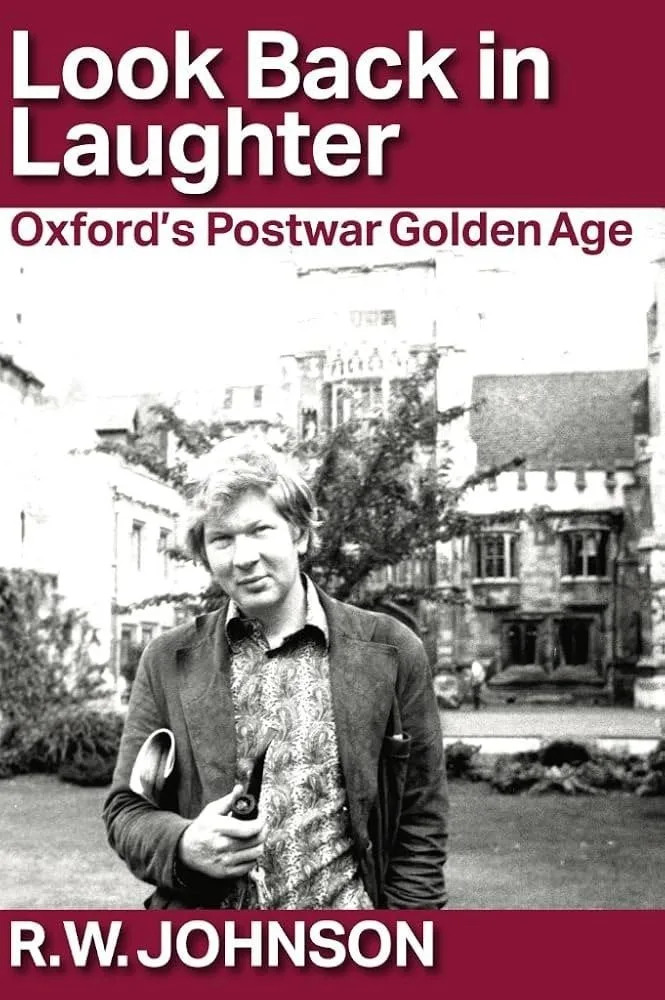
His later books included the concise history South Africa, the First Man, the Last Nation (2004) and the polemic South Africa's Brave New World (2009). Shortly before the latter appeared, he suffered a catastrophic swimming accident off the KwaZulu-Natal coast: striking his foot on a rock led to necrotising fasciitis. The infection necessitated amputation of his toes and, ultimately, his leg at the knee. Confined for months to a wheelchair on his Durban veranda, he drew on memory to sustain himself and produced an exuberant memoir, Look Back in Laughter (2015), as well as a new edition of How Long Will South Africa Survive? subtitled The Looming Crisis (2015).
Known for an intense work ethic—he read stacks of Le Monde in single sittings and could type through the night—Johnson also had a sharp, combative wit. His children recall him pacing and urging himself on with the cry,
"I'll bloody show them!"
Johnson married Anne Summers in 1968; they had two children, Rebecca and Richard. He married again in 2002 to Irina Filatova. He died on 21 July 2026. His work as an academic, reforming bursar and fearless public commentator leaves a complex and influential public legacy.
Help us improve.