Republican senators broadly signaled readiness to support President Trump if he orders an escalation against Iran, even after the president warned the U.S. could strike "VERY HARD TONIGHT" and later said planned strikes were called off. The Iran confrontation has helped push oil prices up and is linked to a 4.2% inflation reading in May, while public opposition to the campaign stands at about a 21-point margin. A small group of Republicans has backed symbolic antiwar resolutions, reflecting divisions within the party.
GOP Senators Signal Support for Escalating Iran Conflict If Trump Orders It
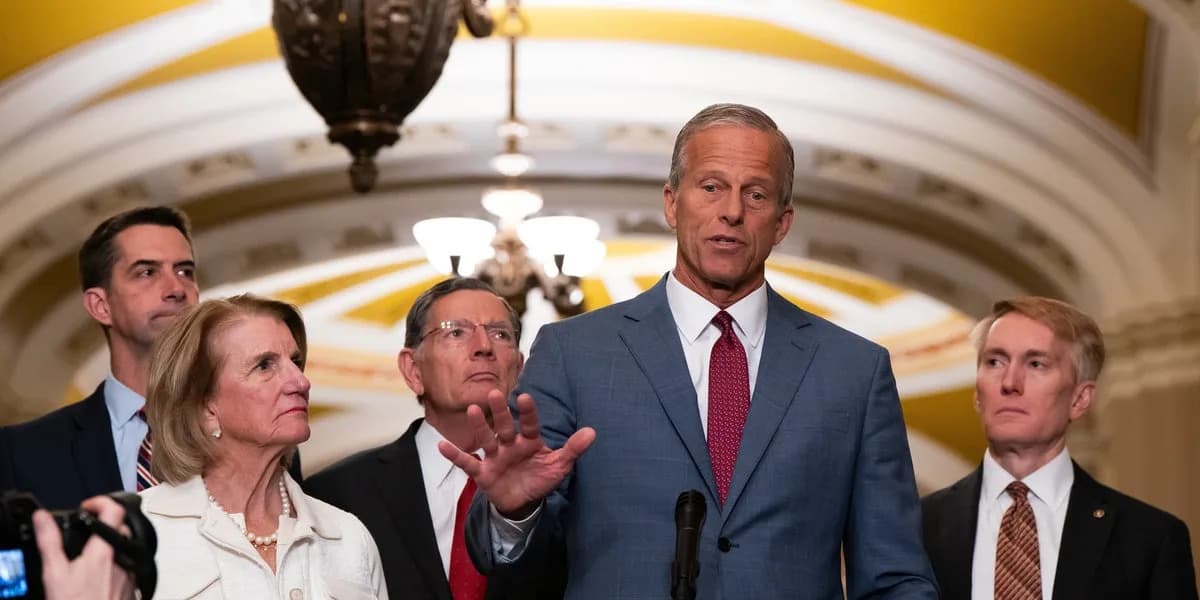
Republicans Back Escalation Of Iran War If That's What Trump Wants
WASHINGTON — Several Senate Republicans signaled they would back President Donald Trump if he chose to escalate U.S. military action against Iran, even as the confrontation has pushed oil prices higher, contributed to a 4.2% inflation reading for May, and eroded public support for the campaign.
President's Threats and a Last-Minute Call-Off
After two days of renewed clashes, Trump posted on his website that the U.S. would strike Iran "VERY HARD TONIGHT" and suggested the possibility of seizing an island off Iran’s coast important to its oil production. Late Thursday, the president said he canceled the planned strikes, citing what the White House described as positive developments in negotiations.
Republican Response
Even before the reported cancellation, a number of Senate Republicans publicly urged a tougher posture. Sen. Roger Wicker (R-Miss.), chair of the Senate Armed Services Committee, told reporters he supported a "much more aggressive" approach. Sen. Roger Marshall (R-Kan.) said, "I certainly think it’s the time for us to stand behind the president... we can’t allow Iran to have nuclear weapons."
Other GOP senators framed escalation as leverage to bring Tehran to the negotiating table. Sen. Chuck Grassley (R-Iowa) said progress has been slowed because, in his view, Iran was "not negotiating in good faith." Sen. Todd Young (R-Ind.) said additional pressure could increase U.S. leverage.
Divisions Within the Party
There is some Republican dissent. Both chambers of Congress have advanced symbolic resolutions calling for an end to the conflict, with a handful of Republicans joining Democrats to force votes. Senators who have voted to move forward an antiwar resolution include Rand Paul (Ky.), Lisa Murkowski (Alaska), Susan Collins (Maine) and Bill Cassidy (La.).
Sen. Murkowski said the conflict "doesn’t appear to be going in the right direction" and expressed skepticism about the repeated White House assurances that a deal was imminent; media tallies have noted multiple past claims that talks were near a breakthrough. Sen. Josh Hawley (R-Mo.)—who opposed sending U.S. ground troops in March and has called for a swift end—declined to comment in detail on the president’s latest threats.
Political And Economic Fallout
The economic consequences of the confrontation have been immediate: oil-price spikes tied to the Iran tensions are widely seen as a driver of the U.S. consumer-price rise that produced a 4.2% inflation rate in May. Public sentiment is largely opposed to the war; a survey aggregator reported voter disapproval by roughly a 21-point margin, a gap that has widened since spring.
Trump had suggested in March that the confrontation might last only "four or five weeks." Three months on, there is no clear, publicly stated metric of success beyond reopening the Strait of Hormuz and constraining Iran’s nuclear capabilities—objectives that remain contested and politically fraught.
Bottom Line: Republican lawmakers are broadly willing to back escalation if the president orders it, but notable GOP dissent and growing public unease — together with economic pain from higher oil costs — complicate the political calculus.
Help us improve.