The MQ-28 Ghost Bat Block 3, unveiled at ILA Berlin, adds a 25% larger wing, increased thrust and two internal weapon bays that can each carry one AIM-120 AMRAAM or two SDBs, while retaining three external stations. Block 3 also introduces beyond-line-of-sight (BLOS) control with SATCOM options and a stated range beyond 2,000 nm, improving survivability and operational reach. Boeing and Rheinmetall are marketing the upgrade to Germany, and Australia plans fleet upgrades with RAAF service expected in 2028.
Boeing’s MQ-28 Block 3 Ghost Bat Gains Internal Bays, Can Carry AIM-120 AMRAAMs
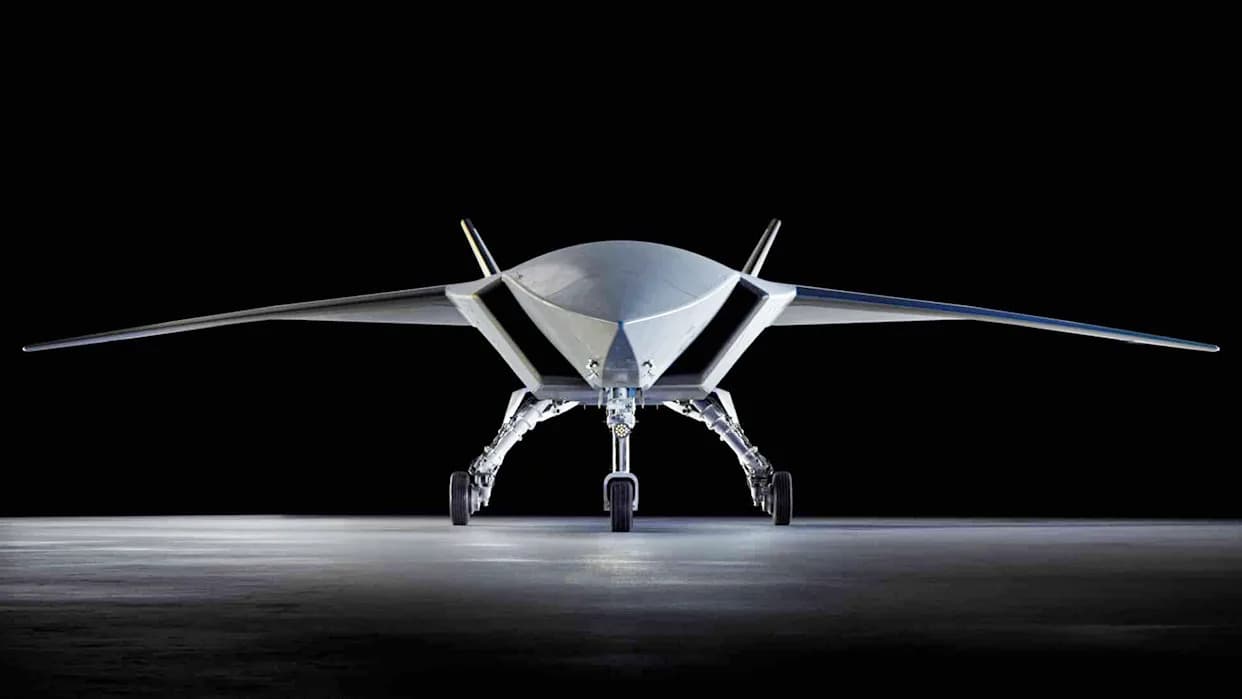
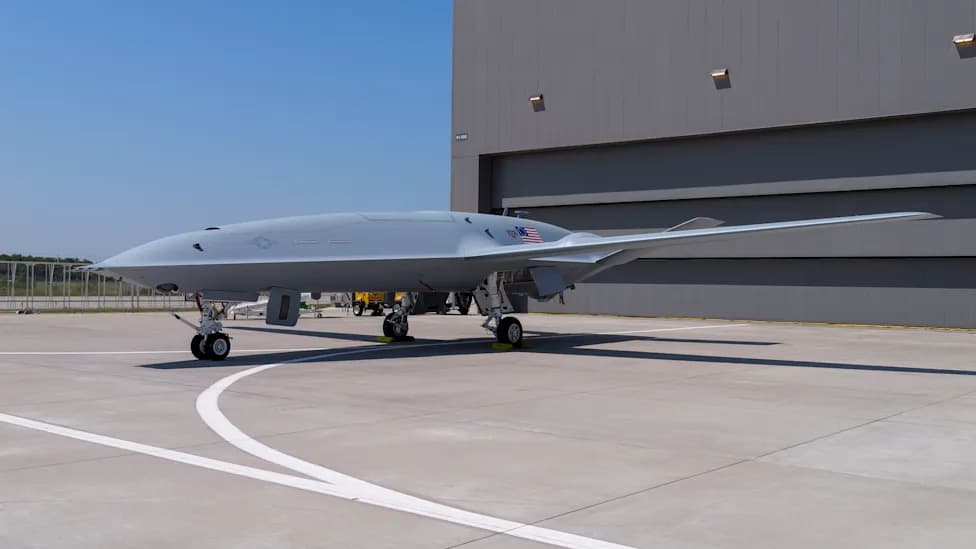
Boeing MQ-28 Ghost Bat Block 3.
Boeing and partner Rheinmetall unveiled the MQ-28 Ghost Bat Block 3 at ILA Berlin, showcasing substantial upgrades that improve range, payload flexibility and survivability. The Block 3 introduces a ~25% larger wing, increased thrust, beyond-line-of-sight control and two internal weapons bays — enabling the drone to carry AIM-120 AMRAAMs internally without degrading its low-observable characteristics.
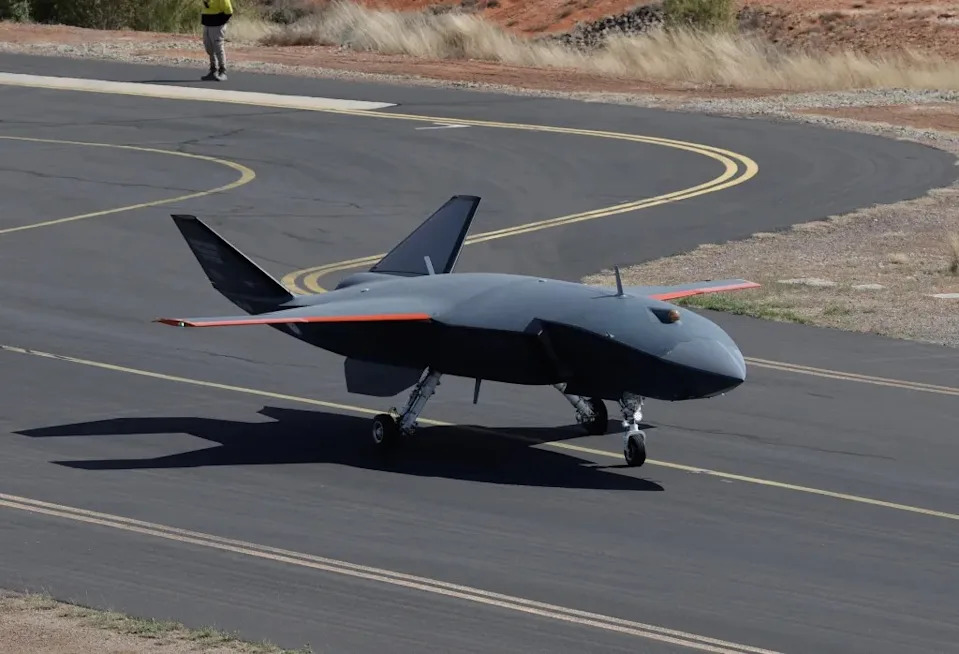
An MQ-28A Ghost Bat taxis prior to flight at Woomera, South Australia, in September 2025.Australian Department of Defense
What’s New on Block 3
The Block 3 is a third major iteration of the Ghost Bat design. Key physical changes include a roughly 25% larger wing and a stated thrust increase from about 10,000 to 12,000 pounds. Together these changes provide roughly an additional 2,000 pounds for fuel, weapons and mission systems, giving operators more options to trade endurance for payload.
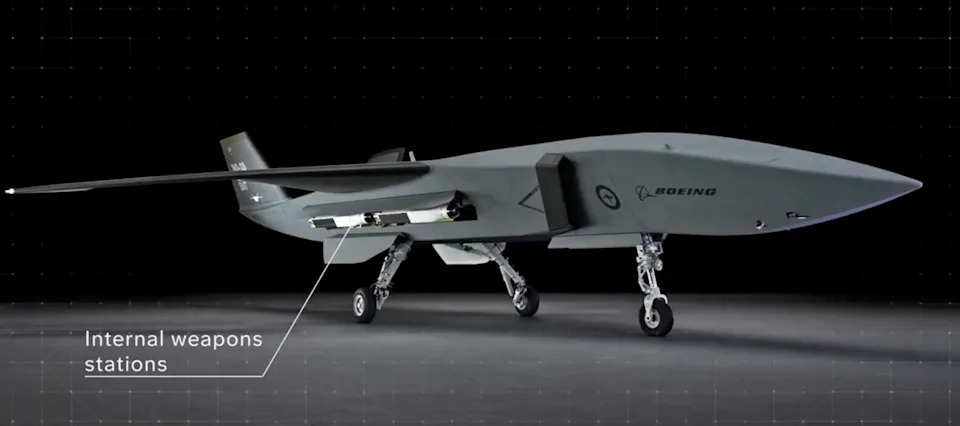
A screencap from a Boeing video showing a CG version of the Block 3 drone with one weapons bay open, to reveal SDBs.Boeing screencap
Internal Weapons Bays
For the first time among collaborative combat aircraft (CCAs) publicly revealed so far, the MQ-28 can carry AIM-120 Advanced Medium-Range Air-to-Air Missiles internally. Each of the two side bays accepts either one AIM-120 or two Small Diameter Bombs (SDBs), such as the GBU-39/B or the GBU-53 SDB II (StormBreaker). Internal carriage supports a lower radar cross-section and better survivability in contested airspace; Boeing says recent RCS trials validated the aircraft’s reduced detectability.
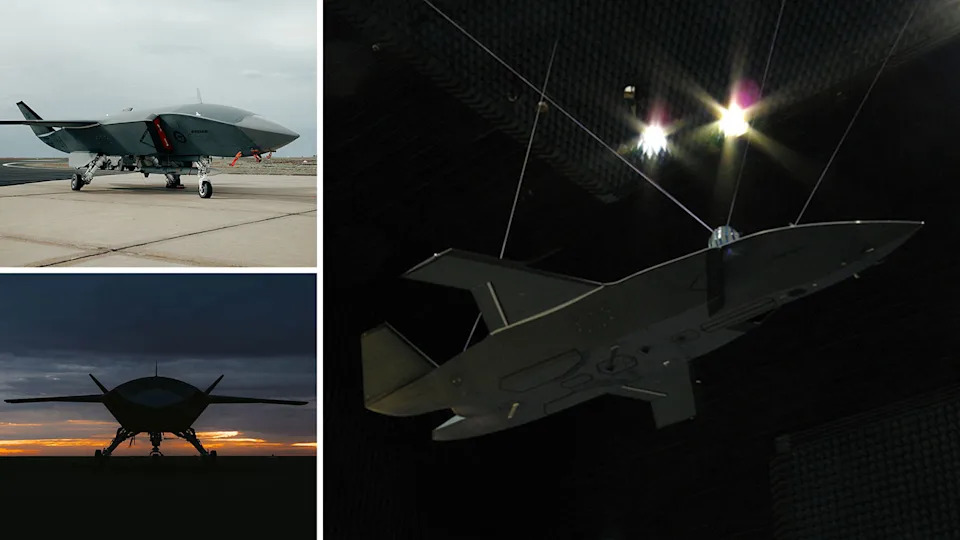
Elevation, or pitch, is one angle engineers analyze to validate MQ-28’s radar detectability inside Boeing’s test chamber. Other positions used in radar cross-section testing include azimuth (measure from nose to tail) and roll (rotation around the aircraft). Above left: Views of MQ-28 on the flight line.Boeing
Performance, Range and Control
Block 3 adds beyond-line-of-sight (BLOS) control and a SATCOM option, enabling operations at essentially unlimited standoff distances from a ground station, ship, or crewed airborne controller. Boeing cites a range in excess of 2,000 nautical miles, and the BLOS/SATCOM options improve resiliency for command and control in degraded or contested electronic-warfare environments.
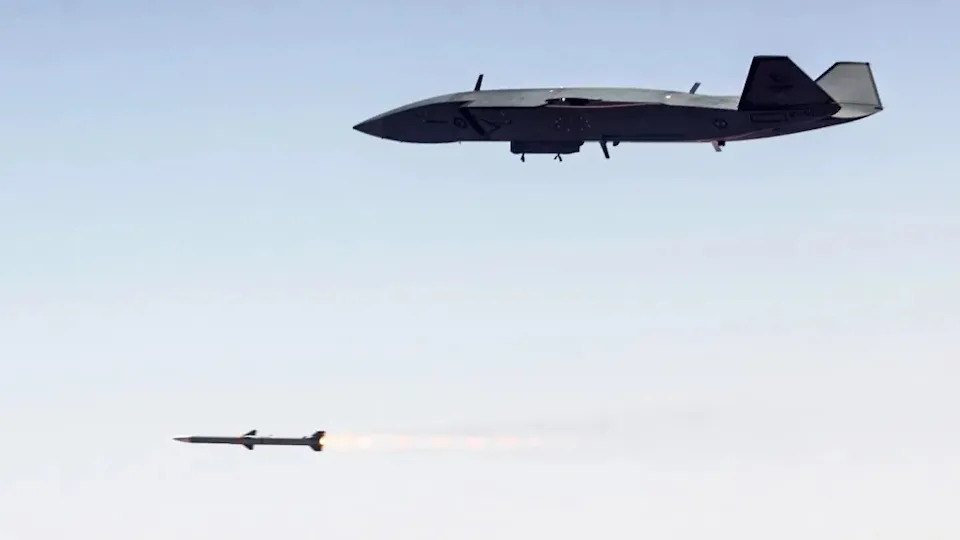
An AIM-120 is launched from an MQ-28A Ghost Bat during Trial Kareela at RAAF Base Woomera, South Australia.Australian Department of Defense
External Stations and Payload Flexibility
The aircraft retains three external weapon stations in addition to the internal bays. Boeing has demonstrated at least one end-to-end engagement in which an AMRAAM launched from the MQ-28 intercepted a target drone. With the larger wing and increased thrust, mixed internal-and-external loadouts could permit multiple AMRAAMs or combinations of air-to-air and air-to-ground weapons.
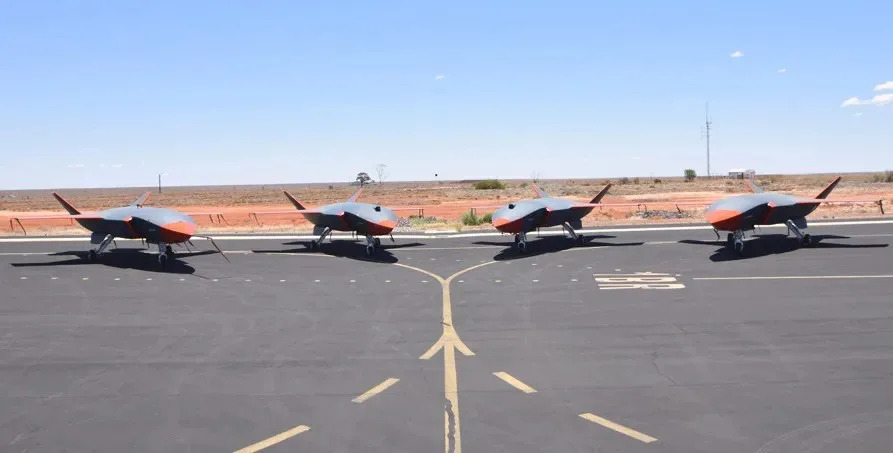
A quartet of MQ-28s, the two in the middle having IRST sensors on top of their noses.Boeing
Sensors, Modularity and Testing
Boeing is developing three to four alternate sensor payloads for Block 3; the nose section is designed to be swappable to simplify integration. Earlier variants (Blocks 1 and 2) completed more than 150 test sorties in Australia and the United States. Australia has eight Block 1 pre-production prototypes and nine Block 2s are in production. Boeing has said it expects to build the first Block 3 aircraft next year and that the Royal Australian Air Force (RAAF) could field the type in 2028.
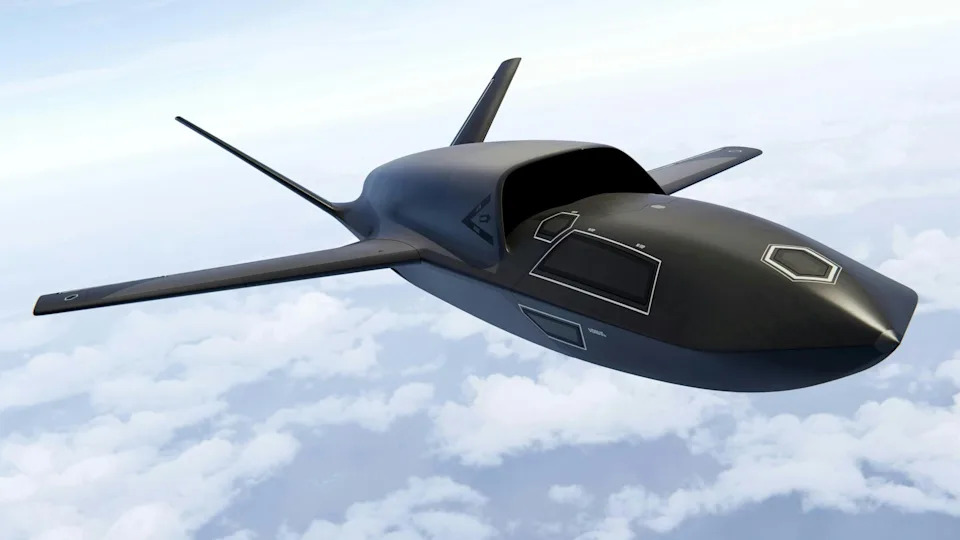
A rendering of the U760 Ravenstorm.Airbus
Market And Operational Outlook
Boeing Australia and Rheinmetall are pitching the Block 3 to the German Air Force as part of a strategic partnership; Rheinmetall has indicated deliveries could be possible by 2029 if a contract is agreed. Boeing is also conducting test flights from the U.S. Navy’s Point Mugu range to demonstrate maturity and support export opportunities — trials that may also signal potential U.S. service interest.
“This is the aircraft that we are offering to Germany… This is the third iteration of design now, and we are on point to build out first [Block 3] aircraft next year,” said Glen Ferguson, MQ-28 Global Program Director.
Competition in Europe’s emerging CCA market is growing fast: Airbus, General Atomics and several European firms displayed rival designs at ILA Berlin. Regardless of the Block 3’s export outcome, the upgrades underline the rapid maturation of CCA capabilities — particularly the importance of internal weapons carriage, longer range and modular sensor options for future contested operations.
Contact the author: [email protected]
Help us improve.