In early 2023, 67-year-old Anola Johnson was befriended on LinkedIn by a man calling himself 'Pedro.' Over nine months she was manipulated into investing retirement funds, wiring large sums to fake accounts and taking out a $350,000 home-equity loan. The scammers, likely operating from overseas and using stolen or AI-generated identities, left her about $850,000 in debt. Johnson now speaks publicly to warn others and hosts the podcast Romance Scam Rebellion.
How a Romance Scammer Left Her $850,000 in Debt — Lessons for Homeowners
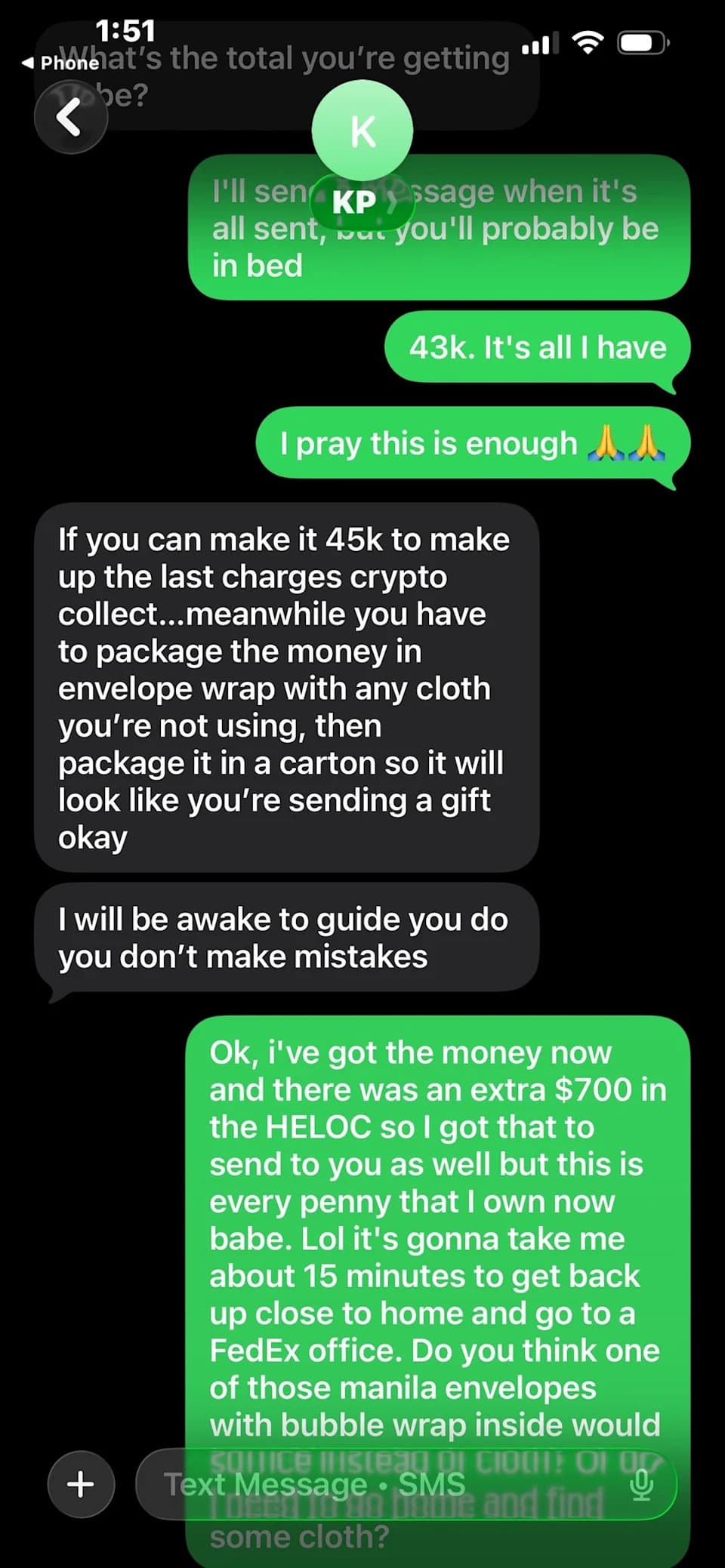
"Pedro" would bombard Anola Johnson with loving text messages that eventually began asking for money ("KP" was Anola's pet name for him, "King Pedro").(Courtesy of Anola Johnson)
In early 2023, Anola Johnson returned from a trip to Paris confident about her finances: roughly $300,000 in retirement savings and a home north of Salt Lake City that would be paid off in two years. Then a LinkedIn message from a man calling himself 'Pedro' began a nine-month sequence of emotional manipulation and financial fraud that ultimately left her about $850,000 in debt.
The Relationship That Wasn’t
What began as friendly messages on a professional platform quickly escalated. Within two weeks 'Pedro' professed love, checked in multiple times a day, and shared an elaborate backstory — orphaned, widowed, an oil-rig engineer with a high income. Occasional inconsistencies were explained away, and the constant affection eroded Johnson's skepticism.
The Investment Trap
Pedro persuaded Johnson to invest with him in cryptocurrency. She cashed out a $100,000 IRA and transferred $50,000 to a platform he recommended. That account was a convincing fake: it showed rapid gains to reassure her while her funds were actually diverted. She later withdrew a second IRA when he promised an even better opportunity.
Fake Bank Pages and Large Wires
Pedro then asked Johnson to move money for him, claiming limited internet access on an Abu Dhabi oil rig. A fabricated bank portal showed millions in his account. Acting on his instructions, she wired $1.4 million to an account in Singapore and other large sums to U.S. banks described as 'suppliers.' When her access was allegedly locked, he asked for more cash—this time secured by tapping her home's equity.
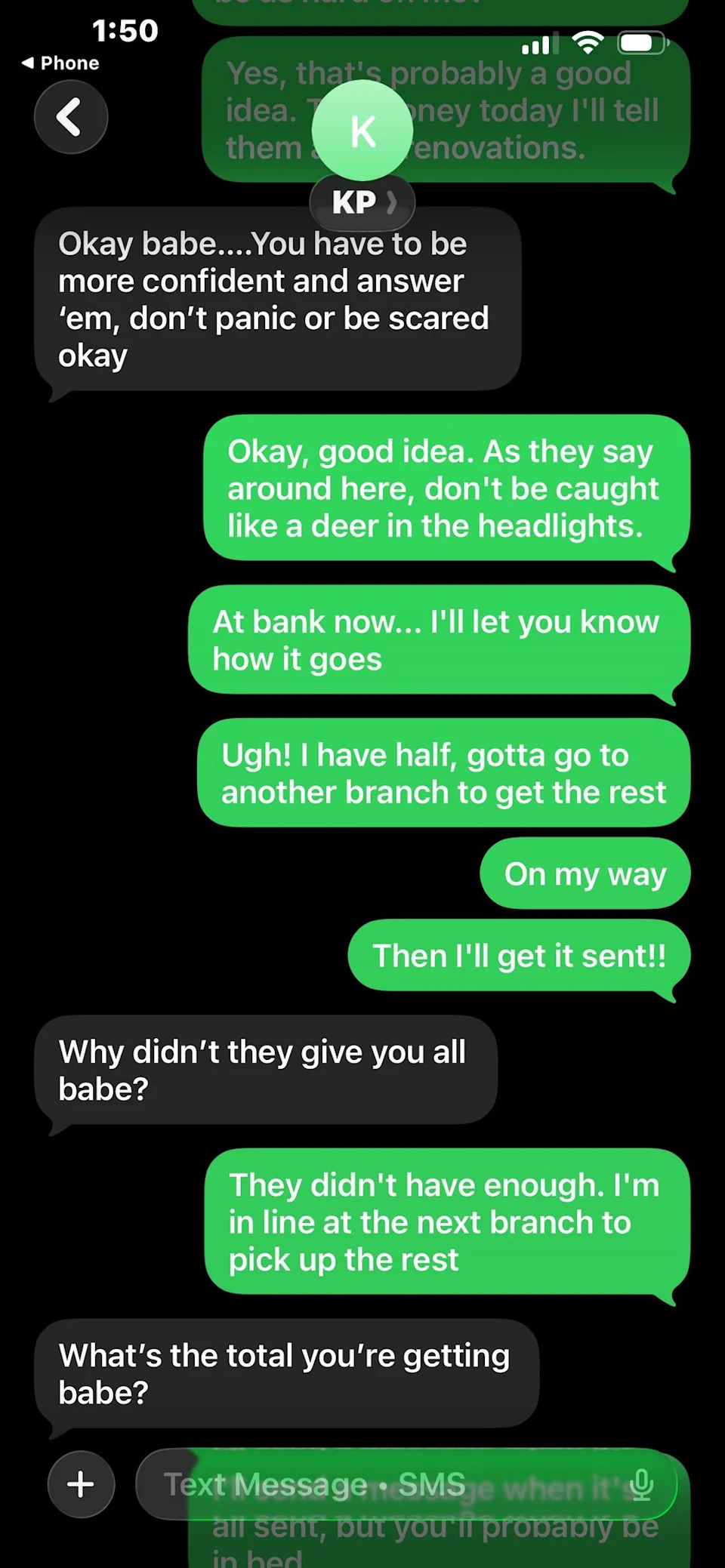
The messages asking for money became constant, and Pedro always had an excuse for needing more.(Courtesy of Anola Johnson)
Home Equity Used As A Last Resort
With retirement funds exhausted, Johnson took an 80% home-equity loan—about $350,000—told the lender the money was for home improvements, and wired large portions to the scammers. Although bank personnel asked questions during the lending and wire processes, Johnson says they never firmly intervened. By the time a law enforcement call in December 2023 revealed a package to Nigeria, the fraud was apparent.
Aftermath
By the end of the scheme Johnson was roughly $850,000 in debt, having used her IRAs, taken cash advances on credit cards and tapped home equity. She received financial help from her brother to pay down cards and refinanced the equity loan into a higher-balance mortgage; her monthly housing payment jumped from about $1,000 to $2,700, and she expects the house won't be paid off until she is much older. The stress contributed to job loss and severe emotional distress; she briefly considered suicide but chose to speak out instead.
How These Scams Work
- Romance scammers often operate in teams overseas (notably in Nigeria and Ghana) and combine emotional manipulation with fake investment platforms and forged bank pages.
- Increasingly, scammers use stolen photos or AI-generated images, video and voice to create believable personas.
- The Federal Trade Commission estimates romance-and-investment scams now steal at least $2.1 billion annually — an eightfold rise since 2020.
Red Flags and Institutional Responsibilities
Experts say lenders and banks can play a key role in protecting vulnerable customers by spotting sudden, large or atypical transfers—especially from longtime clients with predictable histories. Mortgage professionals have a duty of care to ask how funds will be used and escalate suspicious patterns to fraud departments.
Johnson’s Response
Rather than hide her shame, Johnson launched a podcast, Romance Scam Rebellion, to share her story and interview other victims. She urges anyone who suspects they are being targeted to stop transfers, contact their bank's fraud unit, and report the crime to local law enforcement and the FTC (ftc.gov).
"You can't let these scammers win," Johnson says. "You've got to fight back."
Help us improve.