Santa Barbara shorelines were blanketed with tens of thousands of by‑the‑wind sailors (Velella velella), captured in video by Discovery host Forrest Galante that drew 123,000+ plays. These colonial hydrozoans travel on surface winds using a sail‑like float; mass strandings usually follow shifts in wind and currents. While not highly dangerous, their tentacles can irritate sensitive skin. Public footage helps scientists track unusual marine events via platforms such as iNaturalist.
Tens of Thousands of ‘By‑The‑Wind Sailors’ Blanket Santa Barbara Beach After Wind Shift
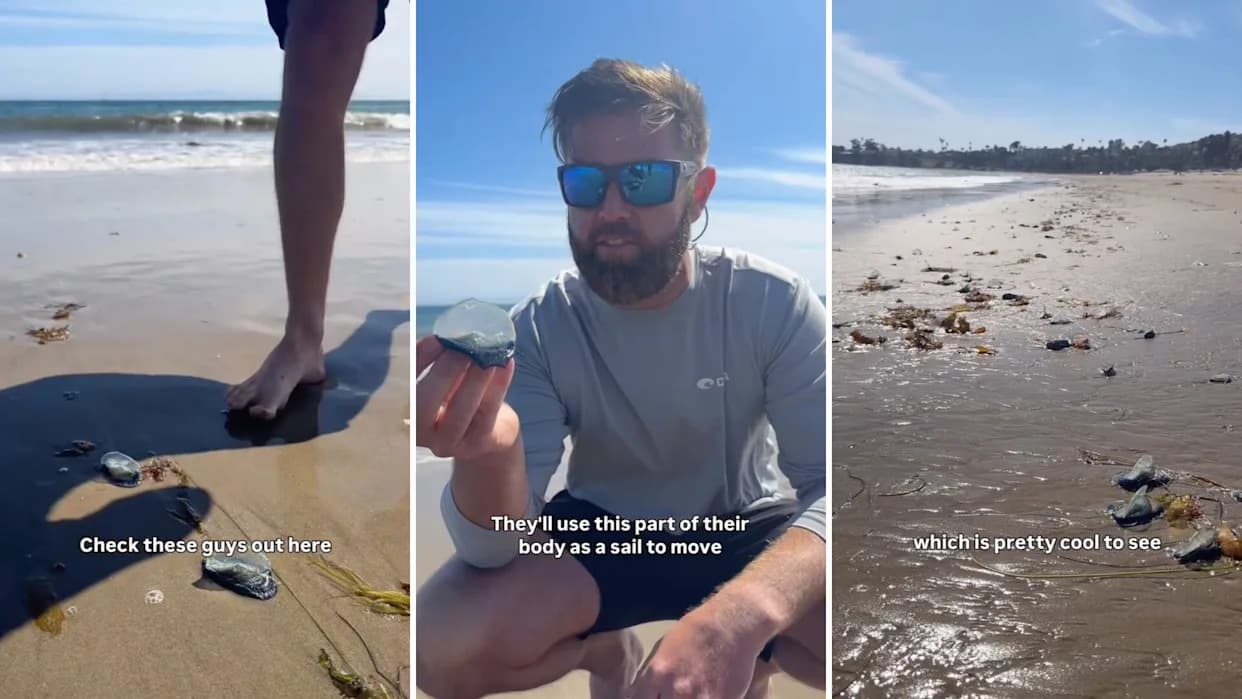
Photo Credit: Instagram
Beachgoers in Santa Barbara encountered an otherworldly scene when stretches of shoreline were carpeted with what appeared to be tens of thousands of tiny, translucent drifters known as by‑the‑wind sailors. Discovery host and outdoor biologist Forrest Galante posted video footage of the mass strand, which drew thousands of likes and more than 123,000 plays.
What Are By‑The‑Wind Sailors?
By‑the‑wind sailors are colonial hydrozoans, usually identified as Velella velella. They are related to jellyfish and other cnidarians but are not true jellyfish. Each individual carries a small, sail‑like float that lets it ride surface winds and currents, while short tentacles beneath capture plankton and small prey.
Why Did So Many Wash Ashore?
Mass strandings of these drifters typically reflect sudden shifts in offshore winds and surface currents. When winds change direction or strengthen, large numbers of Velella can be pushed en masse toward the coast. Scientists and observers note that this year winds have steered more of them toward West Coast beaches, a trend discussed by Smithsonian Magazine.
Safety, Context and Citizen Science
Although by‑the‑wind sailors are not as dangerous as some jellyfish relatives, their tentacles can sting and may irritate sensitive skin, so cautious handling is advised. Experts emphasize that a single wash‑up cannot be taken as direct proof of long‑term climate change; however, warmer winters and more erratic ocean conditions can make these events more likely or more frequent.
Galante framed his footage as both a striking natural spectacle and an example of citizen science: public documentation of unusual marine events can raise awareness and help researchers track patterns through platforms such as iNaturalist. Social media commenters also reported sightings from other locations, including Pacifica, Pismo Beach, Northern California beaches more broadly, Texas, and even international reports such as South Africa.
Galante: The beach was 'covered in these beautiful by‑the‑wind sailor's jellyfish,' and he estimated 'tens of thousands' had washed up, noting he had not seen such a sight locally in nearly 10 years.
For visitors encountering similar strandings: avoid rubbing the affected area if you feel irritation, rinse with seawater rather than fresh water if stung, and report unusual sightings to local marine groups or citizen science platforms to help researchers monitor changes.
Help us improve.