Philosopher Baptiste Morizot and legal scholar Laurent Neyret propose recognising "habitability" — the conditions that sustain human life — as a fundamental right equal to dignity and liberty. They argue current environmental law assumes an unchanging world and fails to account for humanity’s capacity to alter the planet. By reframing protections around habitability, courts and lawmakers would treat measures such as limits on pesticide use near groundwater as core values rather than burdens. The authors see recent legal victories as signs that habitability could gain traction in courtrooms, constitutions and international declarations.
French Scholars Urge Making "Habitability" A Fundamental Right To Protect Life On Earth
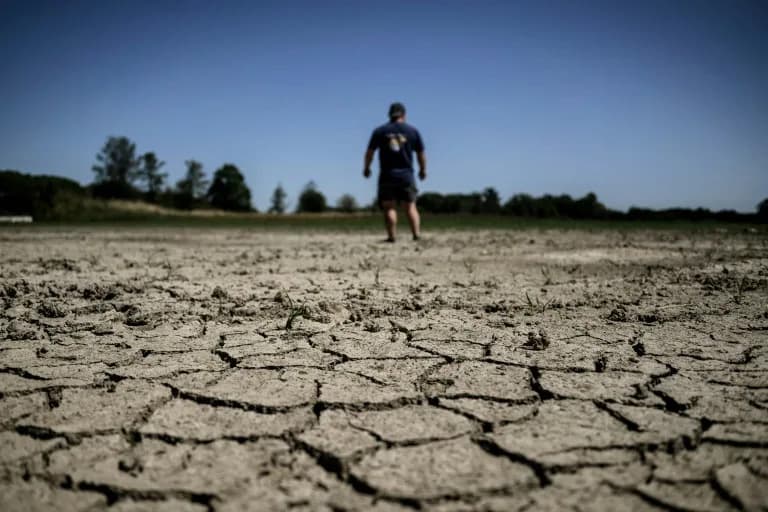
Two Frenchman -- one a philosopher, the other a legal scholar -- argue that protection of the living world should be discussed in entirely different legal terms (JEFF PACHOUD)(JEFF PACHOUD/AFP/AFP)
Environmental causes often struggle for attention. Sidelined in political debate, squeezed from budgets and sometimes losing in court, nature is frequently treated as a niche concern — secondary to immediate priorities like security, health and economic growth.
In a new book, philosopher Baptiste Morizot and legal scholar Laurent Neyret argue that part of the problem is language. They propose the term "habitability" — the set of conditions that sustain human life on Earth — and say it should be recognised as a fundamental right on par with dignity and liberty.
Reframing Environmental Protection
In Liberté, Dignité, Habitabilité (published April, not yet translated into English), the authors contend that modern environmental law is rooted in an era when humans did not yet possess the technological power to alter Earth's climate or habitability at scale. As a result, the law still treats the natural world as a backdrop rather than a core, legally protected condition for human life.
Morizot, a researcher at Aix-Marseille University, told AFP:
"Habitability is the condition of all our rights and freedoms."He and Neyret argue that recognising habitability as a fundamental value would change how judges and lawmakers view regulations: restrictions such as limits on pesticide use near groundwater would not be seen as arbitrary burdens but as measures grounded in a shared, constitutional value.
From Courtrooms To Constitutions
Despite its lower profile in some policy debates, environmental protection has made notable legal gains recently, from rulings at the International Court of Justice to national tribunals. Neyret, formerly chief of staff to the president of France's Constitutional Council, describes an "underground movement" in the courts that is beginning to treat habitability seriously.
The authors acknowledge that formal adoption of the term could take years or decades. They say clear signs of success would include habitability being cited in court rulings, enshrined in constitutions or appearing in the preambles of international declarations — and crucially, when it helps a judge decide a case one way or another.
Whether or not the word becomes commonplace, Morizot and Neyret’s proposal reframes the debate: from treating nature as an optional concern to recognising the living conditions that make human rights possible.
Help us improve.