CASE, the union representing state-employed legal workers, has warned it may sue under CEQA to challenge Gov. Gavin Newsom's directive requiring four in-office days by July 1. The union says the policy will create "hundreds of thousands" of additional monthly commutes and substantial vehicle emissions, and demands environmental review and consideration of telework alternatives. Critics say the episode underscores CEQA's broad scope and how the law is sometimes used to delay or reshape government decisions, even as lawmakers pursue reforms.
Union Threatens CEQA Lawsuit Over Gov. Newsom’s Return-to-Office Mandate

California Public Sector Union Threatens Environmental Lawsuit Over Gavin Newsom's Return-to-Office Policy
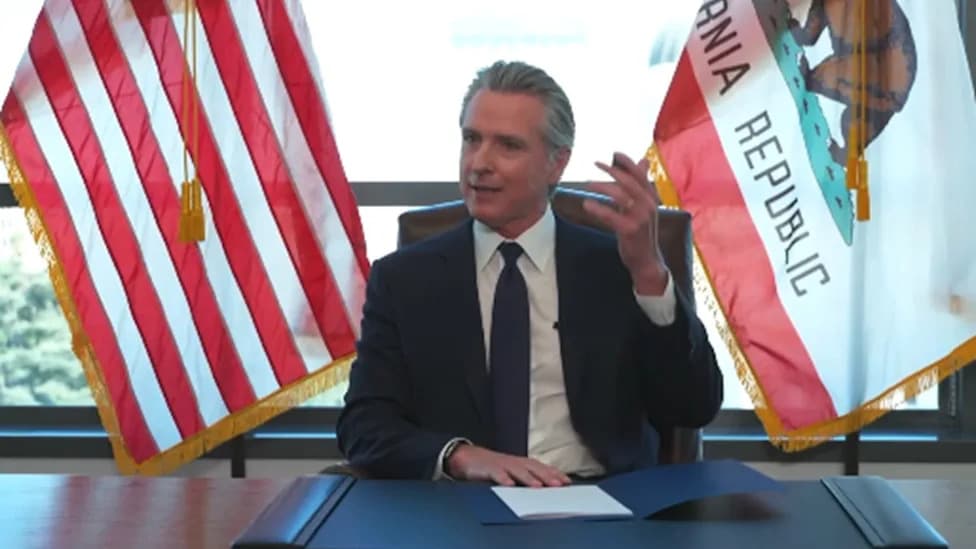
Unionized state legal staff have warned California agencies they may sue under the California Environmental Quality Act (CEQA) to block Gov. Gavin Newsom's push to return state employees to offices four days a week by July 1. The move intensifies a broader fight over telework, labor rights and how broadly environmental laws should apply to personnel policies.
What Happened
CASE, the union representing state-employed legal workers, sent letters this week asserting that the governor's directive will produce "hundreds of thousands of additional monthly commutes" and "thousands of tons of additional air pollution from automobile tailpipes." The union said agencies must perform CEQA analyses of those impacts and consider alternatives such as continued telework, and it threatened litigation if reviews are not conducted, according to The Sacramento Bee.
Why CEQA Matters Here
Broadly, CEQA requires public agencies to evaluate the environmental impacts of discretionary projects and to consider less environmentally harmful alternatives. The statute also allows third parties to sue agencies for taking actions without completing required CEQA reviews. Because CEQA can be applied to many types of government decisions and because litigation under the law can be protracted, it has become a common tool for stakeholders seeking to delay or reshape public projects and policies.
CASE argues the return-to-office mandate is a discretionary policy change that will increase vehicle trips and emissions, and therefore triggers CEQA review.
Context And Examples
CEQA has a long history of surprising outcomes and strategic uses. It has been deployed to delay housing and infrastructure projects, to press for union labor agreements, and even to seek cash concessions from developers. One well-known example involved petitioners in Berkeley who temporarily blocked enrollment growth at the University of California campus while arguing the school had not studied noise impacts from additional students.
Responding to concerns about abuse and unintended effects, California lawmakers recently narrowed CEQA in some areas: last year the Legislature exempted certain infill residential projects from CEQA review, and a Chamber of Commerce–backed ballot initiative could further limit CEQA's reach for many land-use and infrastructure projects if voters approve it in November.
Implications
- CASE's threatened litigation highlights how CEQA can be used beyond traditional land-use disputes, extending into workplace and personnel policy.
- The dispute raises questions about appropriate legal tools for labor disputes and whether environmental review statutes should apply to administrative workplace decisions.
- Even with recent reforms, CEQA remains a flexible—and sometimes controversial—mechanism that groups can use to challenge or reshape government actions.
As the July 1 deadline approaches, agencies will need to decide whether to proceed with the governor's directive, conduct CEQA analyses, or face potential legal challenges that could delay implementation.
Help us improve.