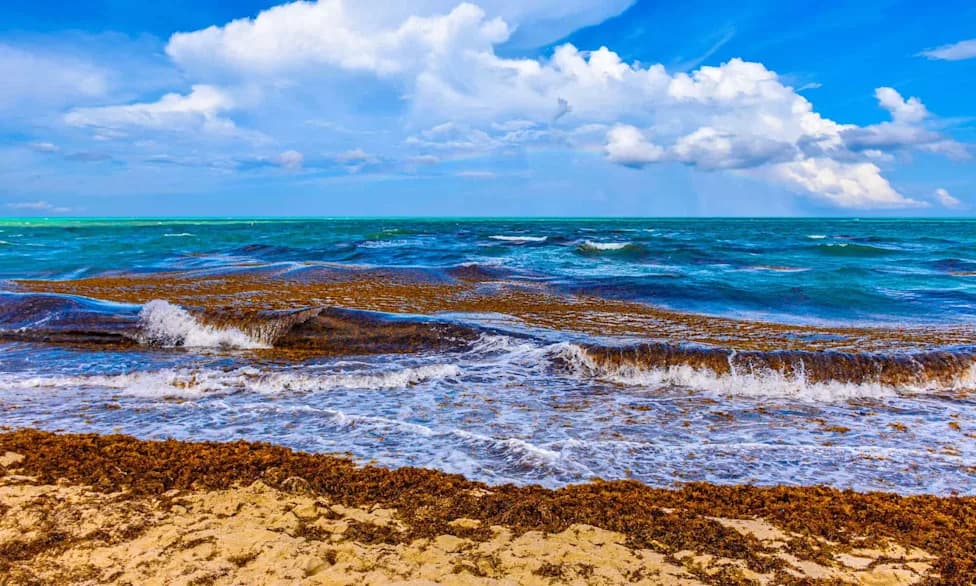
New research in PNAS Nexus traces major tropical North Atlantic Sargassum blooms to coastal waters off West Africa—often forming near the Gulf of Guinea up to two years before satellites detect them. The study uses physics-based «raft» simulations, Bayesian inversion and transition path theory to reconstruct bloom origins and pathways. Nutrient inputs from upwelling, Saharan dust and increased river runoff likely fuel rapid growth. Improved prediction helps preparedness, but scalable, environmentally safe disposal and commercial uses remain limited.
Where the Caribbean’s Sargassum Is Really Coming From — And Why the Invasion Keeps Growing
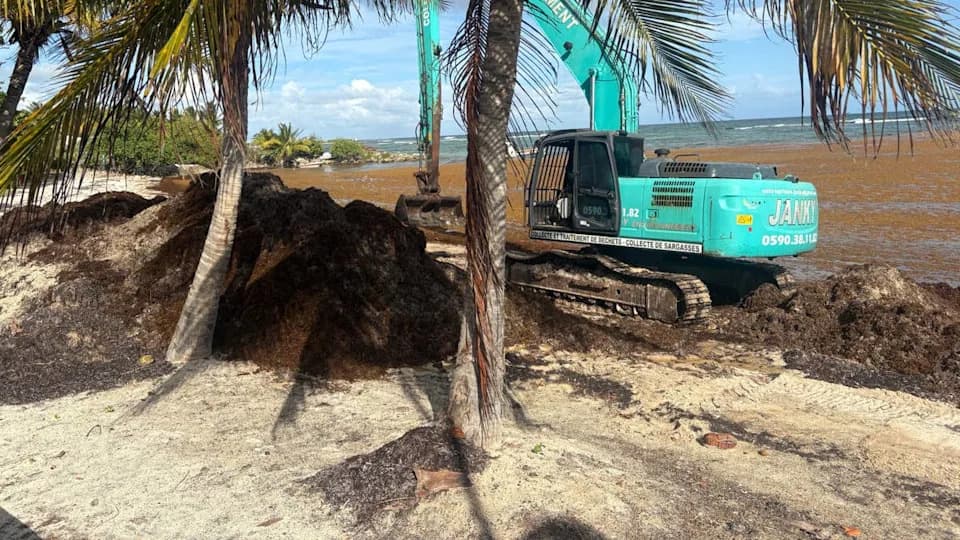
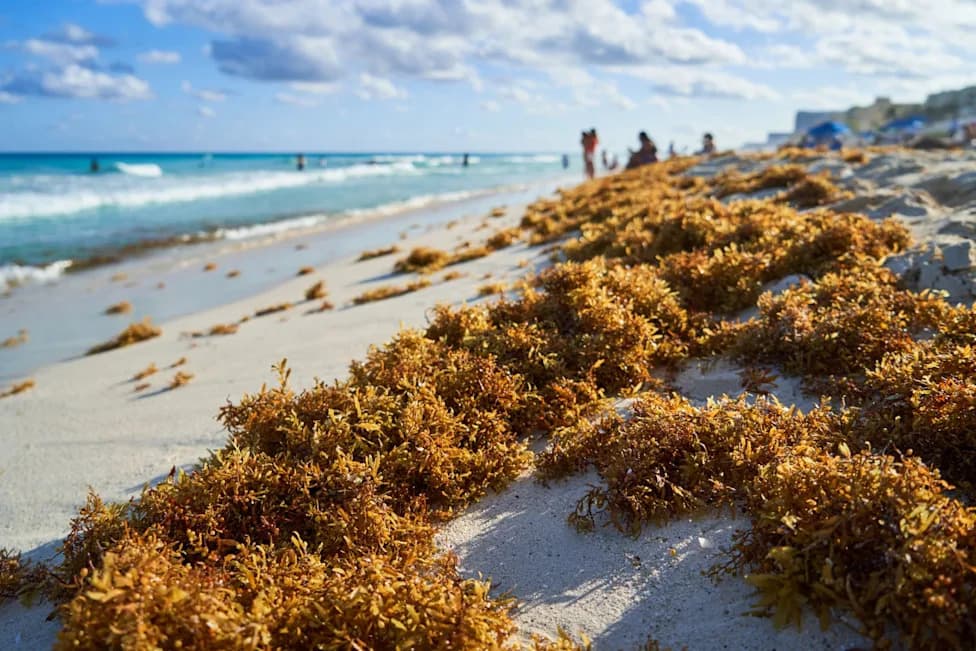
Spring in the Lesser Antilles no longer guarantees powder-white beaches and crystal-clear bays. In recent years, shorelines that were recently soft sand and glassy water have been smothered by thick, moss-like mats of golden Sargassum that arrive in ever-larger pulses.
New Research Traces Blooms to West Africa
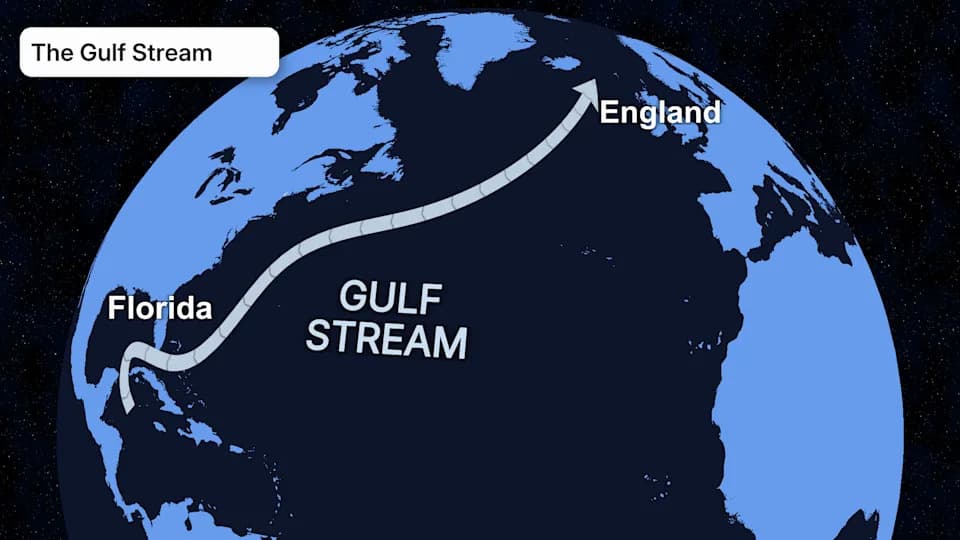
Researchers at the University of Miami’s Rosenstiel School of Marine, Atmospheric, and Earth Science, working with collaborators, used a novel blend of physics-based simulation and probabilistic analysis to trace the origin of major tropical North Atlantic Sargassum blooms. Their paper in PNAS Nexus, “Tracing the origin of tropical North Atlantic Sargassum blooms to West Africa,” finds strong evidence that many of the blooms begin off the coast of West Africa near the Gulf of Guinea—sometimes up to two years before satellites detect them in the western Atlantic.
How the Team Reconstructed Origins
Instead of treating the seaweed as passive debris, the researchers modeled Sargassum as clusters of drifting “rafts” influenced by ocean currents, wind, and interactions between clumps. They combined a Bayesian inversion—which estimates the most likely sources given observed bloom locations and timing—with transition path theory to identify the most efficient transport routes across the tropical Atlantic. Thousands of simulated trajectories were cast into a probabilistic framework that allowed the team to reconstruct likely origins and pathways.
“Our results provide strong evidence that these blooms begin in the eastern tropical Atlantic, not in the Sargasso Sea,” said lead author Francisco Beron-Vera.
What Fuels Rapid Growth?
The study and related research point to several contributing factors. A notable 2009–2010 La Niña–like period brought cooler sea surface temperatures and stronger upwelling off West Africa, supplying nutrients that favored rapid Sargassum growth. Episodic inputs of Saharan dust (a source of iron and other micronutrients) and increased river runoff during wetter conditions likely added more nutrients. Biological analyses also show that the Sargassum arriving in the western Atlantic differs compositionally from mats typical of the Sargasso Sea—supporting the West African origin hypothesis.
Coastal Impacts and Human Costs
Out in the open ocean, floating Sargassum mats form productive microhabitats that support diverse marine life. When those mats strand onshore, however, they decompose and cause serious problems: foul-smelling decay, respiratory and eye irritation for people near heavily affected beaches, clogged boat intakes, damaged tourism and fisheries, and hypoxic conditions in coastal nurseries that can kill juvenile fish and invertebrates.
From the French West Indies to Florida and across the Caribbean, many surf breaks, marinas, and sandy beaches have been periodically unusable. Local health advisors warn that prolonged exposure to dense decomposing Sargassum can aggravate respiratory issues.
Solutions and Next Steps
Better forecasting, made possible by improved models of origin and transport, should help coastal managers anticipate arrivals and stage responses. But the broader challenge remains: what to do with millions of tons of stranded seaweed. Small-scale uses—compost, fertilizer, and niche biofuel experiments—exist, and entrepreneurs are investigating industrial applications, but scalable, environmentally sound disposal or commercial solutions are not yet established. For many coastal communities the immediate priority is restoring healthy shorelines, fisheries, and recreational access.
Bottom line: The Great Atlantic Sargassum Belt is increasingly sourced from the tropical eastern Atlantic near West Africa. Understanding that origin improves prediction and preparedness—but substantial practical and economic solutions for removal, processing, and reuse are still needed.
This article was originally published by Surfer on May 12, 2026, and has been edited for clarity and accuracy. The author’s local observations reflect conditions in the French West Indies.
Help us improve.