The Ivanpah Solar Power Plant in the Mojave Desert continues to operate despite monitoring reports that document hundreds to thousands of bird deaths each year after birds fly into concentrated solar beams. Regulators approved the project with monitoring and mitigation conditions and report no formal fines or enforcement related to avian mortality. The plant received major federal funding, uses natural gas for daily startup (emitting substantial CO₂), and remains the subject of debate over how best to balance renewable energy development with wildlife protection.
Investigation: Obama-Era Ivanpah Solar Plant Kills Thousands Of Birds Annually — Regulators Cite No Fines
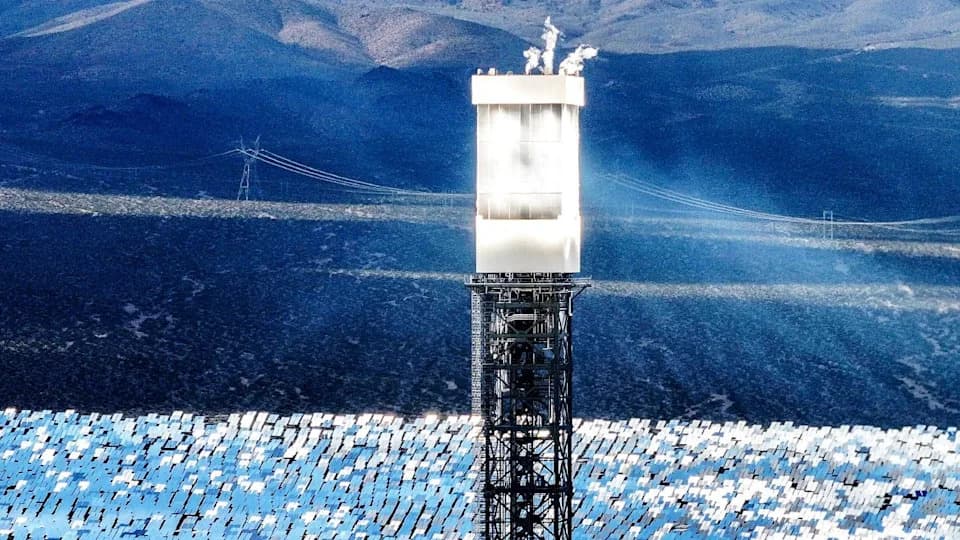
The Ivanpah Solar Power Facility near the California–Nevada border in the Mojave Desert. The solar thermal plant has faced scrutiny over environmental impacts, including bird deaths linked to its concentrated solar energy system.(Getty Images)
An investigation by Fox News Digital finds that the Ivanpah Solar Power Plant — a concentrated solar facility built during the Obama administration in the Mojave Desert — continues to operate even as monitoring reports document hundreds to thousands of bird deaths each year. Regulators say the project remains in compliance with its permits and that no formal fines or enforcement actions have been issued in connection with avian mortality.
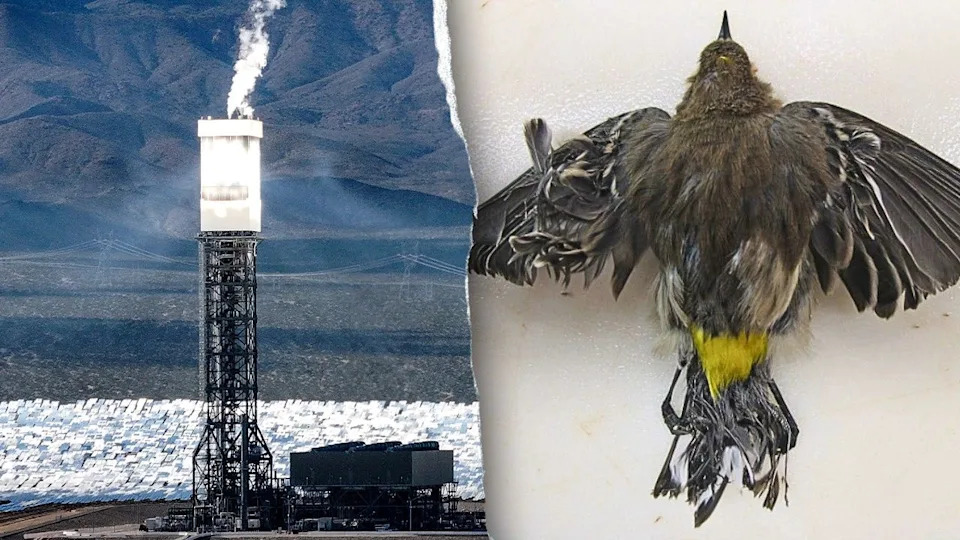
A composite image shows a tower at the Ivanpah Solar Power Plant alongside a bird found with burn injuries linked to concentrated solar heat exposure, according to federal wildlife research.
"Staff is not aware of any formal enforcement actions or fines issued by either the U.S. Fish and Wildlife Service or the California Department of Fish and Wildlife related to avian or wildlife mortality at the Ivanpah Solar Electric Generating System," the California Energy Commission told Fox News Digital.
Ivanpah’s three towering receivers concentrate sunlight reflected from tens of thousands of surrounding mirrors. Scientists and federal researchers have documented birds flying into the concentrated solar flux and catching fire or suffering lethal injuries — a phenomenon researchers call "streamers." Video from the U.S. Geological Survey has captured birds trailing smoke after passing through these intense beams.
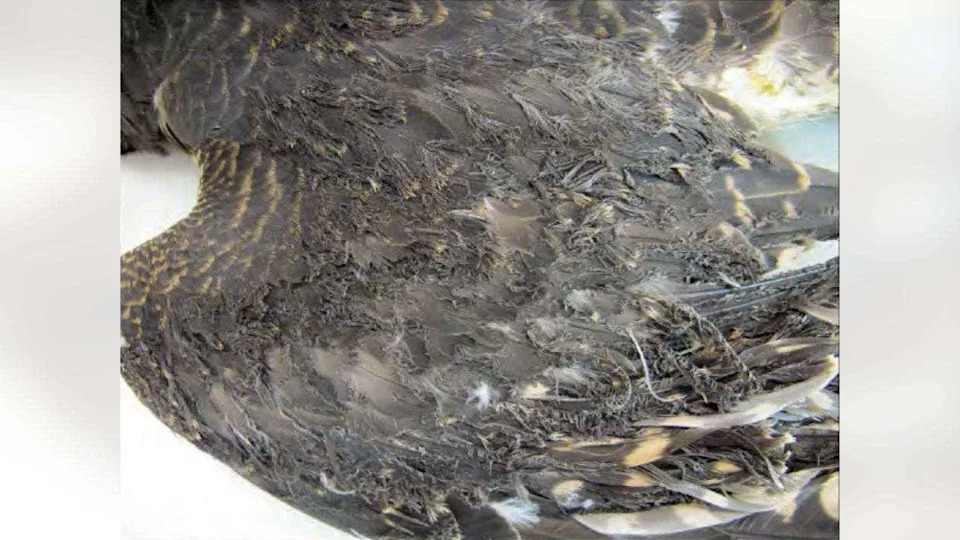
A peregrine falcon wing shows severe feather damage consistent with exposure to concentrated solar heat, according to a U.S. Fish and Wildlife Service study of the Ivanpah solar plant.
Permits, Monitoring And Mitigation
Environmental reviews completed before construction warned that the project could cause bird mortality, habitat loss across roughly 4,000 acres of desert, and impacts to protected species such as the desert tortoise. Regulators approved Ivanpah with conditions requiring ongoing monitoring and mitigation rather than requiring all risks be eliminated before construction.
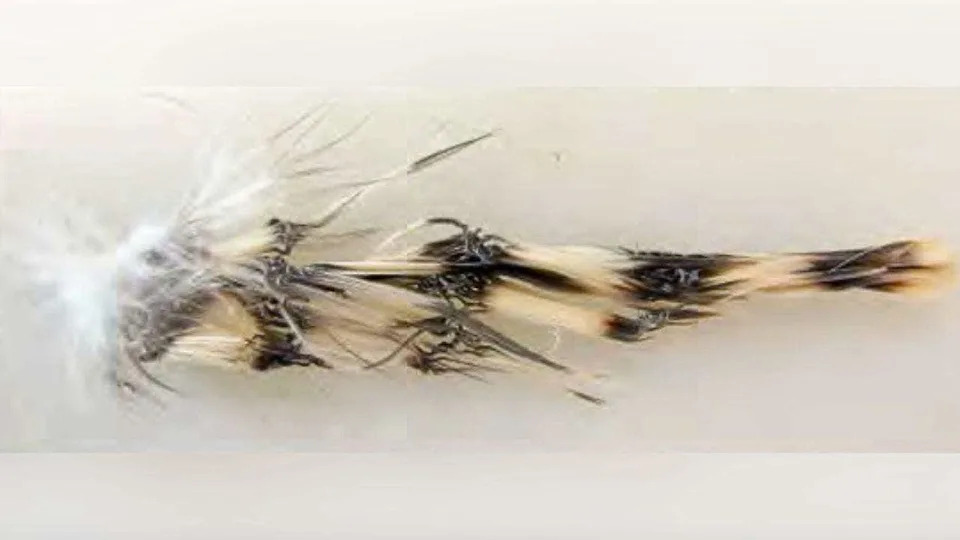
Burned feathers from a peregrine falcon show damage patterns linked to concentrated solar beams at the Ivanpah solar plant, according to federal research.
Who Oversees the Project?
Responsibility is split among multiple agencies: the California Energy Commission (CEC) oversees large energy projects in California, while the U.S. Fish and Wildlife Service, the California Department of Fish and Wildlife, and the Bureau of Land Management each have jurisdiction over elements of the site and its environmental compliance. According to CEC, these agencies review monitoring data and provide technical input but have not, to date, tied that oversight to formal penalties for bird deaths at Ivanpah.
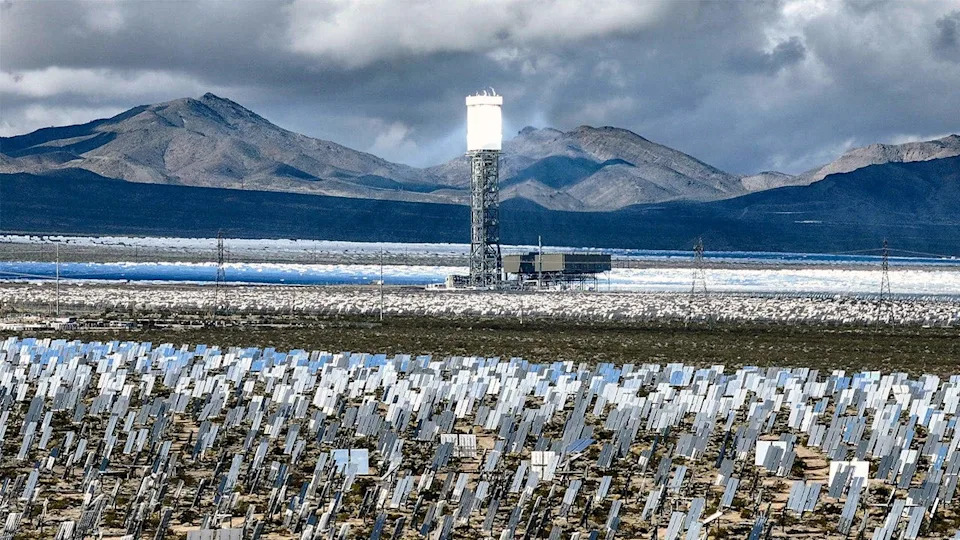
The Ivanpah Solar Power Facility operates in the Mojave Desert near the California–Nevada border, using thousands of mirrors to focus sunlight onto a central tower to generate electricity.
Funding, Technology And Emissions
The plant received significant federal backing during the post-2008 renewable-energy expansion: a $539 million grant and roughly a $1.6 billion loan, commonly cited together among the facility’s approximate $2.2 billion development costs. Ivanpah uses concentrated solar power technology that has since been largely outcompeted on cost by photovoltaic panels. The facility also relies on natural gas for daily startup, producing what regulators and reporting describe as tens of thousands of metric tons of CO₂ annually.
Legal And Policy Context
Federal law can impose fines for deaths of protected migratory birds, but policy and court decisions in recent years narrowed the Migratory Bird Treaty Act’s application to intentional killings in some contexts. In 2017, the Department of the Interior issued guidance that limited enforcement against incidental, unintentional bird deaths, and federal courts have since upheld narrower interpretations, reducing the likelihood of penalties for industrial incidental takes.
Efforts To Reduce Harm
Operators and regulators have tested deterrents, lighting changes and operational adjustments to reduce avian impacts, but monitoring reports show that bird injuries and carcasses continue to be found annually. The plant’s permit structure emphasizes tracking and mitigation rather than automatic fines or shutdowns when wildlife fatalities are documented.
Why This Matters
Ivanpah illustrates trade-offs some regulators and developers face when scaling low-carbon energy: a high-profile renewable project that received large public investment, continues to emit greenhouse gases through fossil-fuel startup, and—despite monitoring—has been linked to substantial wildlife mortality without enforcement action. The case highlights questions about how environmental risks are weighed, how permits are enforced, and how different energy technologies compare on ecological as well as climate grounds.
Sources: Fox News Digital investigation, California Energy Commission statements, U.S. Geological Survey footage and reporting, and publicly available environmental reviews and monitoring reports.
Help us improve.