A walker in Austrått, Norway, discovered a gold sword scabbard about 1,500 years old, likely belonging to a 6th‑century chieftain. The ornament (≈6.1 cm × <2.5 cm, ≈32.6 g) bears Migration Period motifs, traces of filigree, and signs of heavy use. Deliberately placed in a crack in the bedrock, it was probably deposited as a votive offering. One of only 18 such finds in northern Europe, the discovery sheds light on leadership, ritual practices, and social dynamics on Norway's southwest coast.
Hiker Uncovers 1,500‑Year‑Old Gold Sword Scabbard in Norway — A Rare Clue to 6th‑Century Power
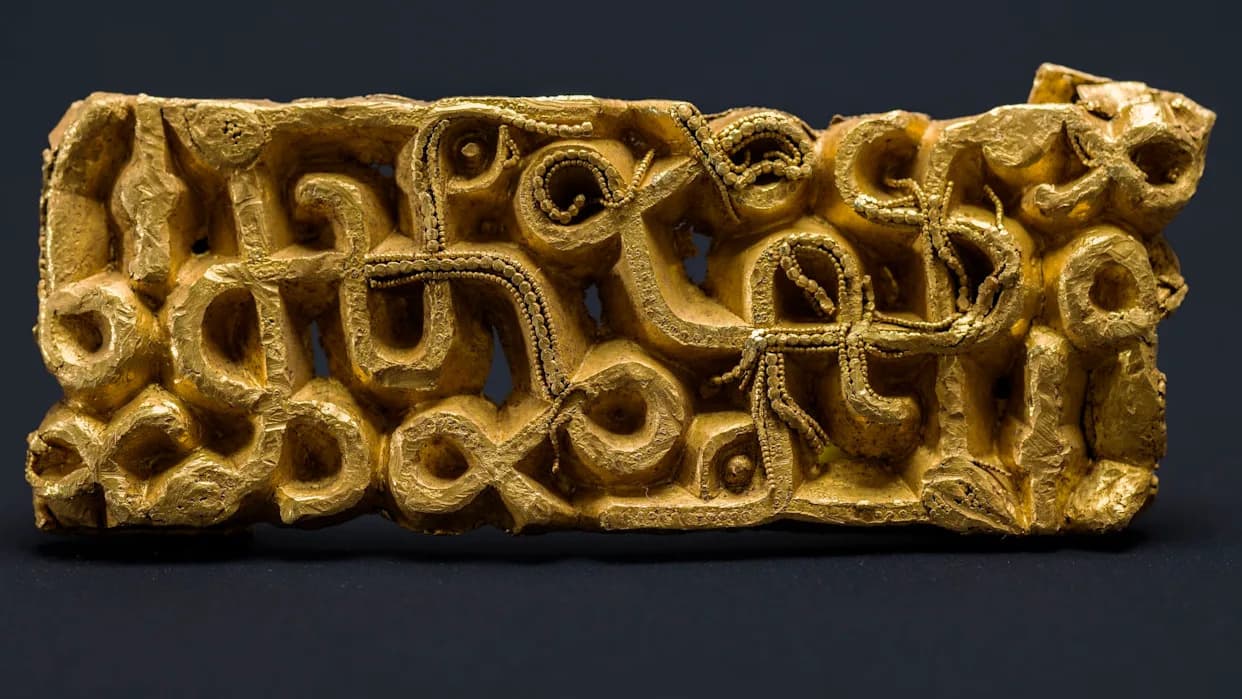
Heavy wear suggests the scabbard's original sword wasn't ceremonial, but frequently wielded.
A hiker who paused to inspect an uprooted tree in the hills of Austrått, on Norway's southwest coast, made an extraordinary discovery: a gold sword scabbard dating to the 6th century. Archaeologists from the University of Stavanger say the small but lavishly decorated piece is roughly 1,500 years old and likely belonged to a high‑ranking leader or chieftain.
Small Object, Big Significance
The ornament measures about 2.4 inches (≈6.1 cm) wide and under 1 inch (≈2.5 cm) tall, weighing around 1.15 ounces (≈32.6 g). Though modest in size, its craftsmanship and material signal great prestige: only 17 similar examples have been recorded elsewhere in northern Europe, making this one of only 18 known pieces.
Design, Use and Dating
Despite centuries underground, much of the scabbard's decoration survives. Researchers identified regional artistic motifs consistent with the Migration Period (300s–600s CE), including animal figures and possible human‑animal hybrids arranged symmetrically. Traces of filigree and finely beaded gold wiring suggest the piece once shimmered in sunlight.
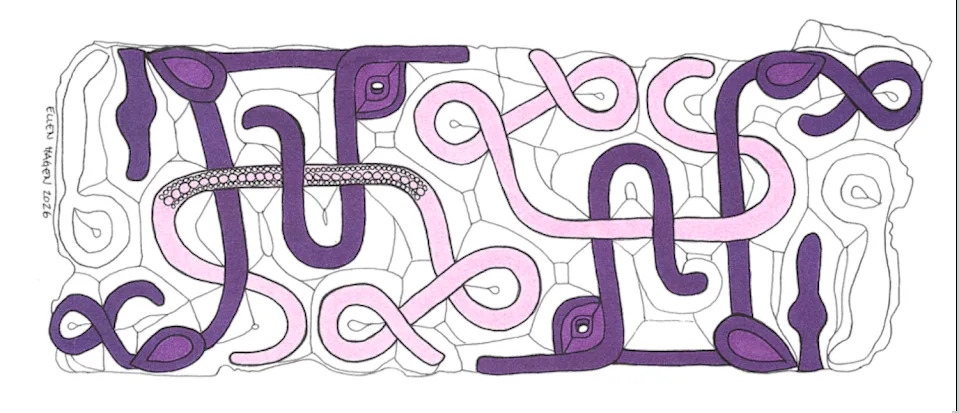
Drawing of the decor in the main field of the fitting from Austrått. The animal figure is drawn with violet color. The ribbon that has been thrown into the figure has been given a pink color. Credit:Ellen Hagen / Archaeological Museum / University of Stavanger
Unlike many richly decorated swords that appear to have been ceremonial, this scabbard shows clear signs of heavy use and wear, indicating the owner likely carried or even used the weapon in public or combat.
Context And Ritual Meaning
Archaeologists found the scabbard deliberately placed inside a crack in the bedrock rather than discarded by accident. That deliberate placement strongly suggests a votive offering — a valuable object given to the gods. In a turbulent 6th century marked by economic and social stress, such a sacrifice would have been a dramatic public display of wealth and power as well as a plea for divine favor.
“The odds of finding something like this are minimal,” said University of Stavanger archaeologist Håkon Reiersen in a statement translated from Norwegian.
Reiersen and colleagues believe the scabbard came from the Hove area, a regional power center on Norway's western shore. The find provides a rare, tangible glimpse into local leadership, ritual practice, and social hierarchy during the Migration Period and will help researchers better understand how leaders displayed authority in early medieval Scandinavia.
Credits: University of Stavanger; archaeologists Håkon Reiersen and Kristin Armstrong‑Oma.
Help us improve.