Japanese Defense Minister Shinjiro Koizumi visited Manila to observe the Balikatan exercises and meet Philippine leaders about deeper defense cooperation, potentially including the transfer of up to six Abukuma‑class destroyers. The 2024 Reciprocal Access Agreement allows Japan to deploy 1,400 personnel as regular participants in the annual drills, which this year will involve representatives from 16 countries and a live‑fire sinking exercise using Type 88 missiles about 40 km offshore. Japan’s recent policy shifts—expanding long‑range strike capabilities and lifting a ban on lethal arms exports—aim to strengthen deterrence amid tensions with China, which has criticized the changes.
Japan’s Defense Minister Visits Philippines to Deepen Security Ties and Observe Balikatan Live‑Fire Drill
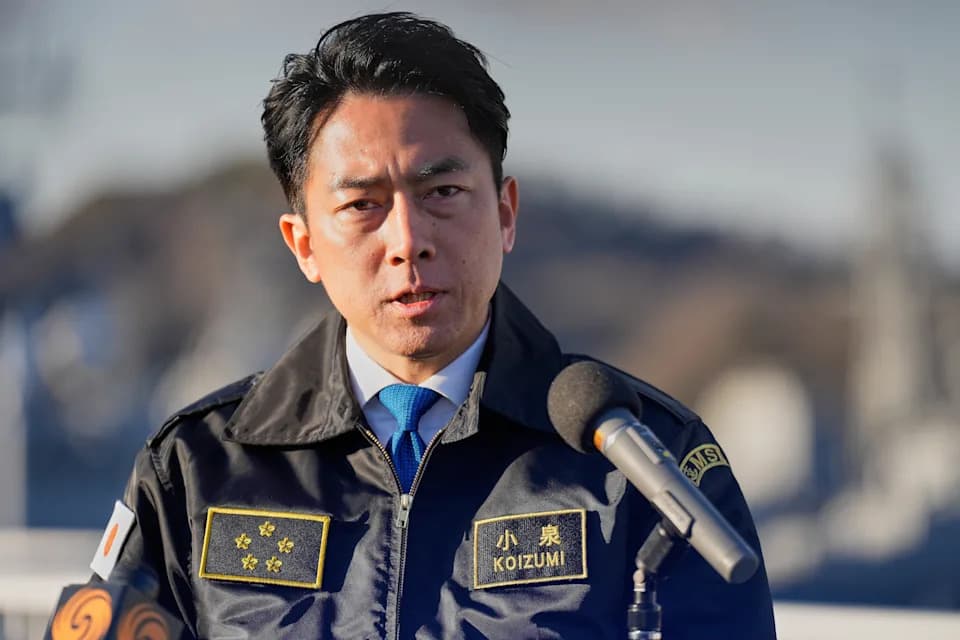
FILE - Japan's Defense Minister Shinjiro Koizumi speaks with media at the headquarters of the Japan Maritime Self-Defense Force Yokosuka District, south of Tokyo, on Jan. 30, 2026. (AP Photo/Eugene Hoshiko, Pool, File)(ASSOCIATED PRESS)
Japanese Defense Minister Shinjiro Koizumi arrived in Manila on Tuesday to observe the multinational Balikatan military exercises and to hold talks with Philippine President Ferdinand Marcos Jr. and Defense Secretary Gilberto Teodoro Jr. The visit is intended to deepen defense cooperation between Tokyo and Manila amid rising regional tensions.
Koizumi’s meetings may include discussion of a possible transfer of up to six used Abukuma‑class destroyers to the Philippine navy. Philippine Marine Corps Col. Dennis Hernandez said Japanese forces will fire two volleys of Type 88 missiles as part of a live‑fire sinking exercise using a decommissioned World War II‑era Philippine ship. The drill is scheduled roughly 40 kilometers (25 miles) off the coast near Paoay, where representatives from 16 countries, including India and Australia, will be present.
The two countries signed a Reciprocal Access Agreement in 2024 that allows Japan to deploy up to 1,400 personnel as regular participants in the annual Balikatan drills. Balikatan—Tagalog for “shoulder‑to‑shoulder”—brings U.S., Filipino and allied forces together to prepare for contingencies and to deter growing assertiveness in the region.

FILE - Philippine President Ferdinand Marcos Jr. speaks during a press conference in Manila, Philippines, on March 25, 2026. (Ezra Acayan/Pool Photo via AP, File)(ASSOCIATED PRESS)
Before arriving in the Philippines, Koizumi visited Jakarta, where he signed a defense cooperation agreement with Indonesian Defense Secretary Sjafrie Sjamsoeddin. In Tokyo, Koizumi has emphasized the need for a "multilayered network of allies and like‑minded countries" as Japan faces what he called the most severe and complex security environment since World War II.
Tokyo has recently taken several notable policy steps: it expanded long‑range strike capabilities and on April 21 lifted a long‑standing ban on lethal weapons exports—moves that mark a significant shift from Japan’s postwar defense posture. Those changes open the door for defense industry cooperation and possible transfers of used vessels and equipment to partner countries, including the Philippines, which has seen a rise in territorial tensions with China in the South China Sea.
Chinese Foreign Ministry spokesperson Guo Jiakun criticized Japan’s policy changes last month, saying the international community would "resolutely resist Japan’s reckless moves toward a new type of militarism."
Details of any potential destroyer transfer have not been disclosed and would require further negotiations and approvals. Koizumi’s visit underscores an accelerating regional security realignment as Japan, the Philippines and other allies deepen practical defense cooperation.
Help us improve.