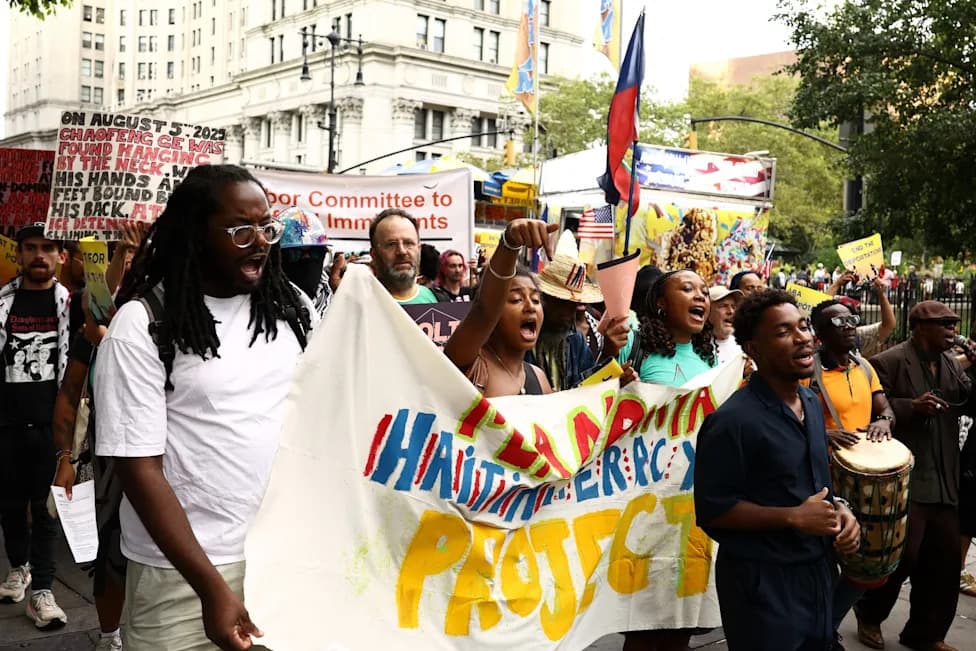
Rep. Mike Turner and several Ohio Republicans have broken with the Trump administration by supporting extensions of protections for Haitian immigrants. An unexpected airport meeting between locals and Turner underscored local pressure, while a recent Bowling Green State University/YouGov poll shows waning support for Trump in Ohio. The Supreme Court is weighing the future of Temporary Protected Status for roughly 350,000 Haitians, leaving communities and employers uncertain ahead of competitive midterm races.
Ohio Republicans Break With Trump to Back Haitian Immigrants as Midterms Loom
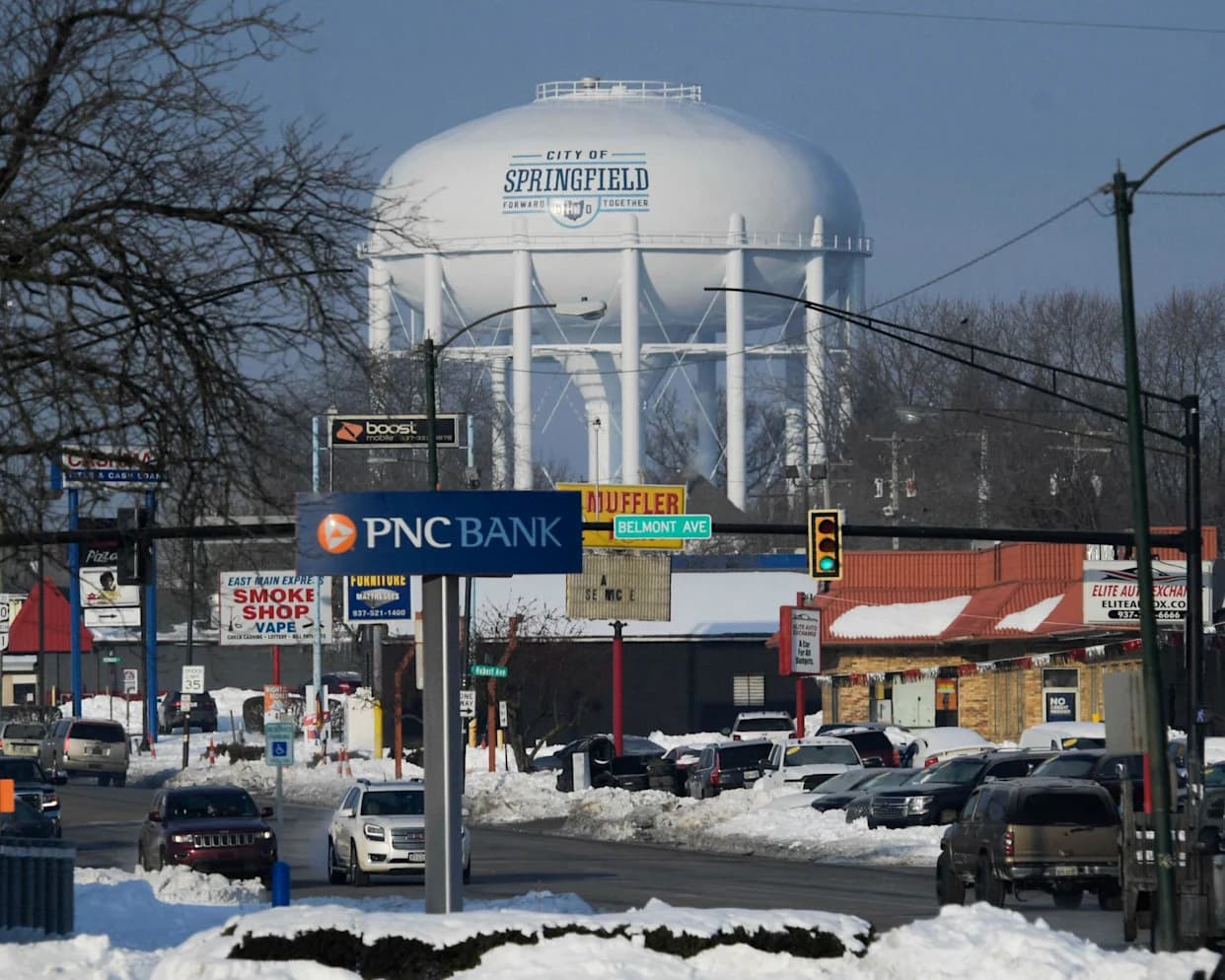
Springfield, Ohio, which has a large number of Haitian immigrants.Photograph: Matthew Hatcher/AFP via Getty Images(Photograph: Matthew Hatcher/AFP via Getty Images)
For months Pastor Carl Ruby, a longtime advocate for Springfield’s estimated 10,000 Haitian residents, had struggled to secure an appointment with his congressman, Republican Mike Turner, to discuss the hardships and civic contributions of the Haitian community.
Ruby finally had an unexpected opportunity when he and Viles Dorsainvil, director of the Haitian Community Help & Support Center and a plaintiff in a case the Supreme Court recently heard, ran into Turner at an airport gate while boarding the same flight to Washington.
They seized the moment to press their concerns. The response surprised them.
“He clearly understands the economic benefit of having immigrants here. He clearly is not on the same page with many members of his party who are willing to step back and let the president do whatever he wants,” Ruby said.
Turner was one of only 10 of 214 House Republicans who joined Democrats last month in voting to extend immigration protections for Haitians in the United States. Mike Carey, a Republican from nearby Columbus, also sided with Democrats on that measure — a move that faces long odds in the Republican-controlled Senate.
Politics, Polls and Local Pressure
Turner and Carey are among a growing number of Ohio Republicans facing reelection who have diverged from the Trump administration on this issue. Their stance appears linked to local political dynamics: Ohio, while it backed Trump by double digits in 2024, shows signs of becoming more competitive, especially around urban centers.
A recent poll of 1,000 registered Ohio voters released by Bowling Green State University and YouGov found that 15% of those who voted for Trump in 2024 now regret their choice. The same survey reported majority opposition to a potential U.S. war on Iran (53%) and to the administration’s tariffs campaign (56%).
“A significant number of Ohioans do not like what they have seen when it comes to many of Trump’s policies,” said Robert Alexander, a political science professor who oversaw the poll. He added that heightened Democratic enthusiasm and local support for Haitian residents — from religious, business and civic leaders — help explain why some Republicans have been willing to break with the party line.
High-Stakes Races
Competitive statewide contests are adding pressure. Polling shows Republican former presidential candidate Vivek Ramaswamy and Democrat Amy Acton statistically tied in the governor’s race, while the Senate contest between Republican Jon Husted and Democratic incumbent Sherrod Brown has attracted more than $79 million from the Senate Leadership Fund, a Republican super PAC.
For Turner, a former Dayton mayor, several polls suggest vulnerability in a seat he has held for nearly 25 years. He faced criticism last year for declining to hold an in-person town hall. Turner’s office did not respond to emailed questions from the Guardian about his vote to extend protections for Haitians.
Human Impact and Legal Uncertainty
In Springfield, the Haitian community says uncertainty about Temporary Protected Status (TPS) is already affecting everyday life. Many employers are reluctant to hire Haitians amid questions about their future legal status.
Ruby — who has faced threats and inflammatory accusations since President Trump’s controversial comments about immigrants in 2024 — says his church now offers Mass in Creole to serve an expanding Haitian congregation.
“I have people in my congregation who have been imprisoned and tortured because they opposed corruption [in Haiti]. It’s more violent now than it was when they first came. Even our own State Department says do not go there,” he said.
The Supreme Court recently heard arguments in a case challenging the administration’s effort to end TPS for roughly 350,000 Haitians and thousands more from other countries, including Syrians. Justices Sonia Sotomayor and Ketanji Brown Jackson questioned whether the president’s repeated inflammatory remarks about Haitians could be considered discriminatory. Last October the Court ruled for the administration in a separate TPS case involving more than 300,000 Venezuelan nationals.
Ruby, who attended the hearing, expects a decision on Haitian TPS by June. Regardless of the court’s ruling, community members say the legal uncertainty is already deterring employers and contributing to fear among immigrants in Springfield.
“Nobody wants to hire Haitians because of all the uncertainty,” Ruby said. “If they may not be allowed to work.”
Help us improve.