Cephalopods — octopuses, squid and cuttlefish — independently evolved large, sophisticated brains and complex behaviours. Their nervous systems are organized very differently from vertebrates (a doughnut brain plus extensive arm "minibrains"), yet single-cell, connectomic and physiological studies reveal both shared computational motifs and novel solutions. The 2015 octopus genome and new molecular tools have accelerated research, but technical hurdles and unresolved welfare and analgesia issues raise ethical concerns. Either way, studying cephalopods promises powerful insights into principles — and alternatives — of brain design.
Octopus Brains: A Different Design for Intelligence — What Neuroscience Is Learning
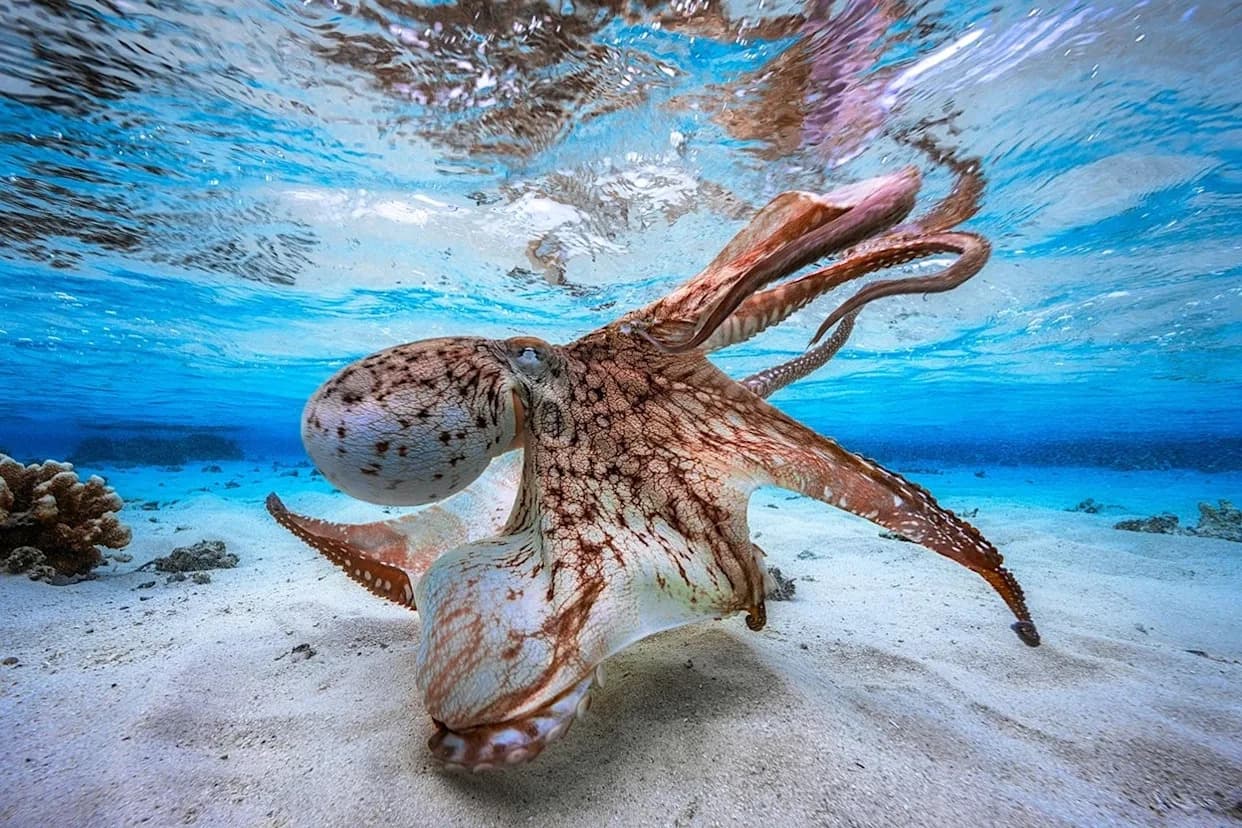
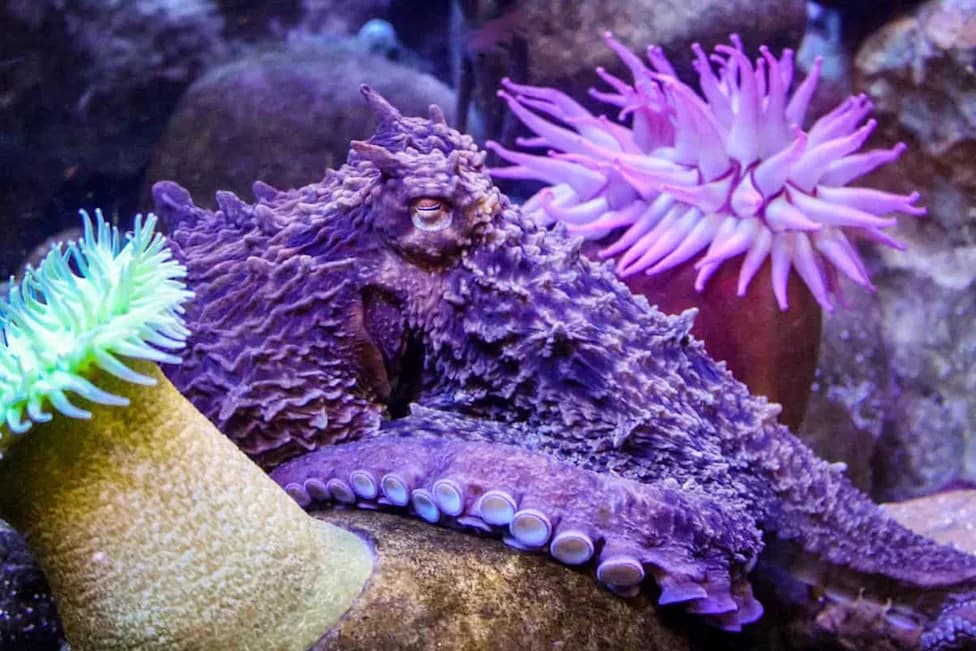
Neuroscientists are studying octopuses and other cephalopods because of their intelligence and large brains.(Media Drum World/Alamy)
Three hearts, blue blood, no skeleton and arms that behave like tongues: these striking traits only scratch the surface of what makes octopuses, squid and cuttlefish — the cephalopods — seem so alien. Their skin can detect chemicals, sense light and shift colour and texture in seconds; many species can even regenerate sucker-lined arms. Yet despite diverging from vertebrates more than 600 million years ago, cephalopods evolved unusually large, sophisticated brains and complex behaviours.
Convergent Evolution and a Burst of Interest
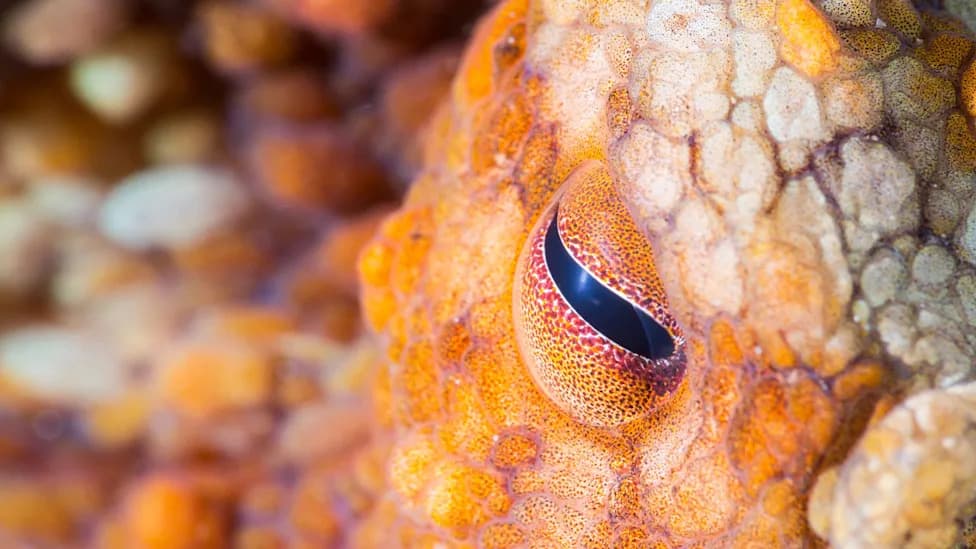
Cephalopods split from the vertebrate lineage long ago, but they convergently evolved features such as camera-like eyes and advanced cognition. Around 400 million years ago, cuttlefish, squid and octopuses diverged from nautiluses, losing protective shells and developing large, soft-bodied brains capable of remarkable feats: spatial memory, tool use, problem solving, a rudimentary sense of time and delayed gratification.
Brains Built Another Way
Cephalopod nervous systems are organised very differently from vertebrate ones. The central brain forms a doughnut around the oesophagus, and in many species — notably octopuses — more than half of the neurons are distributed along eight arm nerve cords, effectively creating 'minibrains' that control local sensing and motor control. These anatomical differences produce unfamiliar circuit layouts and novel neural solutions.
Familiar Features, Unfamiliar Implementations
Structures that look superficially similar to vertebrate systems can function in strikingly different ways. Octopus eyes resemble vertebrate eyes, but the optic lobe and downstream circuits that process vision are organized and wired in ways neuroscientists are only beginning to understand. In one recent preprint, researchers reported a dopamine receptor in the octopus visual system that functions as an ion channel — a direct pore opened by dopamine — in contrast to vertebrate dopamine receptors that trigger intracellular signalling cascades.
"We just have no idea of how it functions," says Cristopher Niell of the University of Oregon, emphasizing how novel these architectures can be.
Methods, Genomes and New Tools
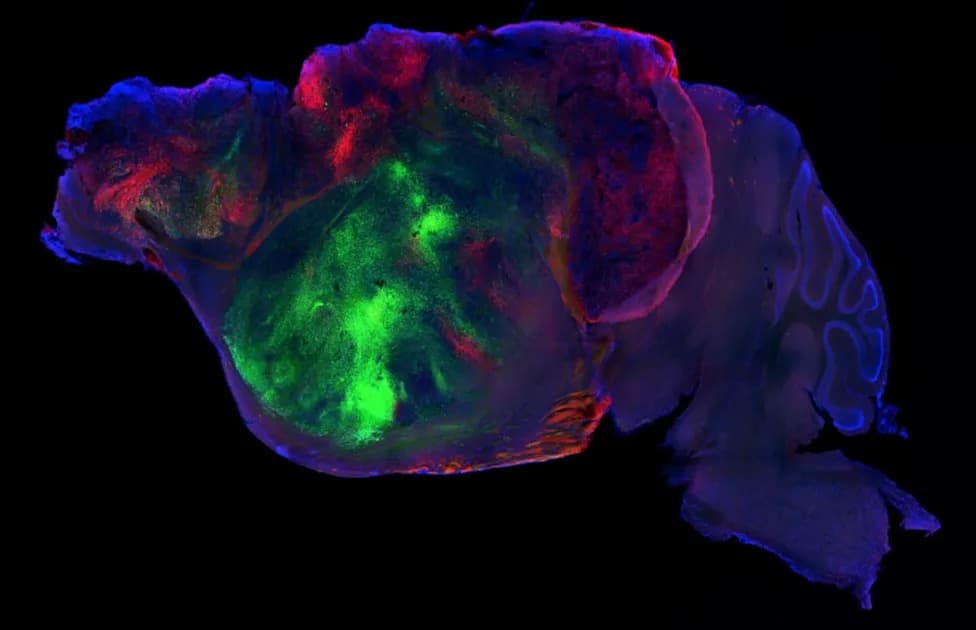
Progress accelerated after the 2015 sequencing of an octopus genome, which revealed expansions in gene families linked to nervous-system patterning and encouraged molecular labs to enter the field. Modern techniques — single-cell RNA sequencing, partial connectomics, brain-slice electrophysiology and CRISPR — are being adapted from mammalian and invertebrate models to probe cephalopod neurons and circuits.
Studies have already produced mixed but exciting results: single-cell profiling of the optic lobe identified distinct neuron classes and an unexpected layered organization; partial connectomes of the vertical lobe revealed both familiar circuit motifs and novel elements; and neurophysiological work has found synaptic strengthening reminiscent of mammalian memory mechanisms, albeit via different molecular pathways.
Technical Challenges
Adapting standard neuroscience methods to cephalopods is hard. Cephalopods lack skulls for mounting equipment, will remove protruding devices with their arms, and often have very small neurons with electrical properties that complicate recordings. Many species do not breed readily in captivity, increasing costs and limiting access to lab-bred animals. Still, teams have begun recording population activity, building genetic tools in multiple species, and producing lab-friendly squid and genetically modified cuttlefish.
Behavioural Advantages
Some cephalopod traits are experimental advantages: cuttlefish can display camouflage patterns controlled directly by neural activity, offering a visible readout of perception-to-action transformations. Conversely, octopuses' flexible, contortionist bodies complicate imaging and tracking of behaviour, which is why researchers often study multiple species in parallel.
Ethics and Welfare
Rapid scientific progress raises ethical questions. Cephalopods are protected in research in some jurisdictions (Europe, the UK) but not others (United States, Japan), and options for analgesia and anaesthesia are limited: common mammalian analgesics often fail in cephalopods, and local anaesthetics show restricted efficacy. Researchers urge more investment in pain-relief studies and harmonized care standards to avoid ethical pitfalls as cephalopods become more widely used in laboratories.
Why Cephalopods Matter to Neuroscience
Studying cephalopods offers a rare test of whether principles derived from vertebrates generalize to independently evolved, complex nervous systems. Either outcome is valuable: finding shared computational principles would suggest universal rules of neural organization; discovering genuinely different architectures would expand our understanding of how intelligence can be built.
Reproduced with permission. First published April 29, 2026.
Help us improve.