China has implemented a two-year, tariff-free policy for imports from 53 of Africa's 54 countries, excluding Eswatini because of its diplomatic ties with Taiwan. The deal covers Africa's 20 largest economies and highlights agricultural winners such as cocoa, coffee, avocados, citrus and wine. While Beijing presents the move as promoting shared development, analysts point to a growing China–Africa trade imbalance: trade hit $348 billion in 2025, with Chinese exports to Africa rising much faster than imports from the continent. Governments including South Africa welcomed deeper cooperation, but experts caution that long-term benefits will depend on diversification and investment in value-added industries.
China Grants 53 of 54 African Nations Two-Year Tariff-Free Access — Eswatini Left Out
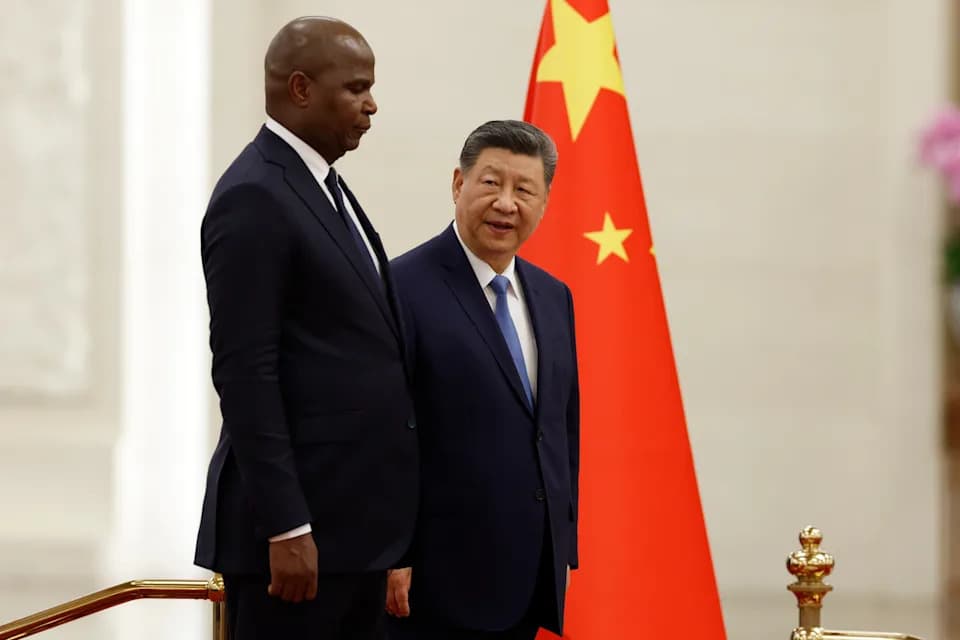
China's President Xi Jinping, right, and Mozambique's President Daniel Chapo attend a welcoming ceremony at the Great Hall of the People in Beijing Tuesday, April 21, 2026. (Haruna Furuhashi/Pool Photo via AP)(ASSOCIATED PRESS)
China's new two-year policy granting tariff-free access to imports from 53 of Africa's 54 countries took effect on Friday, opening duty-free trade for many of the continent's largest economies while prompting debate over the long-term balance of the relationship.
What the Deal Covers
The arrangement covers Africa's 20 largest economies — including South Africa, Egypt, Nigeria, Algeria and Kenya — and extends previously granted tariff removals for 33 lower-income African nations. Chinese officials say the only African country still excluded is Eswatini, the sole African state that maintains formal diplomatic ties with Taiwan.
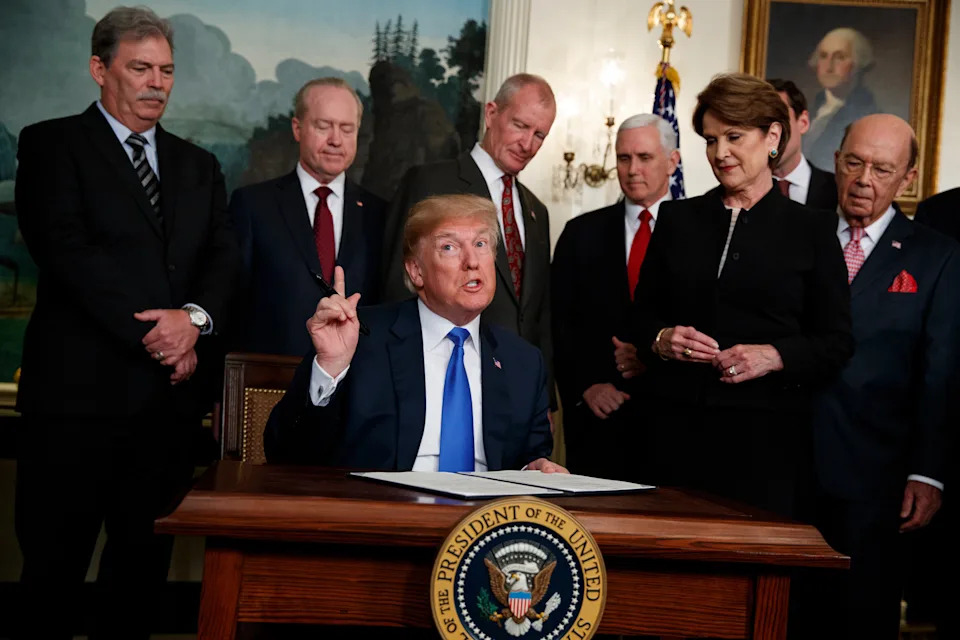
FILE - President Donald Trump speaks before he signs a presidential memorandum imposing tariffs and investment restrictions on China in the Diplomatic Reception Room of the White House, March 22, 2018, in Washington. (AP Photo/Evan Vucci, File)(ASSOCIATED PRESS)
Early Signs and Targeted Benefits
State media reported that the first shipment under the zero-tariff policy was 24 metric tons of South African apples that cleared customs in Shenzhen. China's Commerce Ministry highlighted agricultural items likely to benefit most: cocoa from Ivory Coast and Ghana; coffee and avocados from Kenya; and citrus and wine from South Africa — products that had previously faced tariffs in the roughly 8%–30% range.
Economic Context and Concerns
Beijing framed the move as promoting "common development" with Africa. But analysts and trade data point to a substantial trade imbalance: China-Africa trade reached a reported $348 billion in 2025, with China's exports to Africa rising by about 25% to $225 billion, while imports from Africa grew roughly 5% to $123 billion, widening Africa's trade deficit with China.

Chinese flag is on display during a ate evening with the background of central business district in Beijing, China, Monday, July 15, 2024. (AP Photo/Vincent Thian)(ASSOCIATED PRESS)
Thierry Pairault, a China–Africa specialist at France's National Center for Scientific Research, wrote that the measure sends a political signal against Western protectionism but noted many major African raw-material exports such as oil and minerals already had tariff-free access to China.
Political and Commercial Reactions
Several African governments said they would seek new markets for products previously destined for the United States after Washington introduced reciprocal tariffs last year that at times reached high rates for some African exporters. South African Trade Minister Parks Tau said his country "looks forward to working with China in a friendly, pragmatic and flexible manner."
The United Nations projects Africa's population will rise from about 1.5 billion today to roughly 2.5 billion by 2050, underscoring the continent's growing economic importance. Observers caution that while tariff relief can benefit agricultural exporters, broader structural issues — including the trade mix, value-added production in Africa, and large debt exposures to China — will shape the long-term impact.
Bottom Line
The tariff-free initiative offers immediate export opportunities for several agricultural sectors and a symbolic counterpoint to protectionist rhetoric abroad. At the same time, widening trade imbalances and the concentration of African exports in raw materials mean the move's broader benefits for industrialization and sustained economic development are uncertain.
Help us improve.