The Air Force's FY2027 budget asks for $996.5M to start production of Increment 1 Collaborative Combat Aircraft, plus $150M for FY28, bringing the total program request to about $2.37B with increased R&D. CCAs are semi-autonomous, jet-powered "loyal wingmen" designed to operate alongside crewed fighters, with Increment 1 focused on air-to-air and strike roles. Key decisions remain on basing, maintenance, training and integration, and Congress is expected to closely scrutinize the plan. The Netherlands has pledged funding for two Increment 1 CCAs to support joint development and testing.
U.S. Air Force Seeks Nearly $1B To Begin Production Of 'Loyal Wingman' CCAs — From Prototypes To Fleet
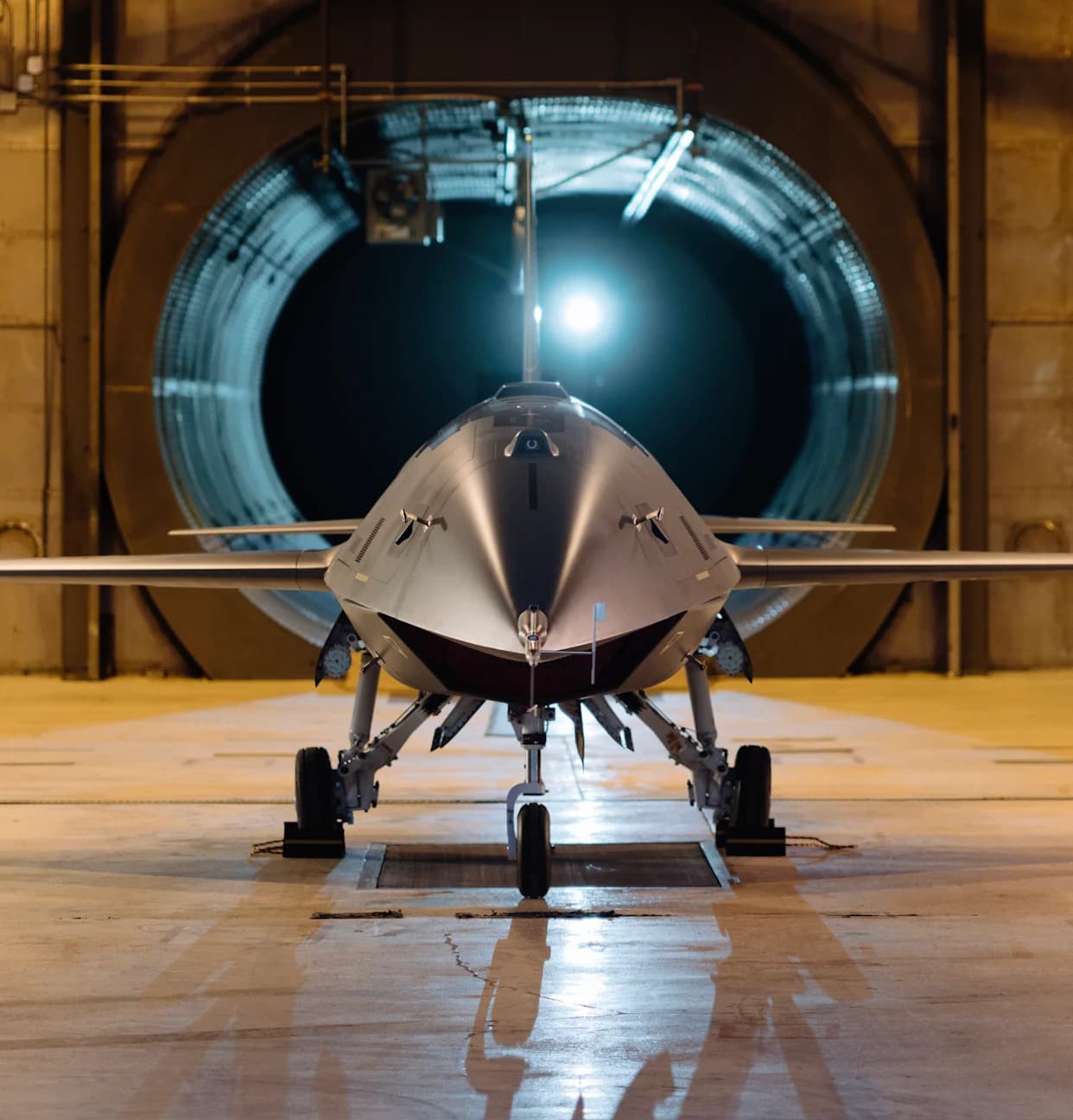
A YFQ-44A production representative test vehicle sits in a testing chamber in Costa Mesa, California. (Air Force)(Master Sgt. Gustavo Castillo)
The U.S. Air Force’s fiscal 2027 budget request marks a major shift: for the first time the service is asking Congress to fund the purchase of Collaborative Combat Aircraft (CCAs), commonly described as "loyal wingmen." The request signals a move from experimental demonstrations toward an operational, fielded capability.
What the Budget Requests
Procurement: $996.5 million in FY2027 to start production of Increment 1 CCAs, plus $150 million in advance procurement for FY2028.
Research & Development: Roughly $1.37 billion in continued R&D funding (up from $827 million in FY2026), bringing the combined FY27 program request to about $2.37 billion, according to Pentagon comptroller documents released April 3.
What CCAs Are — And Why They Matter
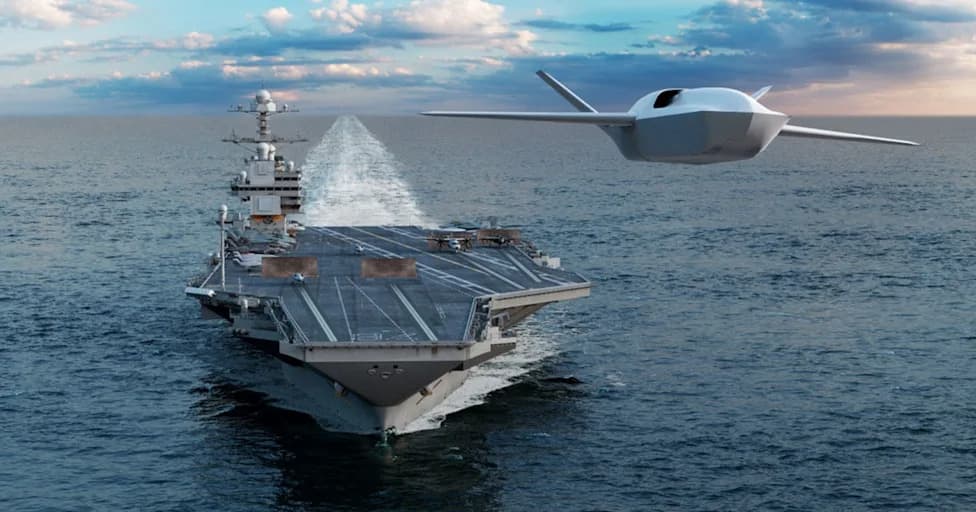
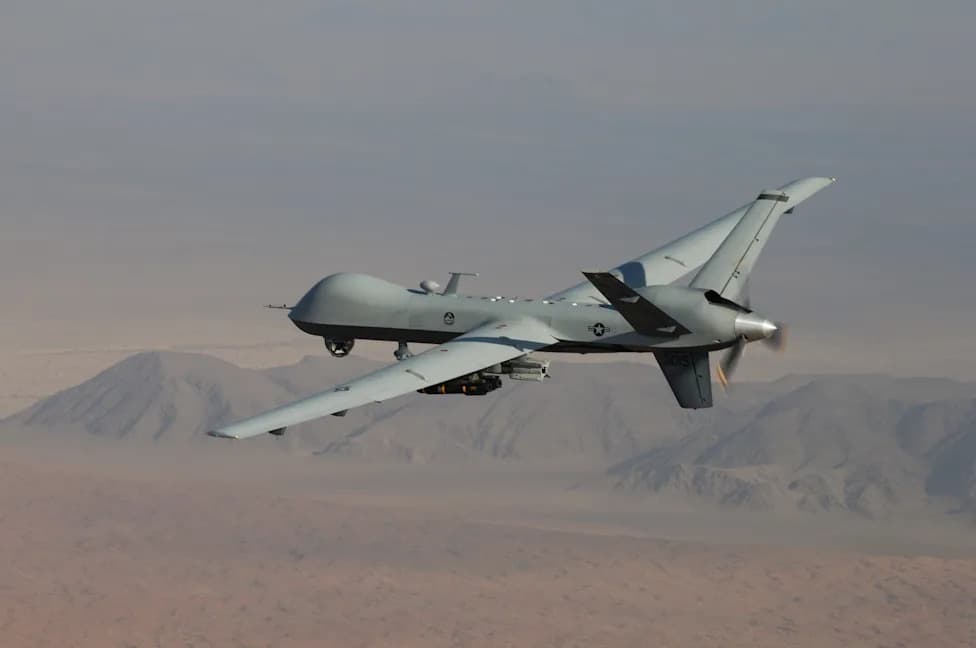
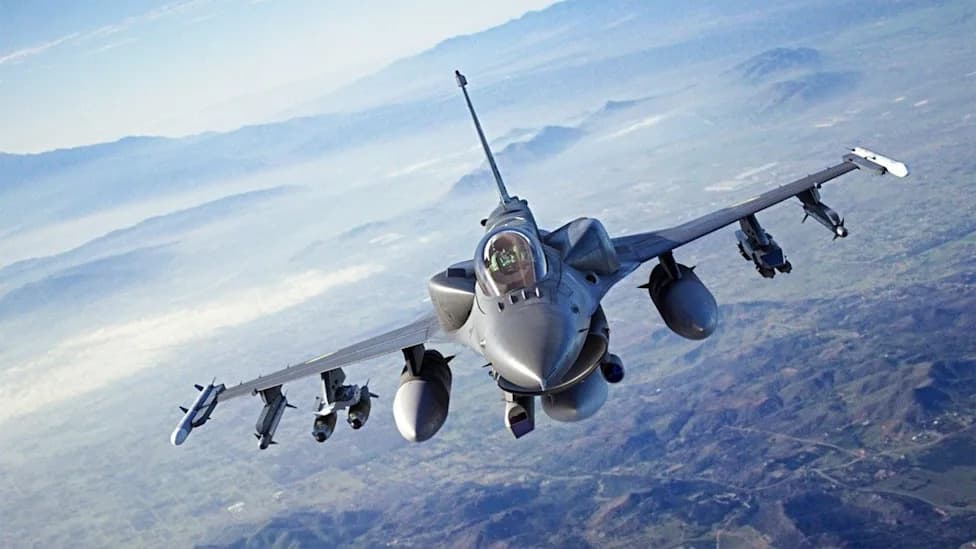
CCAs are jet-powered, semi-autonomous aircraft designed to operate alongside crewed fighters such as the F-35, F-22 and planned F-47. In this concept the manned fighter pilot serves as the mission commander while CCAs use onboard autonomy for navigation, maneuvering, sensor fusion and weapons employment — enabling larger, more distributed formations and higher combat mass without adding more crewed jets.
Increment 1 Focus And Scale
Increment 1 will prioritize air-to-air and strike missions, with electronic warfare (EW) and intelligence, surveillance and reconnaissance (ISR) variants planned for later increments. The Air Force has previously signaled interest in acquiring 100–150 Increment 1 aircraft as part of a longer-term plan that could reach hundreds to the low thousands across multiple increments.
Industry, Competitors And Timeline
A final production decision for Increment 1 is expected this summer. Leading contenders include General Atomics' YFQ-42A and Anduril's YFQ-44A; Northrop Grumman's YFQ-48A remains in testing for subsequent phases. While budget documents do not specify exact lot quantities for FY27, analysts estimate roughly 30 airframes for the initial procurement, depending on final unit costs.
Cost, Risks And Operational Questions
Col. Timothy Helfrich, the program's portfolio acquisition executive, said the program is currently tracking below the original $30 million per-unit target — a positive sign — but production transitions typically encounter challenges. Key risk areas include autonomy software maturity, supply chain readiness, and secure integration with manned platforms.
Operationally, unanswered questions remain: where CCAs will be based, who will maintain them, how pilots and maintainers will be trained, and how CCAs will be integrated across active-duty, Guard and Reserve units. The Air Force's notional concept pairs each manned fighter with two CCAs, though testing suggests a single pilot could supervise three to five CCAs in some scenarios.
Policy And International Interest
The FY27 procurement request sits in the base budget, but Congress is expected to scrutinize details. Lawmakers have requested briefings on mission sets, human-machine interfaces, production scaling and integration plans; the FY27 markup could include minimum quantities or additional oversight language.
International interest is already emerging: on April 23 the Netherlands committed funding for two Increment 1 CCAs. Under that arrangement the aircraft will remain U.S. property and operate with the Air Force's Experimental Operations Unit at Nellis AFB, with Dutch personnel embedded to help develop concepts of operations.
“The future fight will be fought with allies and partners,” Air Force Secretary Troy Meink said on April 23. “By aligning our approaches early, we ensure interoperability and shared advantage in the era of human-machine teaming.”
Outlook
The FY27 procurement request is a clear turning point for the CCA program: it moves the concept out of the lab and toward a fielded capability, but it also forces hard choices about basing, force structure and sustainment. With nine vendors under contract for Increment 2 prototypes and wargames favoring larger numbers of lower-cost CCAs for a Pacific fight, the program faces a balancing act between scaling Increment 1, accelerating future increments, and managing risk.
Help us improve.