The U.S. Air Force approved two acquisition milestones to advance B‑52 modernization: Milestone B (June 1) cleared the Commercial Engine Replacement Program to enter Engineering and Manufacturing Development, and Milestone C (Aug. 21) authorized Low‑Rate Initial Production for the Radar Modernization Program. The combined acquisition baseline for CERP is set at $20.2 billion, with $2.6 billion spent since 2018. Structural assessments indicate the B‑52 airframes should remain serviceable into the 2050s, and LRIP contracts were awarded to Raytheon Technologies and Boeing.
Air Force Clears Two Major B‑52 Modernization Milestones — New Engines and AESA Radar Move Forward
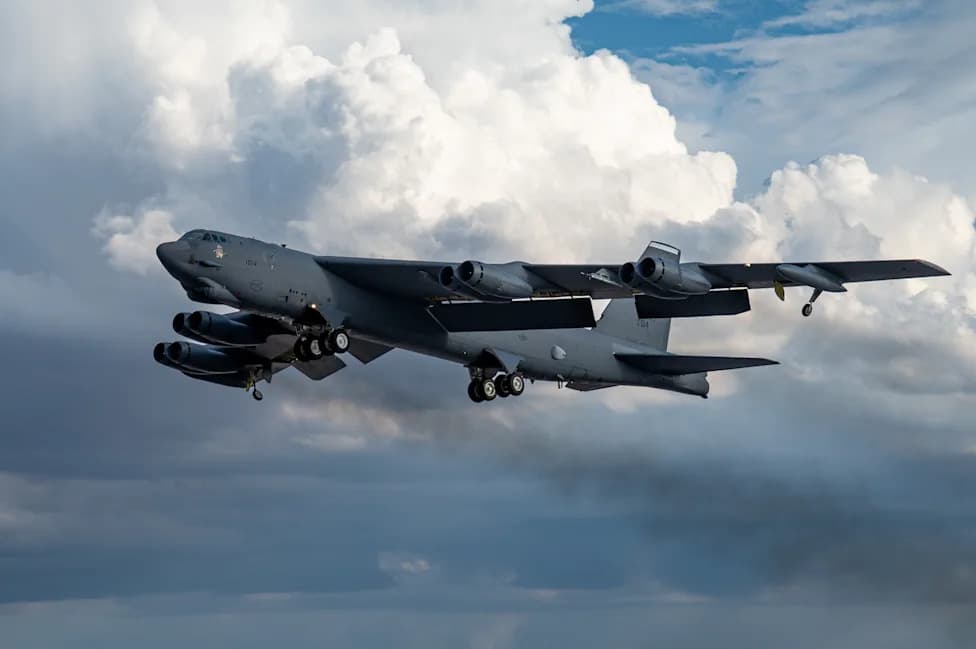
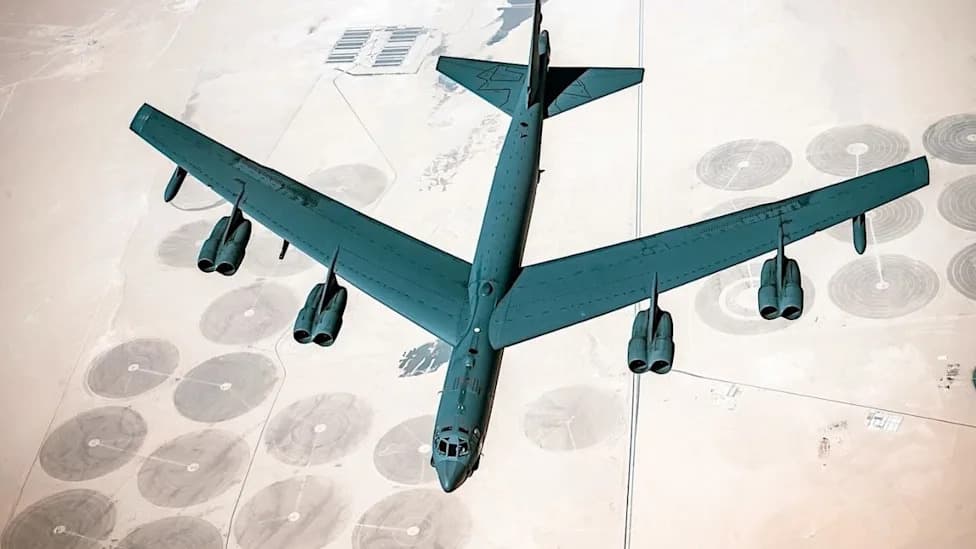
A U.S. Air Force B-52H Stratofortress takes off during the U.S. Air Force Weapons School Integration at Nellis Air Force Base, Nevada, on June 5, 2025. (William R. Lewis/U.S. Air Force)
The U.S. Air Force has cleared two formal acquisition milestones that push major B‑52 Stratofortress upgrades into development and production. These decisions aim to keep the bomber fleet operational and credible into the 2050s as part of the Nuclear Triad and long‑range strike force.
Engine Upgrade: Milestone B (CERP)
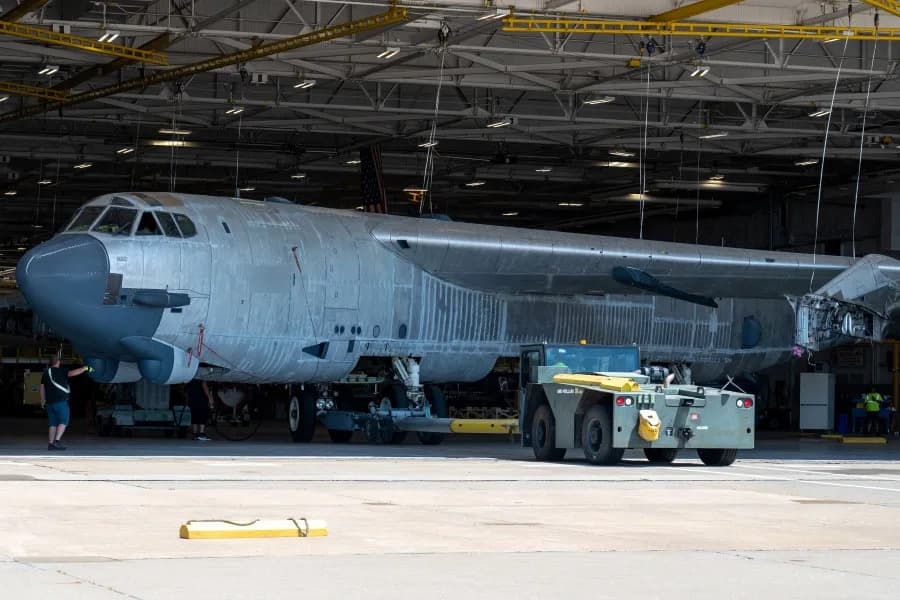
On June 1, the Air Force approved Milestone B for the B‑52J Commercial Engine Replacement Program (CERP), establishing the program's first Acquisition Program Baseline and authorizing entry into the Engineering and Manufacturing Development (EMD) phase. CERP will replace the B‑52’s original TF33 engines with Rolls‑Royce F130 engines and modernize related subsystems, including hydraulic pumps, cockpit displays and electrical generators. The total acquisition cost is set at $20.2 billion, covering RDT&E, procurement and military construction; of that amount, $2.6 billion has been obligated since 2018.
Radar Upgrade: Milestone C (RMP)
On Aug. 21, the Air Force approved Milestone C for the B‑52 Radar Modernization Program (RMP), authorizing Low‑Rate Initial Production (LRIP). RMP replaces the 1980s‑era APQ‑166 analog radar with the APQ‑188, an Active Electronically Scanned Array (AESA) radar related to systems used on modern fighters. LRIP contracts were awarded to Raytheon Technologies for the APQ‑188 radars and to Boeing for 74 aircraft integration kits.
Testing, Production Readiness and Fleet Health
Two test B‑52s are currently flying operational missions after recent depot maintenance and are scheduled to enter modification at Boeing’s San Antonio facility in the coming months to receive both CERP and RMP upgrades. A June 2026 Production Readiness Review concluded the new systems can be built reliably and are ready for initial production.
Structural Assessments and Longevity
“These programs are delivering the propulsion reliability, sensor capability and electrical power needed to keep this legendary bomber viable, lethal, and supportable well into the future,” said Brig. Gen. Timothy Spaulding, portfolio acquisition executive for Bombers and director of the Air Force Life Cycle Management Center's Bombers Directorate.
Program engineers conducted fleetwide structural assessments as part of Milestone B to ensure the airframes can support new engines, increased electrical generation and decades more operations. According to the release, analyses project the airframes will have sufficient fatigue life to support operations well into the 2050s and beyond.
Outlook
Together, CERP and RMP are intended to restore propulsion reliability, modernize sensors and increase electrical capacity—upgrades that are central to maintaining the B‑52's mission relevance through midcentury. With EMD underway for engines and LRIP underway for radars, work will shift from design and testing to large‑scale production and fleet modernization in the coming years.
Help us improve.