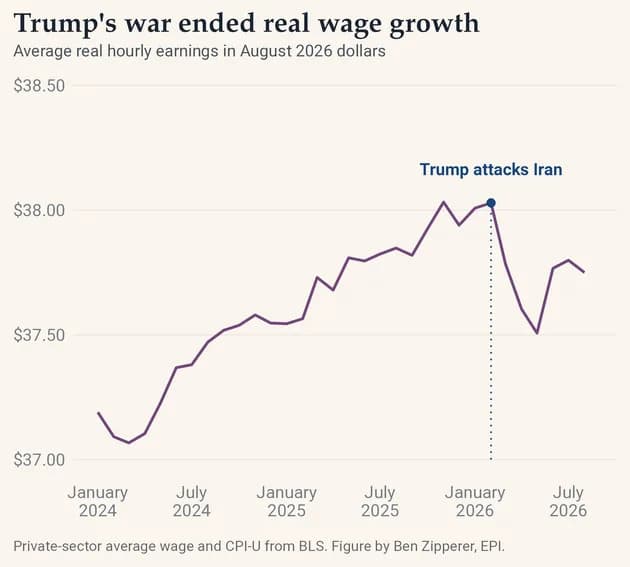
Large tax refunds and a boom in AI-related investment have temporarily offset the economic pain from higher fuel costs tied to the Iran war. March's PCE inflation rose 0.7% month-over-month and 3.5% year-over-year, while Q1 GDP grew at a 2% annualized rate. Gasoline surged 21% in March and recently averaged $4.30 a gallon, and economists warn the consumer lift from refunds may fade as fuel costs persist.
Tax Refunds and AI Investment Cushion US Economy as Gas Prices Surge — For Now
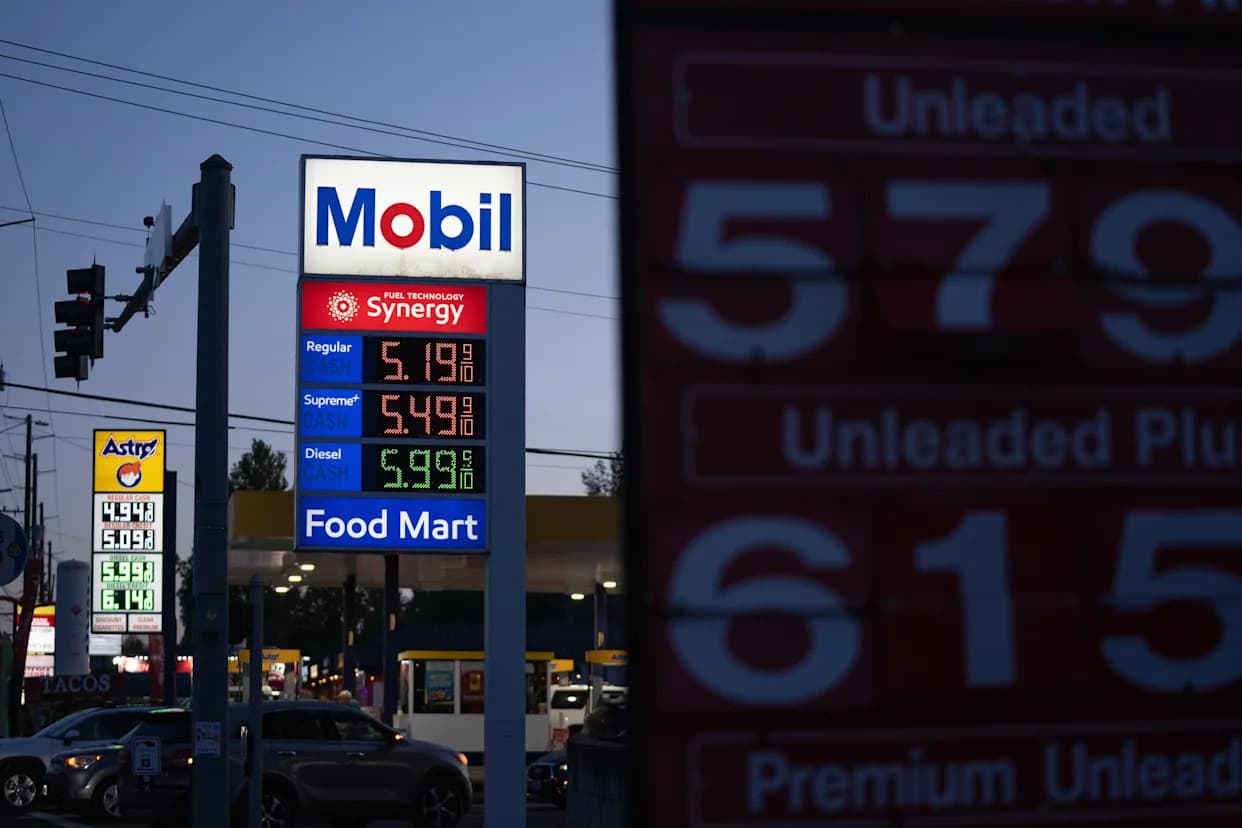
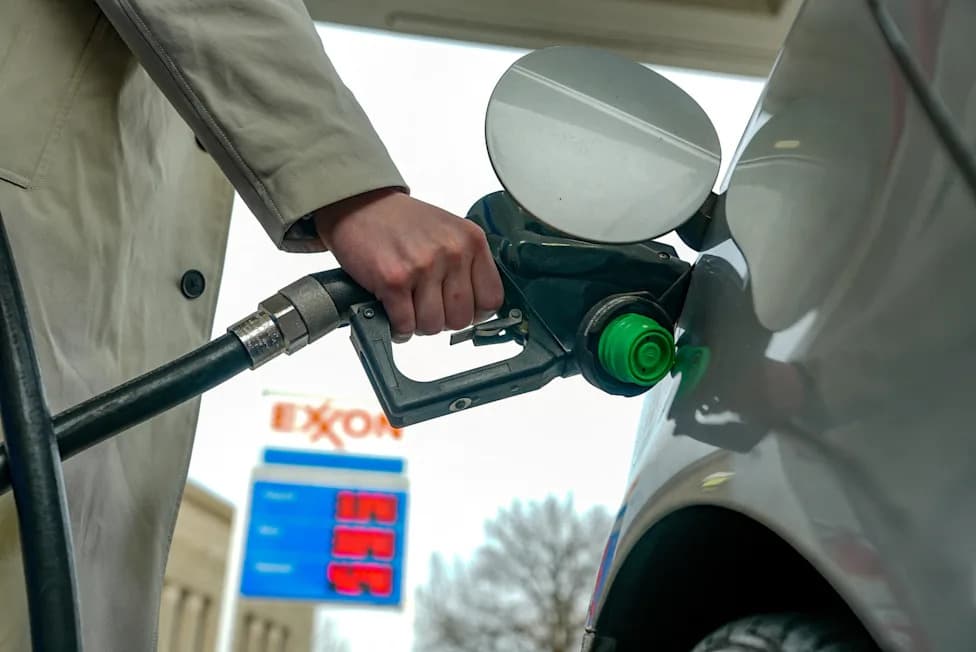
Gasoline prices are displayed at a Mobil gas station on Wednesday, April 29, 2026, in Portland, Ore. (AP Photo/Jenny Kane)
Americans are feeling the economic cost of the war in Iran at the pump, but large tax refunds and a surge in business investment tied to artificial intelligence have so far softened the blow.
Inflation and the Fuel Shock
The Commerce Department's Personal Consumption Expenditures (PCE) price index — the Federal Reserve's preferred inflation gauge — rose 0.7% from February to March and 3.5% from a year earlier, the largest year-over-year gain since May 2023. The sharp increase was driven largely by gasoline: prices jumped 21% in March versus February after Iran, responding to U.S. and Israeli strikes, prompted a closure of the Strait of Hormuz and what officials described as a major disruption to oil supplies.
Growth, Spending and the AI Boost
U.S. gross domestic product expanded at a 2% annualized rate in the first quarter (January–March), a rebound from the 0.5% pace in the final quarter of 2025. Consumer spending — which accounts for roughly 70% of the economy — grew at a 1.6% annualized clip in Q1, supported in part by unusually large tax refunds tied to President Donald Trump's 2025 tax cuts.
Business investment outside of housing surged 10.4% in the first quarter, the biggest increase in nearly three years, driven largely by AI-related spending on equipment and software.
Household Budgets and the Outlook
The national average for a gallon of regular gasoline climbed to about $4.30, up from $3.18 a year earlier; gasoline prices set new multi-year highs on consecutive days. Economists warn the temporary boost from tax refunds may fade as refund season ends and fuel costs remain elevated. Michael Pearce, chief U.S. economist at Oxford Economics, noted that refunds were outpacing gasoline costs two to one in March and most of April, but that dynamic is likely to reverse in May.
Joe Brusuelas, chief economist at RSM, has cut his 2026 growth forecast to 1.7% from 2.4%, saying the supply shock from the Iran conflict has altered the year's probable growth path.
Labor Market and Policy Response
The Labor Department reported initial unemployment claims fell last week to the lowest level in more than 50 years, underscoring continued job market resilience. Firms are generally retaining workers but remain cautious about hiring; last year's job growth was the weakest outside a recession since 2002, and 2026 has seen uneven monthly gains.
Central banks face a difficult choice: ease policy to support growth or hold (or even tighten) to rein in inflation. So far, the Bank of England (which left rates at 3.75%), the Federal Reserve, the Bank of Japan and the European Central Bank have mostly held policy steady as they assess the conflict's economic fallout.
Bottom Line: Large tax refunds and an AI-led investment boom have provided a temporary cushion for U.S. growth, but rising fuel costs and an evolving supply shock from the Iran conflict threaten to slow expansion in the coming months.
AP Business Writer Matt Ott in Washington contributed to this story.
Help us improve.