The Pacific pocket mouse, once common along Southern California’s coast, now survives in only three isolated populations after decades of habitat loss. A genomic study found 14 genes tied to temperature and moisture resilience remain in the subspecies, despite an overall decline in genetic diversity. Captive-bred mice reintroduced to the wild showed rapid shifts in gene frequencies toward profiles suited to local climates within just a few generations, suggesting real adaptive potential. Continued habitat protection and management are still critical for the mouse’s long-term survival.
Tiny Mouse, Big Hope: Rapid Genetic Shifts Could Help the Pacific Pocket Mouse Avoid Extinction
© San Diego Zoo
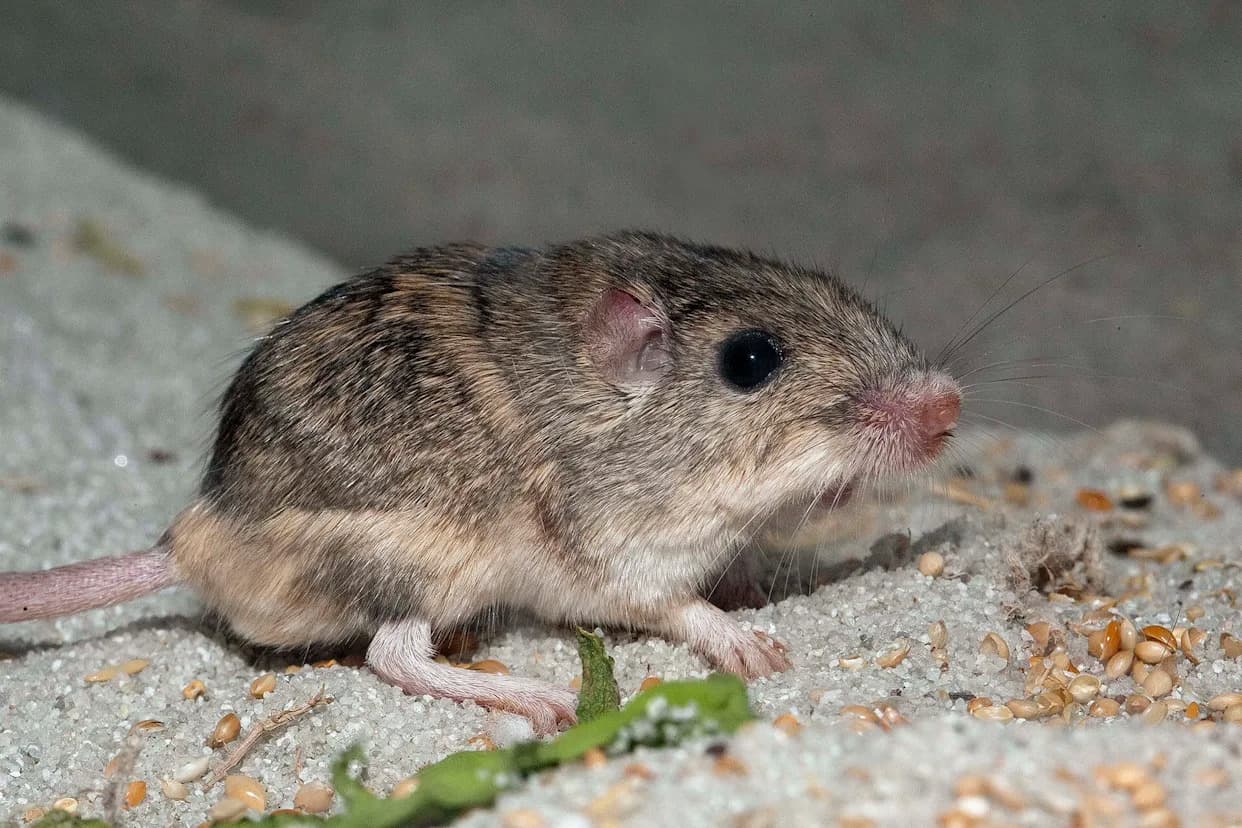
The Pacific pocket mouse (Perognathus longimembris pacificus) may be small, but recent research suggests it still holds genetic tools that could help it survive in a rapidly changing world. Once widespread along Southern California’s coastline, this tiny rodent now persists in only three isolated populations — but signs of adaptive genetic change offer cautious optimism for its future.
Description and Habitat
The Pacific pocket mouse is one of North America’s smallest rodents, measuring roughly 4.3 to 6 inches from nose to tail tip. Nocturnal and seed-eating, these mice shelter in burrows by day and use fur-lined external cheek pouches to transport and store seeds. They depend on very specific coastal habitats: fine-grained sandy soils on coastal strands, dunes, river alluvium and coastal sage scrub within about 2.5 miles of the ocean, with abundant forb cover and moderate open ground. Dense thatch, heavy shrub cover and invasive grasses reduce habitat suitability.

Dana Point, California, is home to a population of Pacific pocket mice.©Cavan Images/iStock via Getty Images
Decline and Conservation Status
Extensive coastal development dramatically reduced suitable habitat across the mouse’s historic range. By the 1970s the subspecies appeared to be extirpated, until a population was rediscovered in the early 1990s. The Pacific pocket mouse is now federally listed as endangered and survives in only three known populations: Dana Point (Orange County) and two sites on Marine Corps Base Camp Pendleton (South San Mateo and Santa Margarita).
Genetic Risks — And Surprising Resilience
Small, fragmented populations are vulnerable to inbreeding and loss of genetic diversity, which can reduce a species’ capacity to adapt to new environmental stresses. A recent genomic study compared historical and contemporary DNA to evaluate how much adaptive variation remains in the subspecies. Researchers specifically looked for climate-associated genes related to tolerance of extreme temperatures and moisture conditions.

Genetic analysis revealed insights into the mouse’s adaptability.©Gio.tto/Shutterstock.com
The study identified 14 genes linked to temperature and moisture resilience. Many of these genes are likely involved in circulatory processes that regulate heat loss — for example, muscle control of vasodilation and vasoconstriction and heart-rate adjustments. While the research confirmed a substantial loss of overall genetic diversity over the past century, it also found that important climate-associated variation persists.
Rapid Shifts After Reintroduction
Conservationists reintroduced individuals bred in a captive program into wild sites and tracked their descendants across multiple generations (the mice produce one to two litters per year). Gene frequencies in the reintroduced populations shifted toward profiles predicted for the local climate within just a few years — evidence that selection is acting on the remaining variation and driving rapid genetic change.
What This Means
These results offer guarded hope: despite past genetic losses, the Pacific pocket mouse still harbors adaptive variation that selection can act upon. That adaptive potential, combined with targeted habitat protection, population management and ongoing monitoring, could improve the subspecies’ chances of persisting under changing climate and land-use conditions.
Takeaway: Rapid genetic shifts observed in reintroduced populations indicate the Pacific pocket mouse retains evolutionary capacity for climate-related traits — but continued conservation action remains essential.
Help us improve.