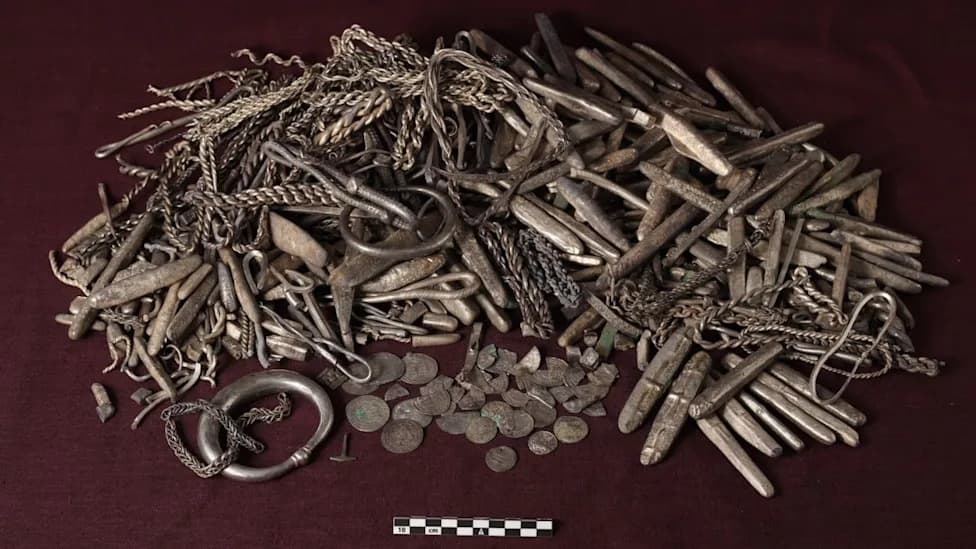
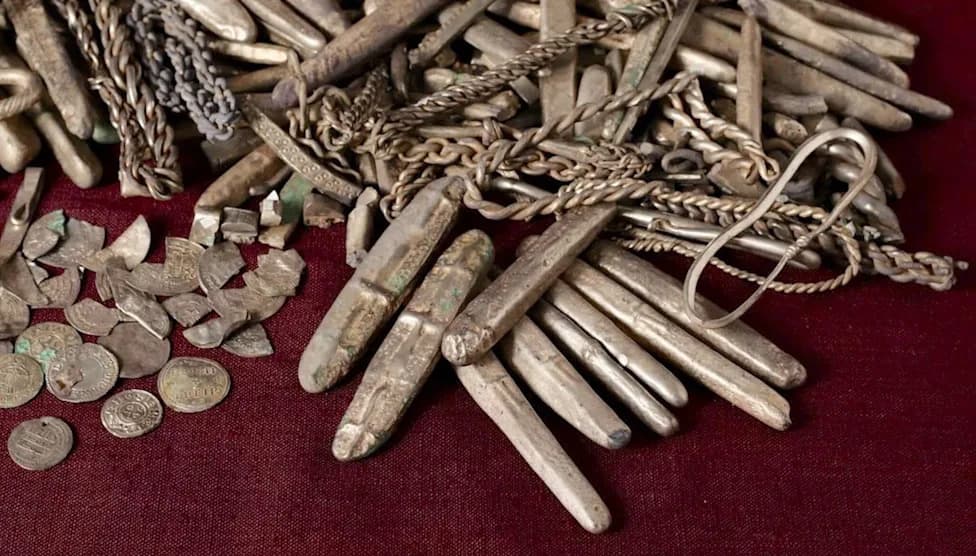
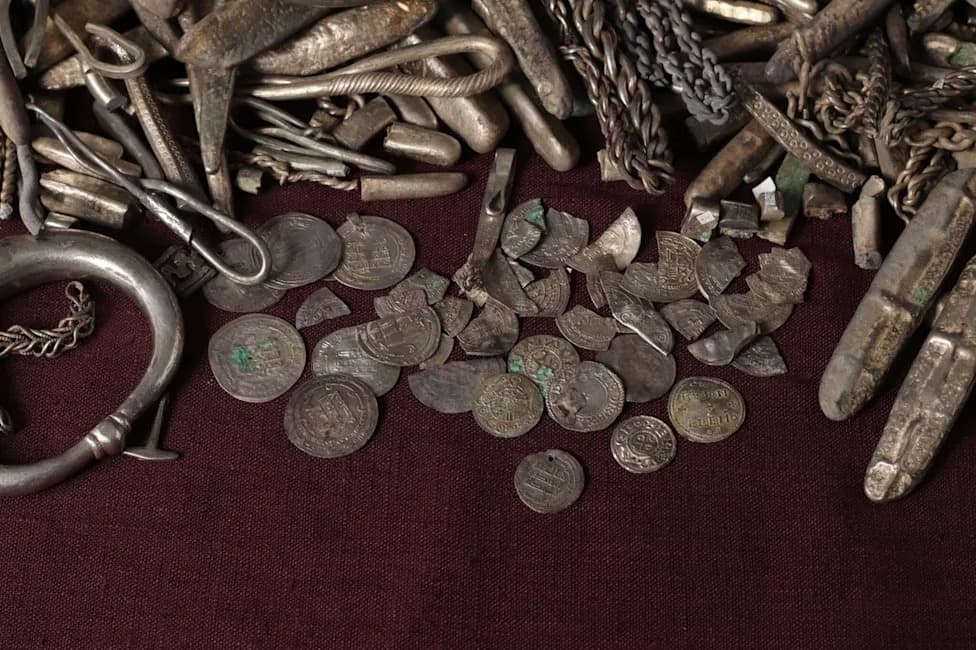
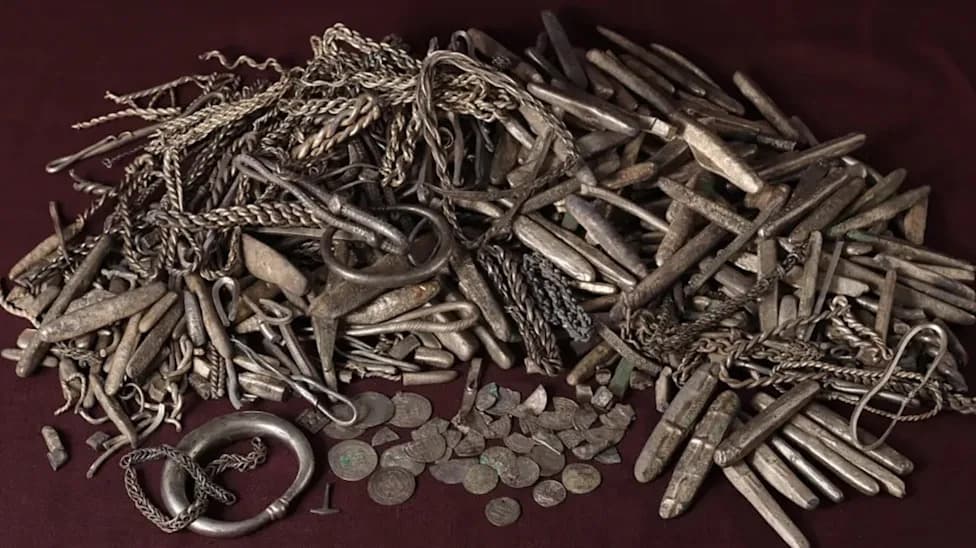
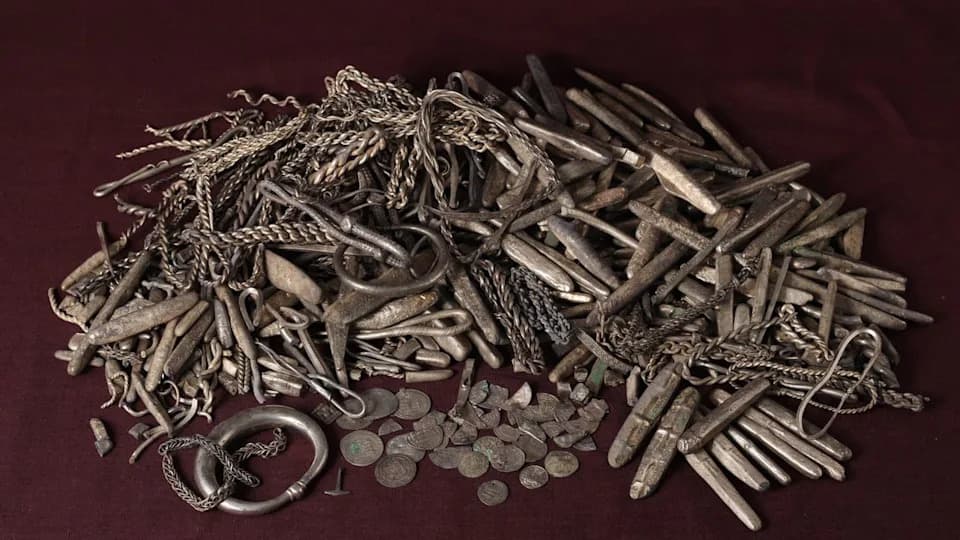
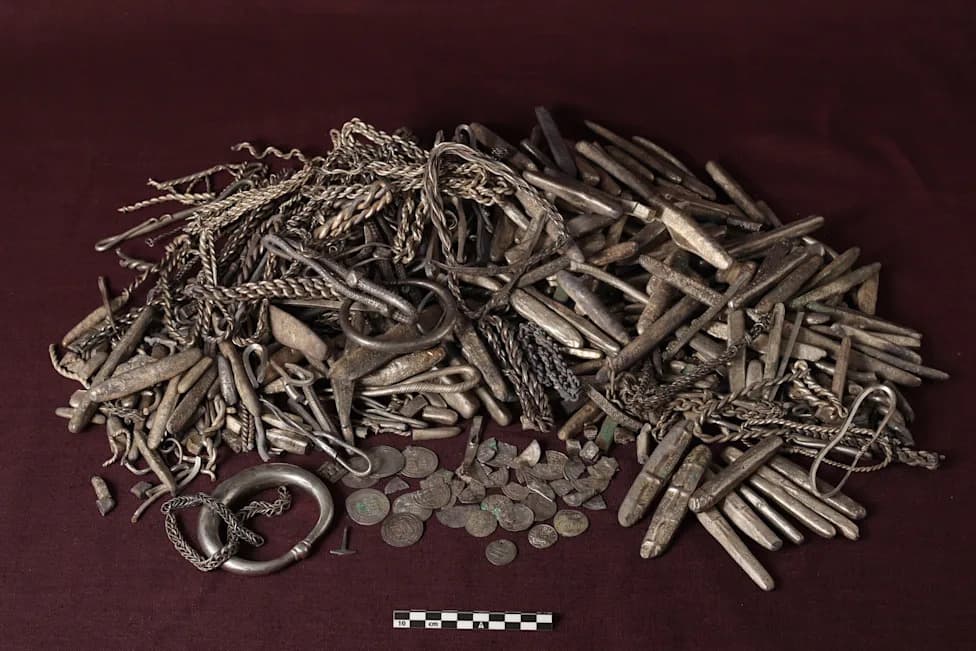
The Bickmarsh Hoard, uncovered by metal‑detectorists in Bickmarsh, Worcestershire, contains 63 Anglo‑Saxon coins and several unrelated Roman‑era objects. Worcestershire Archaeology followed up with surveys and a targeted excavation after additional coin concentrations were detected. Most coins were issued in the name of King Burgred (r. 852–874) and the hoard was likely buried around 871–874, possibly to protect valuables from Viking raids. Thirty‑five small lead fragments were recovered nearby, but their connection to the hoard is unconfirmed.
Metal-Detectorists Find 63 Anglo‑Saxon Coins in Worcestershire — Likely Hidden During Viking Raids
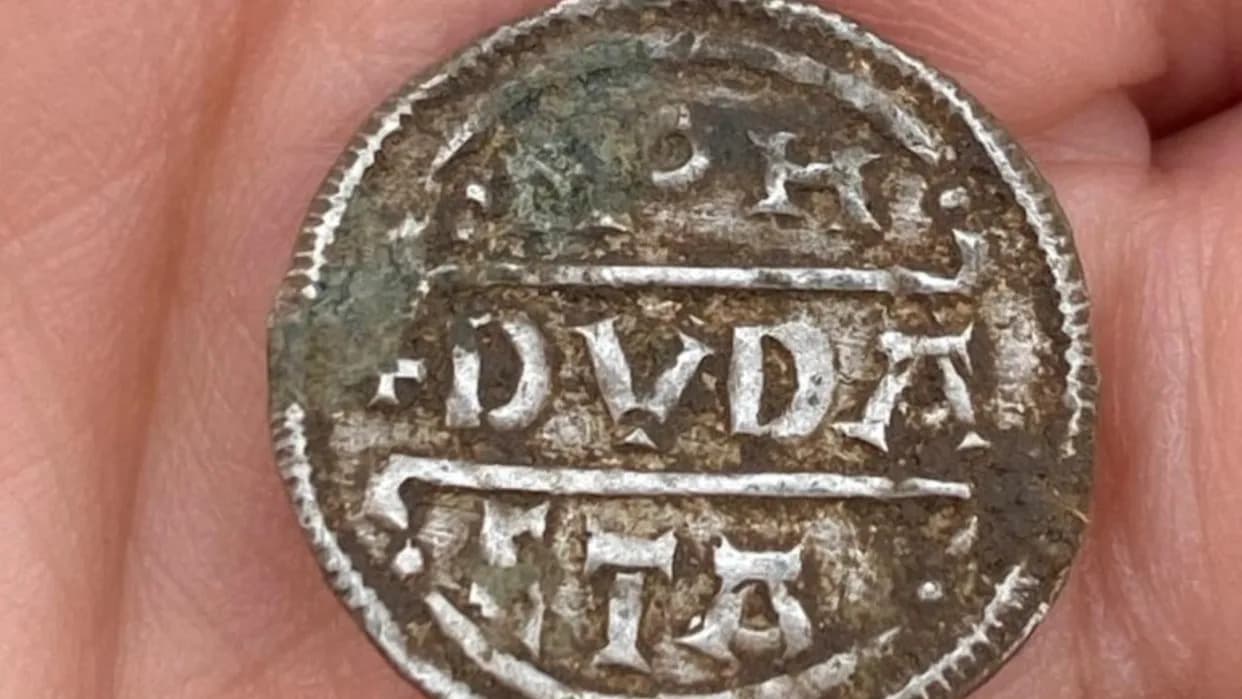
One of the silver coins in the hands of their finder, moments after being found.
A group of metal-detecting hobbyists in the parish of Bickmarsh, Worcestershire, have uncovered a rare hoard of early medieval Anglo‑Saxon coins now known as the Bickmarsh Hoard. The initial discovery prompted a formal archaeological response led by Worcestershire Archaeology after the find was reported by members of Go Detecting (Midlands) Ltd.
Worcestershire Archaeology carried out a follow-up programme that began with a second metal‑detector survey and a geophysical scan, then moved to a targeted excavation. The dig revealed two additional concentrations of coins, which expanded the excavation area and confirmed the significance of the find.
The Bickmarsh Hoard comprises 63 coins. Excavators also recovered other objects dating as far back as the Roman period, though those appear to be unrelated to the main hoard. In addition, archaeologists recovered 35 small fragments of lead sheet from the same general area as the coins. While other English hoards have been found wrapped in lead, there is currently no direct evidence tying these fragments to the Bickmarsh deposit.
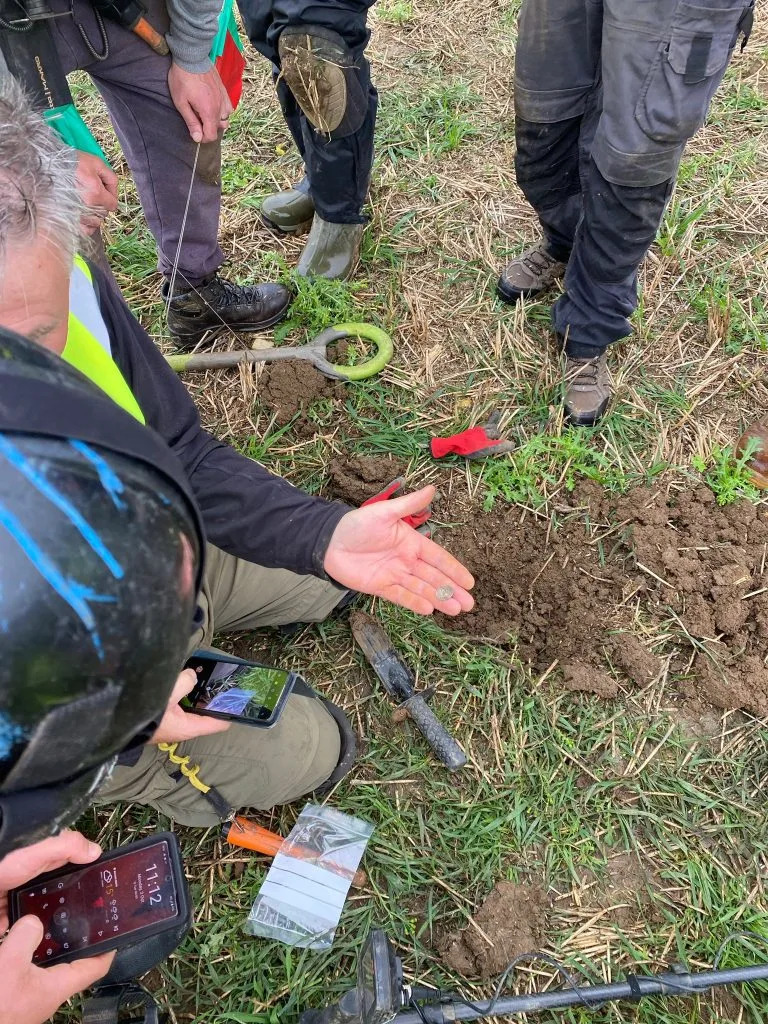
The metal detectorists and archaeologists worked together to uncover further coins.Image: Worcestershire City Council/Historic England/Go Detecting (Midlands) Ltd.
Discoveries of coins dated between the 5th century and the early 11th century are especially uncommon in Worcestershire. Before this discovery, fewer than 100 such coins had been recorded in the county; 18 of those came from the Severn Stoke Hoard, the only other documented hoard from the 800s in Worcestershire.
Dating and Historical Context
Most of the coins in the Bickmarsh group were issued in the name of King Burgred of Mercia, who ruled from 852 to 874. Based on the coin types and their dates of issue, archaeologists estimate the hoard was buried around 871–874 — a period of intensive Viking activity across England. It is likely the coins were hidden to protect them from raiding parties.
Site Conditions and Next Steps
The site shows evidence of both medieval and modern ploughing, which likely explains why many coins were scattered across the topsoil rather than found in a single intact container. Conservators will now stabilise and study the coins; numismatic analysis and the formal reporting process (including any treasure inquest) will help clarify the hoard’s date, composition, and potential link to the lead fragments.
“This is a fascinating discovery that provides a new glimpse into Worcestershire’s past,” said Councillor Ian Cresswell, Cabinet Member for Environment and Communities. “It’s a great example of how the work of our archaeology team and partners helps bring our history to life and connect us to our heritage.”
The Bickmarsh Hoard adds important evidence about wealth, circulation of coinage, and local responses to the turbulent late 9th century in England. Further study will place the hoard in its wider regional and historical context.
Help us improve.