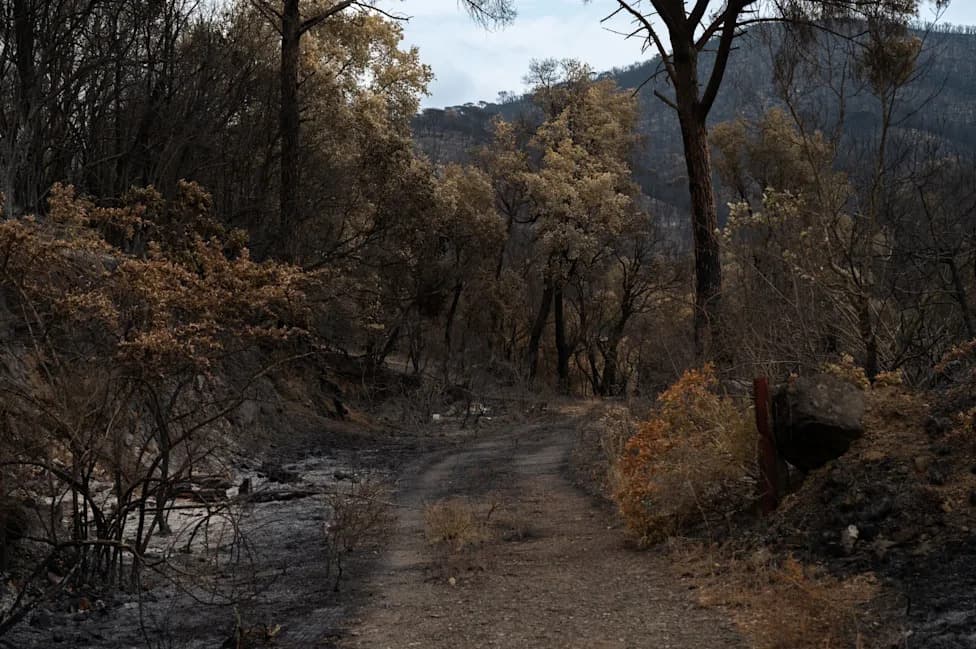
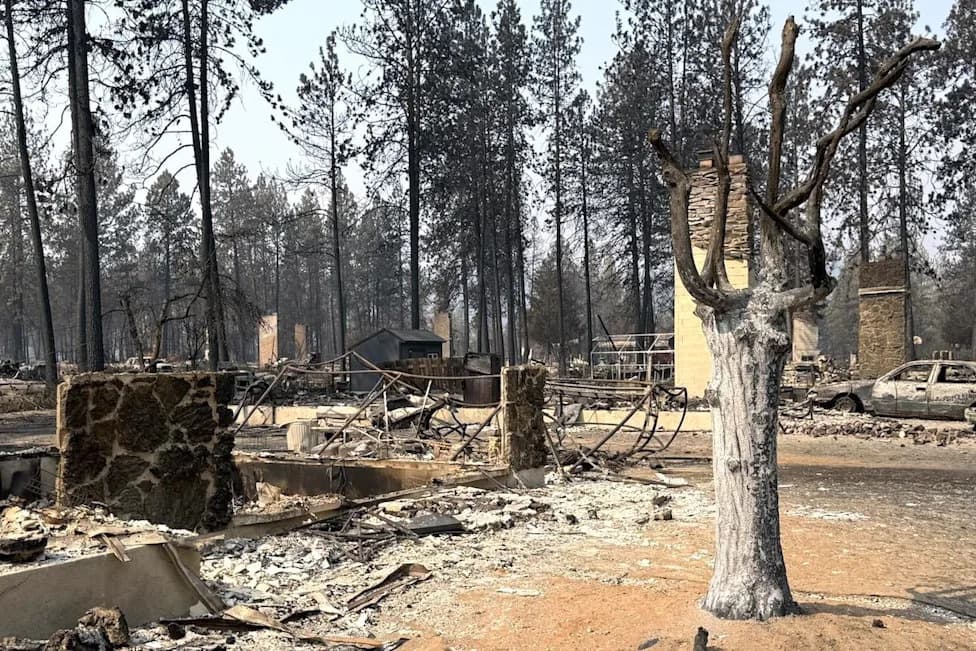
The Southeast is experiencing an exceptional drought that, together with a persistent high‑pressure ridge, warm southeast winds and very low humidity, has desiccated vegetation and fueled dozens of wildfires in Georgia and Florida. By April 24, 2026, fires had damaged 80+ homes in Brantley County and burned over 30,000 acres elsewhere. Investigators cite human‑caused ignitions, and officials warn that climate warming will likely increase future wildfire risk. Forecast rain could help, but many Georgia counties remain under emergency as crews work to contain the blazes.
Why the Southeast Is Burning: Drought, Winds and Human Sparks Are Driving This Year’s Wildfires
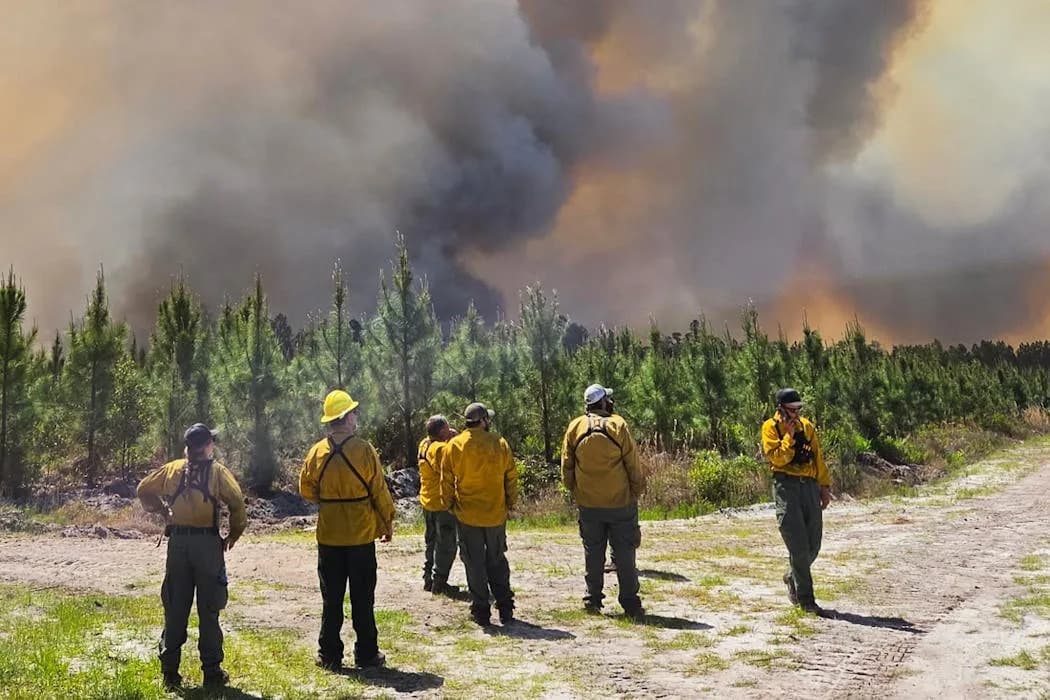
Fire crews responded to dozens of wildfires burning in Georgia and northern Florida on April 23, 2026.Georgia Department of Natural Resources via AP
Large portions of the southeastern United States are engulfed in an exceptional drought that has helped ignite and spread dozens of wildfires across Florida and Georgia. By April 24, 2026, a blaze in Brantley County, Georgia, had damaged more than 80 homes and put roughly 800 more at risk; another fire near the Georgia–Florida border had scorched over 30,000 acres and was about 10% contained. Smoke from the fires prompted air quality alerts in Atlanta.
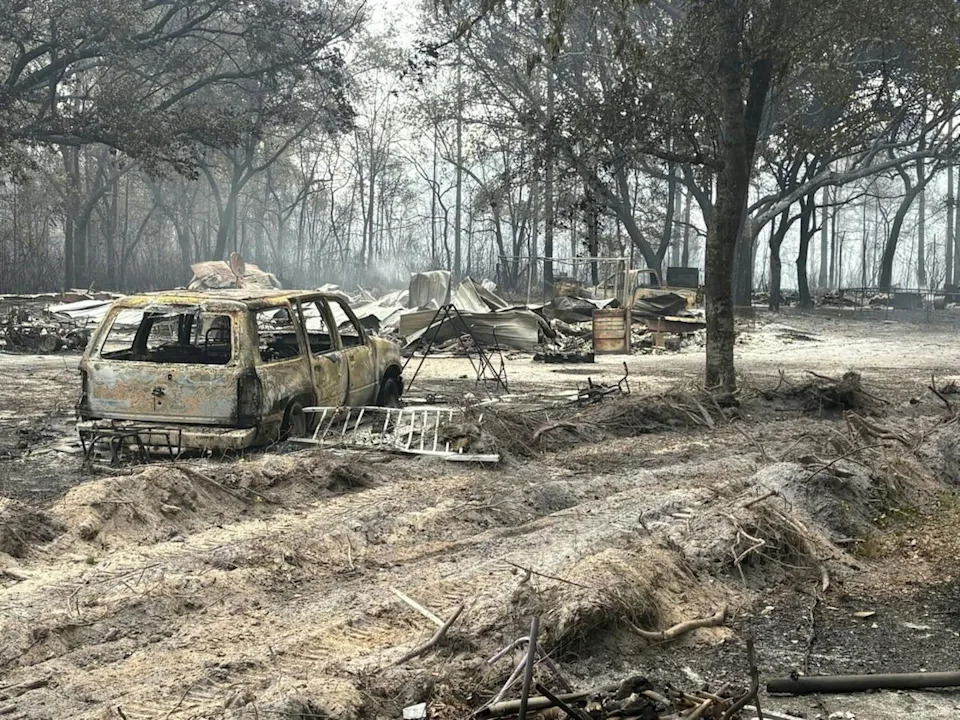
A fire near the Florida-Georgia line had burned nearly 30,000 acres by April 23, 2026, leaving ash behind.Georgia Department of Natural Resources via AP
How Weather Created the Perfect Conditions
Wildfires require three main ingredients to spread quickly: low relative humidity, dry fuels and strong winds. Much of the Southeast has been in drought since July 2025. Between mid‑March and mid‑April 2026 the region received less than 25% of its normal rainfall for that period, and by mid‑April the U.S. Drought Monitor classified most of the area as "extreme" or "exceptional" drought.
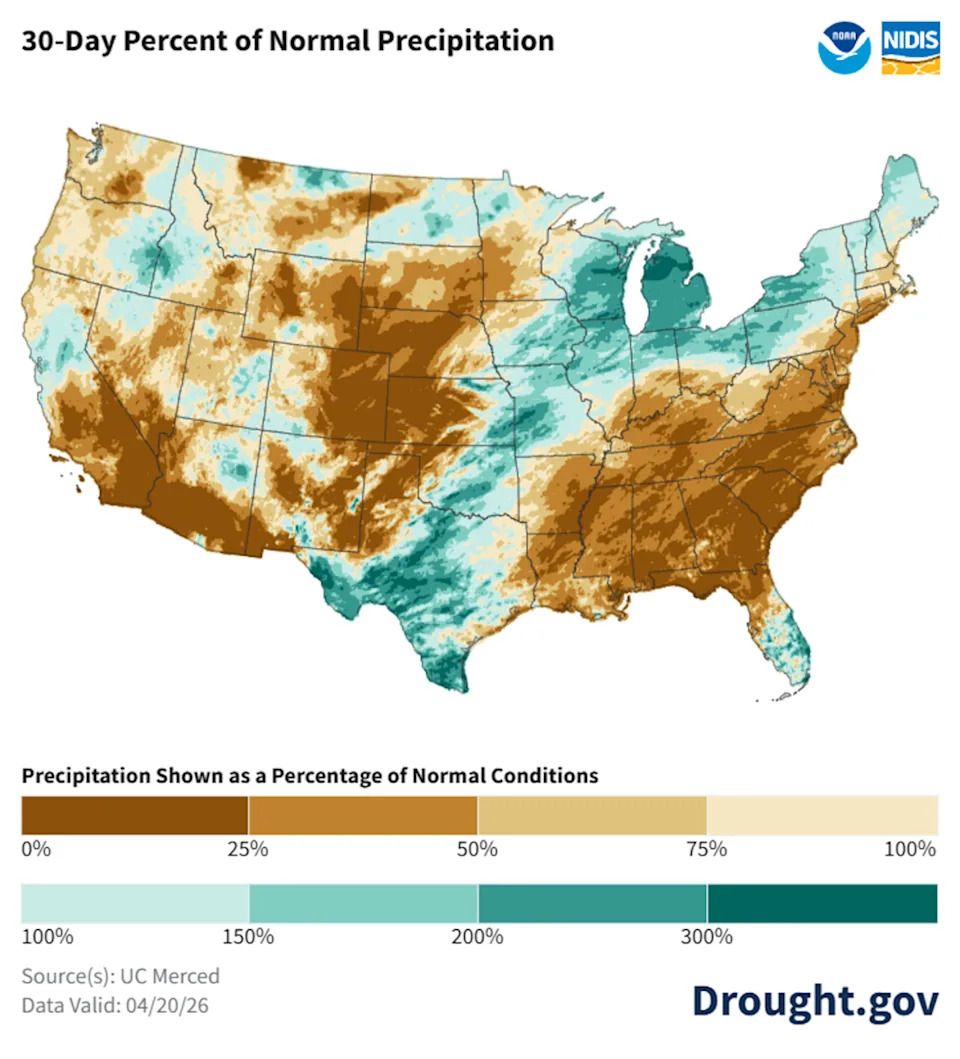
A map showing how far above or below average precipitation has been in each region from mid-March to mid-April 2026 shows just how dry much of the U.S. Southeast has been.Drought.gov
A persistent high‑pressure system parked over the region has been a major driver. High pressure forces air aloft to descend, suppressing cloud formation and precipitation. On upper‑level charts this setup corresponds to a pronounced ridge in the jet stream — a northward bulge in the fast, upper‑level flow — that deflects storms away from the Southeast.
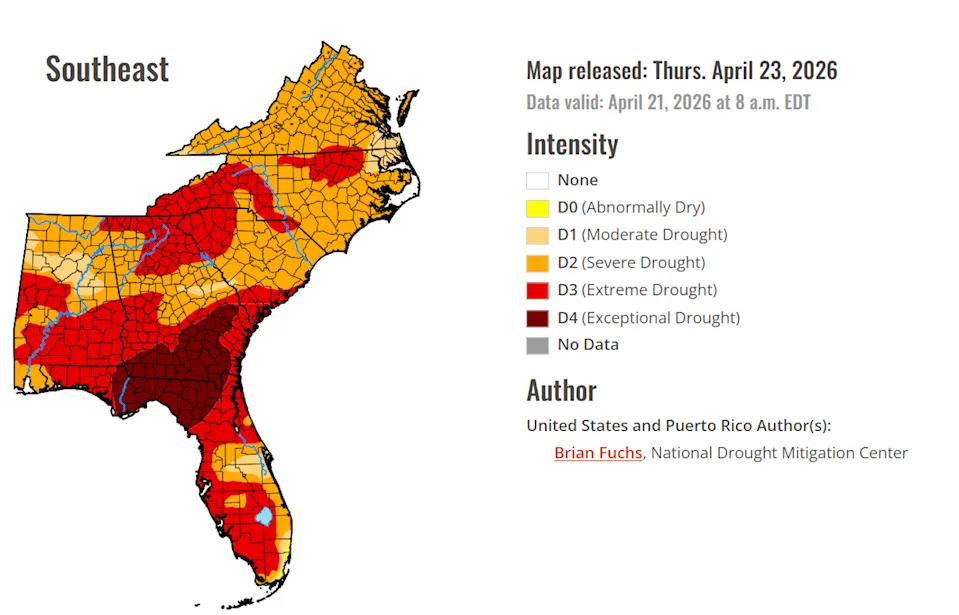
A map of the U.S. Southeast as of April 21, 2026, shows exceptional drought across the Georgia-Florida border area and extreme drought in many other areas.Brian Fuchs, National Drought Mitigation Center/U.S. Drought Monitor
Warm, Dry Air and Dry Fuels
The same high‑pressure pattern has brought generally southeasterly winds that advected warm, relatively dry air into the region. Warmer temperatures reduce relative humidity and accelerate the drying of leaves, grass and woody material. Those desiccated fuels are now widespread across rural Georgia and northern Florida and can ignite and carry flames rapidly once a fire starts.
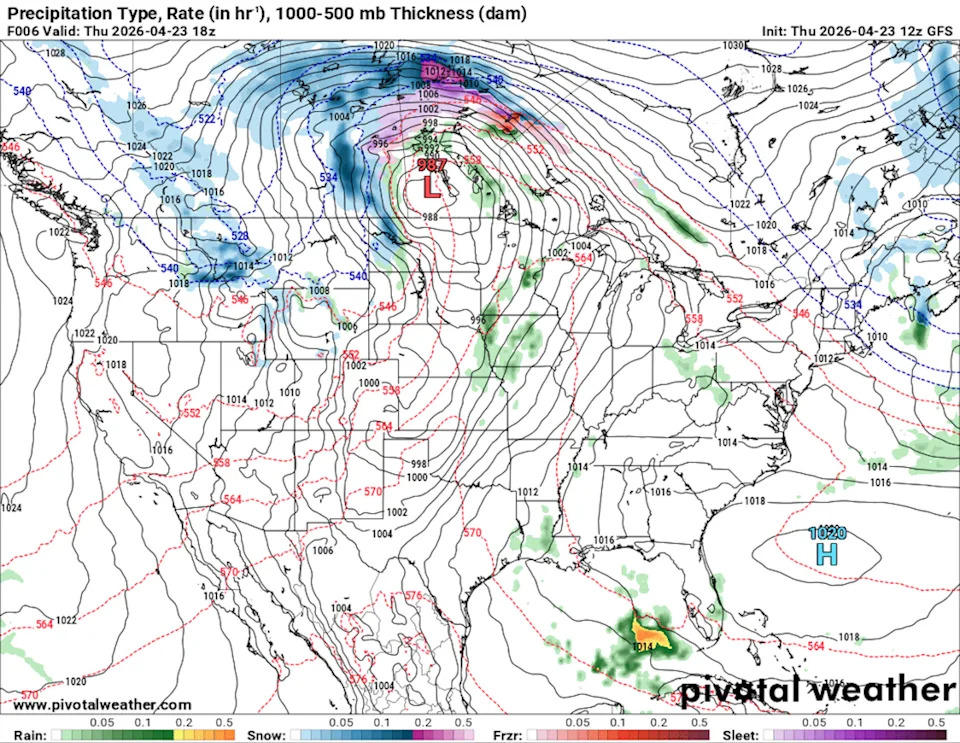
A weather map from the Global Forecast System for April 23, 2026, shows the forecasted low-pressure (red L) and high-pressure (blue H) systems.Pivotal Weather
Ignitions and Rapid Spread
Fires require an ignition source. Investigators reported that the largest April blaze near the Florida line began with a spark from welding equipment. In Brantley County, officials suspect a mylar balloon struck a power line and caused the fire that destroyed dozens of homes. With gusty winds and abundant dry fuel, small sparks can quickly become large, destructive fires.
Longer‑Term Outlook
Climate warming is expected to increase the frequency and intensity of drought conditions in parts of the Southeast, and projected summer soil‑moisture declines could raise the region’s wildfire vulnerability over time. That does not mean every season will produce large fires, but the baseline risk is increasing.
What It Will Take To Stop The Fires
Wildfires eventually subside when atmospheric conditions shift — namely rains or higher humidity — and when firefighters reduce fuels and suppress flames on the ground. Multiple low‑pressure systems were forecast for late April and early May 2026 that could bring some relief with rainfall. Meanwhile, more than half of Georgia’s counties were placed under a state of emergency as agencies deployed helicopters and scores of firefighters to protect homes and attack the blazes.
Author: Zachary Handlos, Georgia Institute of Technology.
Disclosure: Dr. Handlos receives funding from the U.S. National Science Foundation. He is affiliated with the Georgia Institute of Technology School of Earth and Atmospheric Sciences and directs the Atmospheric and Oceanic Sciences undergraduate program. He currently chairs the American Meteorological Society Board on Higher Education.
Help us improve.